
Lawn Care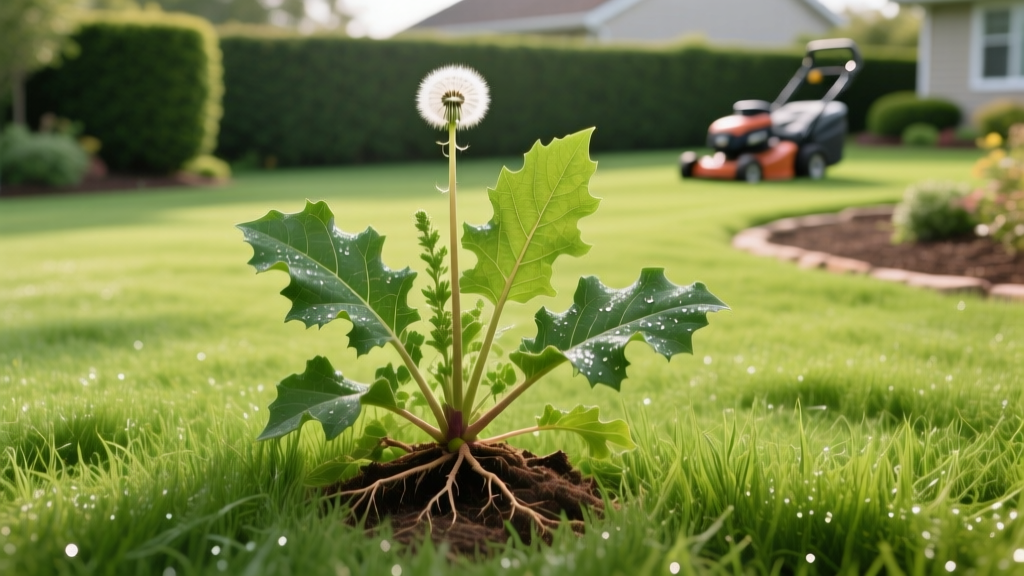
How to Identify and Kill Tall Big Leaf Weeds in Your Lawn
When homeowners encounter a towering, broad-leafed invader disrupting their carefully manicured turf, the immediate search is often for a 'tall big leaf weed.' While this isn't a formal botanical classification, it perfectly describes the most frustrating category of broadleaf weeds that outcompete desirable grasses for sunlight, water, and nutrients. These weeds typically feature large, aggressive rosettes, deep taproots, and waxy leaf surfaces that repel standard off-the-shelf herbicides.
Successfully eradicating these invaders requires more than a casual spray of generic weed killer. It demands precise identification, an understanding of leaf cuticle penetration, and targeted spot-treatment protocols. This guide provides the exact chemical formulations, mixing ratios, and cultural remediation steps required to eliminate large-leafed turf invaders permanently.
The 'Tall Big Leaf' Lineup: Identification Matrix
Before mixing any chemicals, you must accurately identify the specific weed species. The term 'tall big leaf weed' in a lawn context almost always points to one of three primary culprits. Misidentification leads to selecting the wrong active ingredient, resulting in wasted money and chemical runoff.
| Weed Species | Leaf Characteristics | Root Structure | Primary Soil Indicator |
|---|---|---|---|
| Broadleaf Plantain (Plantago major) | Oval, 4-12 inches long, prominent parallel veins, grows in a low but wide rosette. | Shallow, dense, fibrous root system with a short central taproot. | Severe soil compaction and heavy clay soils. |
| Common Mallow (Malva neglecta) | Rounded, crinkled, 2-4 inches wide with 5-7 shallow lobes, resembles a miniature geranium leaf. | Deep, aggressive taproot that easily snaps if pulled dry. | Low mowing heights and neglected turf edges. |
| Bull Thistle (Cirsium vulgare) | Large, deeply lobed, heavily spined, can grow 12-24 inches tall before bolting. | Fleshy taproot extending 12+ inches deep. | Disturbed soil, bare patches, and lawn borders. |
According to the University of California Integrated Pest Management program, Broadleaf Plantain is particularly notorious for thriving in high-traffic areas where soil bulk density exceeds 1.6 g/cm³, effectively choking out cool-season grasses like Kentucky Bluegrass and Tall Fescue.
The Chemistry of Eradication: Overcoming Waxy Cuticles
The primary reason standard 2,4-D formulations fail on mature, large-leafed weeds is the presence of a thick, waxy epicuticle. This biological armor causes water-based herbicide droplets to bead up and roll off the leaf surface before the active ingredient can translocate to the root system.
To bypass this defense mechanism, professional turf managers rely on two chemical strategies:
- Ester Formulations: Unlike amine formulations, ester-based herbicides are lipophilic (fat-soluble). They dissolve directly through the waxy leaf cuticle, making them vastly superior for large, mature weeds in cooler spring or fall temperatures (below 75°F).
- Non-Ionic Surfactants (NIS): Adding an NIS reduces the surface tension of the spray solution, forcing the droplet to flatten and spread across the leaf surface rather than beading up. This increases the absorption area by up to 400%.
Exact Spot-Treatment Mixing & Application Protocol
Do not use a hose-end sprayer for these weeds. Hose-end sprayers lack the precision required for spot-treatment and will unnecessarily expose your desirable turf to herbicide stress. Use a dedicated 1-gallon or 2-gallon handheld pump sprayer.
Step 1: The Professional Mix Ratio
For a highly effective, fast-acting burndown of large-leafed weeds in cool-season turf (Fescue, Bluegrass, Ryegrass), use a product containing Carfentrazone-ethyl combined with 2,4-D and MCPP. A leading commercial option is PBI/Gordon SpeedZone Lawn Weed Killer (approx. $45 per pint in 2026).
- Herbicide: 1.5 fluid ounces of SpeedZone per 1 gallon of water.
- Surfactant: 0.5 teaspoons (approx. 2.5 ml) of a high-quality Non-Ionic Surfactant (e.g., Hi-Yield Spreader Sticker) per 1 gallon.
- Water: 1 gallon of clean, pH-neutral water.
Step 2: Calibration and Application
Shake the sprayer vigorously for 30 seconds to emulsify the surfactant. Adjust the nozzle to a pin-stream or low-pressure fan pattern. You are not trying to drench the soil; you are coating the foliage. Spray the center of the weed rosette until the leaves are visibly wet but not dripping. Dripping indicates chemical waste and increases the risk of soil residual damage to surrounding grass roots.
⚠️ Critical Temperature Warning: Never apply ester-based herbicides or products containing Carfentrazone when ambient temperatures exceed 85°F. High heat causes the chemicals to volatilize (turn into a gas), which will drift and severely burn desirable turfgrass, leaving large, yellowed dead zones in your lawn.
Herbicide Active Ingredient Comparison
If SpeedZone is unavailable, or if you are managing a warm-season turf like Zoysia or Bermudagrass (which is sensitive to 2,4-D), you must adjust your active ingredients. The University of Minnesota Extension emphasizes matching the herbicide to the specific turfgrass species to prevent phytotoxicity.
| Active Ingredient | Best For Turf Type | Effectiveness on Big Leaf Weeds | Average Retail Cost (2026) |
|---|---|---|---|
| Carfentrazone + 2,4-D + MCPP | Cool-Season (Fescue, Bluegrass) | Excellent (Fast burndown, 48-hour visual results) | $45 / pint |
| Triclopyr + Fluoroxypyr | Cool-Season & some Warm-Season | Very Good (Slower, but excellent root kill on Mallow) | $35 / quart |
| Quinclorac + Sulfentrazone | Warm-Season (Bermuda, Zoysia) | Good (Safe for warm-season, slightly slower visual kill) | $50 / pint |
Cultural Remediation: Starving the Weeds
Chemical eradication is only a temporary fix if the underlying soil mechanics favor weed germination. Large-leafed weeds are opportunistic; they exploit specific environmental weaknesses in your lawn care program.
Addressing Soil Compaction (The Plantain Fix)
If Broadleaf Plantain is your primary issue, your soil is compacted. Plantain roots can penetrate soils with a penetrometer reading of over 300 psi, whereas Tall Fescue roots stall out at roughly 200 psi. You must perform core aeration in the early fall. Rent a walk-behind core aerator and pull plugs that are at least 3 inches deep and 0.5 inches in diameter. Leave the plugs on the lawn to break down naturally, which introduces top-dressing organic matter back into the soil profile.
Adjusting Mowing Heights (The Mallow Fix)
Common Mallow thrives in scalped lawns. If you are mowing your cool-season turf below 2.5 inches, you are allowing sunlight to hit the soil surface, triggering Mallow seed germination. Raise your mower deck to 3.5 to 4.0 inches. This creates a dense canopy that shades out broadleaf weed seedlings while encouraging deeper, more drought-resistant grass roots.
Troubleshooting Common Application Failures
The Weed Turned Purple and Crispy, But Grew Back
The Cause: You achieved a successful foliar burn, but the herbicide failed to translocate to the taproot. This usually happens when you spray during a drought. When weeds are water-stressed, they shut down their vascular systems to conserve moisture, preventing the chemical from traveling down to the roots.
The Fix: Water your lawn deeply 48 hours before applying the herbicide to ensure the weed is actively growing and translocating nutrients (and the poison) down to the root zone.
The Surrounding Grass Turned Yellow and Stunted
The Cause: Herbicide overlap or application during high heat. Spraying the same weed twice 'just to be sure' doubles the chemical load on the surrounding soil, leading to root uptake by desirable grasses.
The Fix: Apply a single, thorough coating and wait 14 days. If the center of the weed rosette shows any green growth after two weeks, perform a second, lighter spot-treatment. Never oversaturate the soil.

