
Lawn Care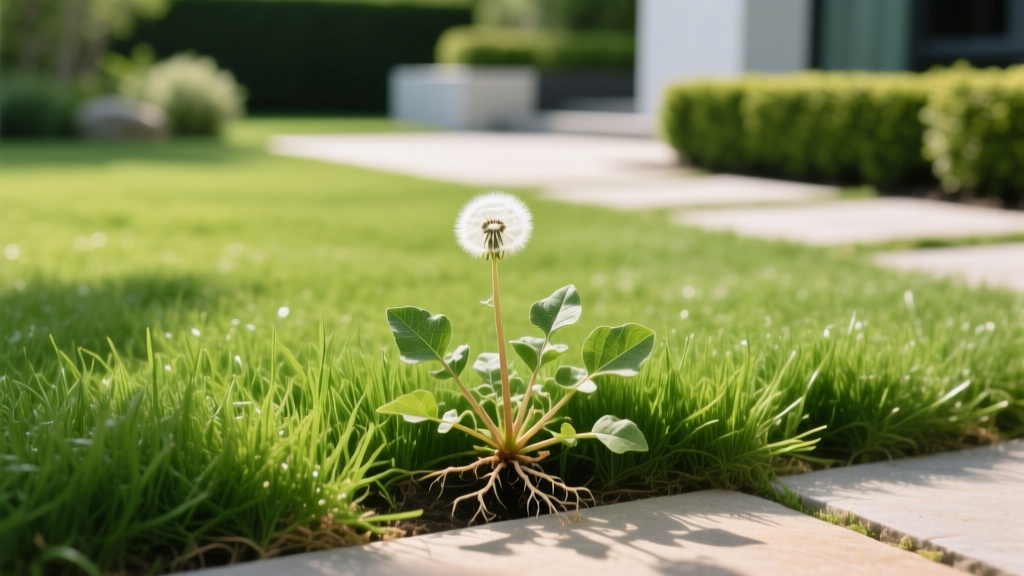
How to Identify a Weed in My Lawn: Visual Diagnostic Guide
Misidentifying a lawn weed is the single most common reason homeowners waste money on ineffective herbicides. A product formulated to destroy broadleaf weeds will do absolutely nothing to a grassy weed, and applying a standard grassy-weed killer to a sedge will leave the root system intact to resprout weeks later. To successfully identify a weed in my lawn, you must move beyond casual observation and apply a structured morphological diagnostic framework. This guide breaks down the exact botanical markers turfgrass professionals use to categorize and eliminate unwanted vegetation.
The 3-Step Morphological Diagnostic Framework
Before reaching for a chemical solution, isolate a single specimen of the weed and examine it across three distinct botanical vectors. This methodology aligns with the diagnostic protocols used by the Michigan State University Turf Weeds database.
Step 1: Leaf Blade Anatomy and Vernation
Examine the youngest, unopened leaves at the tip of the shoot. This reveals the plant's vernation—the way the leaf is folded in the sheath. Grassy weeds typically exhibit either rolled or folded vernation. Next, locate the ligule, a small appendage where the leaf blade meets the stem. Ligules can be membranous (a thin, translucent tissue), hairy (a fringe of trichomes), or entirely absent. Finally, check the leaf tip: is it sharply pointed, blunt, or boat-shaped? These micro-traits are the primary differentiators between visually similar species like Crabgrass and Goosegrass.
Step 2: Growth Habit and Stem Architecture
Determine how the weed colonizes your turf. Does it grow in a centralized clump (bunch-type), or does it send out horizontal runners? Horizontal stems that travel above the soil surface are stolons, while those traveling beneath the surface are rhizomes. Weeds with aggressive stoloniferous or rhizomatous habits require systemic herbicides that translocate through the vascular system, whereas bunch-type weeds can often be managed with contact herbicides or manual extraction.
Step 3: Root System Architecture
Gently excavate the base of the weed. A thick, central taproot (common in broadleaf weeds like dandelions and plantains) stores massive energy reserves; if you snap the taproot during manual pulling, the weed will regenerate. Conversely, a shallow, fibrous root system is typical of annual grassy weeds. If you discover hard, spherical tubers (nutlets) chained together underground, you are dealing with a sedge, which requires entirely different chemistry to eradicate.
The Primary Split: Broadleaf vs. Grassy vs. Sedge
The first critical branching point in weed identification is categorizing the specimen into one of the three major physiological families. This dictates the active ingredient class you must select.
| Category | Leaf Venation | Stem Cross-Section | Root / Propagation | Primary Herbicide Class |
|---|---|---|---|---|
| Broadleaf | Netted / Branching | Round / Solid | Taproot or Fibrous | Synthetic Auxins (2,4-D, Dicamba, Triclopyr) |
| Grassy | Parallel | Round / Hollow nodes | Fibrous, Rhizomes, or Stolons | ACCase Inhibitors (Quinclorac, Fenoxaprop) |
| Sedge | Parallel (3-ranked) | Triangular / Solid | Fibrous + Underground Tubers | ALS Inhibitors (Halosulfuron, Sulfentrazone) |
The "Top 5" Culprits and Their Telltale Signatures
While there are hundreds of turf weeds, five specific species account for the vast majority of homeowner misidentifications and subsequent treatment failures.
1. Smooth Crabgrass (Digitaria ischaemum)
Category: Grassy Weed (Annual)
Visual Markers: Prostrate growth habit radiating from a central point like a starfish. Leaf blades are wider than standard turfgrass (up to 1/4 inch) and feature a distinct, long, membranous ligule. Stems often take on a reddish-purple hue at the base in late summer.
Common Misidentification: Often confused with Tall Fescue clumps or Quackgrass. Unlike Quackgrass, Crabgrass lacks rhizomes and will pull up easily with a shallow fibrous root ball.
2. Yellow Nutsedge (Cyperus esculentus)
Category: Sedge (Perennial)
Visual Markers: Grows significantly faster than surrounding turf, creating yellowish tufts that break the canopy line. The definitive ID marker is the stem: roll it between your fingers. If it feels distinctly triangular ("sedges have edges"), it is nutsedge. Leaves are arranged in sets of three (3-ranked) at the base.
Common Misidentification: Routinely mistaken for tall, pale grass. Applying standard grass-killers like Quinclorac will fail completely against nutsedge.
3. White Clover (Trifolium repens)
Category: Broadleaf (Perennial)
Visual Markers: Trifoliate leaves (three distinct leaflets) often featuring a pale, crescent-shaped watermark. Spreads aggressively via above-ground stolons. Produces spherical, white-to-pink flower heads from late spring through autumn.
Common Misidentification: Sometimes confused with Oxalis (which has heart-shaped leaflets and yellow flowers) or Lespedeza. Clover's stoloniferous creeping habit and distinct leaflet shape are the key differentiators.
4. Annual Bluegrass (Poa annua)
Category: Grassy Weed (Winter Annual)
Visual Markers: Apple-green color that stands out against darker winter turf. The definitive marker is the leaf tip, which is distinctly boat-shaped (prow-shaped). It features a long, pointed membranous ligule and produces aggressive, silvery-white seedheads even at mowing heights as low as 1 inch.
Common Misidentification: Highly confused with desirable Kentucky Bluegrass. Kentucky Bluegrass has a boat-shaped tip but possesses underground rhizomes and a much darker, bluish-green hue.
5. Dandelion (Taraxacum officinale)
Category: Broadleaf (Perennial)
Visual Markers: Forms a basal rosette of deeply lobed, jagged leaves that point backward toward the center. When the stem or leaf is broken, it exudes a milky white latex sap. Features a singular, hollow flower stalk and a massive, brittle taproot that can extend 10 to 15 inches deep.
Common Misidentification: Rarely misidentified when flowering, but in its early vegetative rosette stage, it can be confused with Wild Lettuce or Catsear. The milky sap and deep taproot confirm Dandelion.
Herbicide Mapping: Matching Chemistry to the Weed
Once you have positively identified the weed, you must select an herbicide with an active ingredient proven to disrupt its specific biological pathways. According to the University of California Integrated Pest Management (UC IPM) program, matching the mode of action to the weed family is critical for preventing herbicide resistance.
- For Broadleaf Weeds (Clover, Dandelion, Plantain): Seek out multi-ester formulations containing a combination of 2,4-D, Dicamba, and Triclopyr or MCPA. Commercial products like SpeedZone or Trimec Classic utilize these synthetic auxins to cause uncontrolled cellular growth, effectively twisting the weed to death. Warning: Triclopyr can severely damage St. Augustinegrass and Centipedegrass; always check the label for warm-season turf safety.
- For Grassy Weeds (Crabgrass, Foxtail): Quinclorac (found in products like Drive XLR8) is the industry standard for post-emergent crabgrass control. It mimics plant hormones and induces toxic ethylene buildup in the target weed. For a safer alternative in sensitive warm-season lawns, Mesotrione (Tenacity) acts as an HPPD inhibitor, bleaching the weed white by blocking chlorophyll synthesis.
- For Sedges (Nutsedge, Kyllinga): You must use an ALS (Acetolactate Synthase) inhibitor. Halosulfuron-methyl (SedgeHammer) or Sulfentrazone (Dismiss) are required. These chemicals translocate down into the underground nutlets, preventing the sedge from regenerating the following spring.
Frequently Asked Questions
Why did my "Weed and Feed" product fail to kill the weeds in my lawn?
Most big-box store "Weed and Feed" granular products rely heavily on 2,4-D and Mecoprop (MCPP). While effective on simple broadleaf weeds like dandelions, they are virtually useless against mature white clover, ground ivy, or any grassy weed/sedge. Furthermore, granular herbicides require moisture on the leaf surface to stick and absorb; if applied to dry foliage, the granules simply bounce off and dissolve into the soil, wasting the active ingredient.
Can I use digital apps to identify a weed in my lawn accurately?
AI-driven botanical apps like PictureThis or iNaturalist are excellent starting points for broadleaf weeds with distinct flowers or leaf shapes. However, they frequently fail when differentiating between vegetative grassy weeds (e.g., telling Crabgrass from Goosegrass) because they lack the resolution to analyze microscopic ligules and vernation. For grassy weeds, physical morphological inspection or sending a sample to your local university cooperative extension lab remains the gold standard.
Is pulling weeds by hand ever a viable long-term strategy?
Manual extraction is only viable for bunch-type annual weeds with shallow fibrous roots, or broadleaf weeds if you use a specialized taproot extractor (like a Fiskars Stand-Up Weeder) that removes the entire root core. Pulling stolons or rhizomes by hand is counterproductive; snapping the horizontal stems leaves behind nodes that will immediately sprout two new weeds in its place, effectively multiplying your infestation.

