
Lawn Care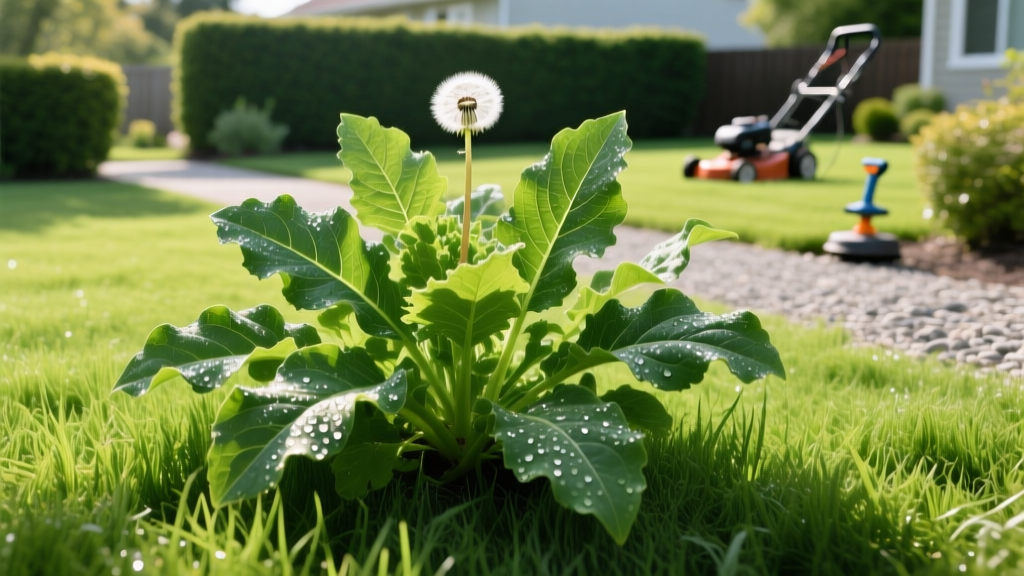
How to Identify and Kill the Weed with Very Large Leaves
Finding a weed with very large leaves in your lawn is a clear indicator of underlying soil issues and aggressive competition for resources. Unlike fine-bladed grassy weeds, broadleaf invaders with massive foliage—often spanning 8 to 18 inches across—can rapidly shade out your turfgrass, leading to thinning and bare patches. Successfully eradicating these giants requires precise identification, as the root structures and chemical susceptibilities vary drastically between species.
Identifying the Culprit: Which Weed Has Very Large Leaves?
Homeowners frequently search for a "weed with very large leaves" without realizing that three primary culprits fit this exact description in residential turf. Misidentifying the weed leads to failed treatment protocols. Use the diagnostic matrix below to confirm your specific invader.
| Weed Species | Leaf Shape & Size | Root Structure | Key Visual Identifier | Preferred Soil Condition |
|---|---|---|---|---|
| Broadleaf Plantain (Plantago major) |
Oval to elliptical; 4–10 inches long | Shallow, fibrous rosette | Prominent parallel veins running the length of the leaf | Heavily compacted, high-traffic clay soils |
| Common Burdock (Arctium minus) |
Heart-shaped, woolly underside; up to 18 inches long | Deep, fleshy taproot (1st year) | Leaves are massive and soft; 2nd year produces burr stalks | Disturbed soil, lawn edges, and neglected borders |
| Curled Dock (Rumex crispus) |
Lanceolate with wavy/crisped margins; 6–12 inches long | Deep, brittle taproot with yellow-orange core | Distinctive wavy leaf edges and reddish-purple stem base | Poorly drained, acidic, or low-fertility soils |
Why These Broadleaf Giants Thrive in Your Lawn
Large-leafed weeds are opportunistic. According to turfgrass specialists at the University of Minnesota Extension, broadleaf plantain specifically thrives in soils with a bulk density exceeding 1.4 g/cm³, a level of compaction where Kentucky bluegrass and fine fescues struggle to establish roots. Similarly, Curled Dock exploits low-pH environments (below 5.8) where calcium is locked up. Before treating the weeds, purchase a standard soil test kit (such as the MySoil Professional Kit, typically $30) to check your pH and compaction levels. If your soil is compacted, schedule a core aeration that pulls 3-inch plugs immediately after your chemical treatment cycle concludes.
Mechanical Extraction Protocols
Hand-pulling a weed with very large leaves is rarely effective if the root system is not fully removed. The strategy depends entirely on the root type identified above.
Removing Fibrous Roots (Broadleaf Plantain)
Plantain roots are shallow but dense. Wait until 24 hours after a heavy rainfall or deeply irrigate the zone the night before. Use a dandelion weeder or a hori-hori knife to slide under the basal rosette at a 45-degree angle, lifting the entire crown. If the central crown snaps off, the weed will regenerate within 10 to 14 days.
Extracting Taproots (Burdock and Dock)
First-year burdock and mature dock possess taproots that can extend 12 to 24 inches deep. Surface pulling leaves the lower taproot intact, guaranteeing rapid regrowth.
- Tool Selection: Use a stand-up weeder with serrated steel claws (e.g., the Fiskars 42-inch Stand-Up Weeder) to penetrate 6 to 8 inches into the soil directly over the crown.
- Severing Technique: If using a hori-hori knife, dig a circular trench 3 inches around the weed and sever the taproot at least 4 inches below the soil surface. The remaining lower root will typically rot rather than regenerate if cut this deeply.
Chemical Spot-Treatment: Formulations and Application Rates
When mechanical removal is impractical, targeted chemical control is required. Do not use non-selective herbicides like glyphosate, as they will kill your surrounding turfgrass. Instead, utilize a selective, systemic broadleaf herbicide.
⚠️ Temperature Warning: Never apply phenoxy herbicides (2,4-D, dicamba) when daytime temperatures exceed 85°F. High heat causes the chemical to volatilize into a gas, drifting onto and severely damaging nearby ornamental shrubs, tomatoes, and flowering beds.
The Three-Way Herbicide Standard
The most effective chemistry for large-leafed weeds is a three-way combination of 2,4-D, dicamba, and triclopyr (found in commercial products like SpeedZone or consumer variants like Ortho WeedClear for Lawns). Triclopyr is specifically critical for woody-stemmed or thick-cuticle weeds like burdock and dock.
- Mixing Ratio: For concentrated spot treatments, mix 1.5 to 2.0 fluid ounces of three-way herbicide per gallon of water.
- Surfactant Addition: Large-leafed weeds develop a thick, waxy cuticle to retain moisture. Add a non-ionic surfactant or methylated seed oil at a rate of 1% v/v (approx. 2.5 teaspoons per gallon) to break the surface tension and force the herbicide into the leaf tissue.
- Application Technique: Use a 1-gallon pump sprayer with a pin-stream nozzle. Spray the large leaves until they are visibly wet, but avoid runoff dripping onto the soil. The weed will absorb the chemical and translocate it down to the taproot over 7 to 14 days.
For detailed safety data and application timelines, refer to the NC State TurfFiles Weed Database, which provides updated efficacy charts for specific broadleaf species.
Post-Treatment Turf Recovery
Once the large-leafed weed turns yellow and collapses (usually 14–21 days post-spray), it leaves a bare void in your lawn. If left unfilled, crabgrass or nutsedge will immediately colonize the space.
- Debris Removal: Rake out the dead weed material and loosen the top 1 inch of soil with a hand cultivator.
- Seeding: Apply a premium turf-type tall fescue or Kentucky bluegrass blend at a rate of 3 to 4 seeds per square inch.
- Fertilization: Cover the seed with a 1/4-inch layer of compost and apply a phosphorus-rich starter fertilizer (e.g., 24-25-4 NPK ratio) to accelerate root establishment.
- Hydration: Water the spot lightly twice daily for 14 days to maintain constant surface moisture until germination is complete.
Frequently Asked Questions
Can I mow over a weed with very large leaves to kill it?
No. Mowing removes the photosynthetic leaf area temporarily, but species like Broadleaf Plantain and Curled Dock grow from a basal rosette located below the mower deck height. Mowing simply forces the weed to adapt by growing its leaves flatter against the soil surface, making subsequent chemical sprays more difficult. Always treat or extract before mowing.
Why did my vinegar-based organic spray fail on burdock?
Horticultural vinegar (20% acetic acid) is a contact desiccant. It burns the massive top-growth of a burdock or dock leaf but cannot translocate into the deep taproot. The root stores massive amounts of carbohydrates and will simply push up a new rosette of leaves within a week. Systemic synthetic herbicides or deep physical extraction are the only permanent solutions for taprooted giants.

