
Lawn Care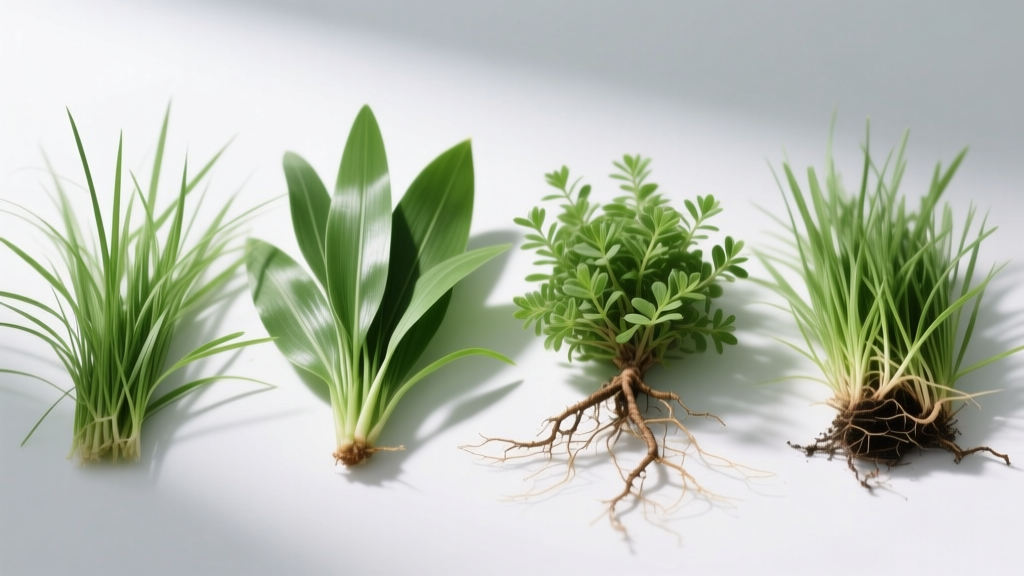
How to Identify Common Types of Lawn Grasses by Blade and Root
Misidentifying your turf is the most expensive mistake in lawn care. Applying a warm-season pre-emergent to a cool-season fescue lawn, or mowing Zoysia at three inches, guarantees a deteriorating landscape. With the USDA Plant Hardiness Zone Map shifts pushing the transition zone further north, knowing exactly which types of lawn grasses are growing in your soil is no longer optional—it is the baseline for survival.
This guide bypasses generic advice and provides a botanical framework for identifying your turfgrass by leaf anatomy, root structure, and regional behavior.
The Anatomy of Grass Identification
Professional agronomists do not identify grass by color or general texture. They examine the collar region (where the leaf blade meets the stem) and the vernation (how the youngest leaf is folded inside the shoot). To accurately identify your lawn, you need a 10x jeweler's loupe and a trowel.
The 3 Key Botanical Identifiers
- Vernation: Pinch the newest shoot. If it feels round, the vernation is rolled. If it feels flat or V-shaped, it is folded.
- Ligule: The membrane or fringe of hairs at the inner junction of the blade and sheath. It can be membranous, hairy, or absent.
- Auricle: Claw-like appendages that clasp the stem at the collar. They can be long and clasping, short, or completely absent.
Cool-Season Grasses: Visual Profiles
Cool-season grasses thrive in northern climates and the upper transition zone, growing most actively when soil temperatures sit between 55°F and 65°F. According to University of Minnesota Extension, these grasses require specific mowing heights to maintain deep root systems capable of surviving summer droughts.
Kentucky Bluegrass (Poa pratensis)
- Blade Tip: Distinct 'boat-shaped' or prow-shaped tip.
- Vernation: Folded.
- Auricles: Short to absent, rarely clasping.
- Root Structure: Spreads via underground rhizomes, allowing it to recover from divots and heavy foot traffic.
Tall Fescue (Festuca arundinacea)
- Blade Texture: Wide (up to 3/8 inch), with prominent, rough veins on the upper surface and a serrated margin that feels like a saw if you run it across your lip.
- Vernation: Rolled.
- Auricles: Short, blunt, and non-clasping.
- Root Structure: Bunch-type growth. It does not spread via rhizomes or stolons, meaning it cannot self-repair bare spots without overseeding.
Perennial Ryegrass (Lolium perenne)
- Blade Underside: Extremely glossy, almost plastic-like in direct sunlight.
- Vernation: Folded.
- Ligule: Short, membranous.
- Root Structure: Bunch-type. Often used as a nurse grass in seed mixes because it germinates in 5 to 7 days.
Warm-Season Grasses: Visual Profiles
Warm-season grasses dominate the southern tier and are increasingly popular in the shifting transition zone. They green up late in spring and go dormant (turning brown) after the first hard frost. The Texas A&M AgriLife Extension notes that these grasses require aggressive nitrogen schedules during peak summer heat to maintain density.
Bermudagrass (Cynodon dactylon)
- Ligule: A distinct fringe of white hairs (the most reliable identifier).
- Vernation: Folded.
- Blade Tip: Sharp, pointed.
- Root Structure: Aggressive spreader via both above-ground stolons and below-ground rhizomes.
Zoysiagrass (Zoysia japonica / matrella)
- Blade Texture: Extremely stiff; high-silica content makes older blades sharp enough to poke bare feet.
- Vernation: Rolled.
- Visual Quirk: Leaf blades often curl inward lengthwise when the lawn experiences moisture stress.
- Root Structure: Slow-spreading stolons and rhizomes. Takes years to establish a thick sod.
St. Augustinegrass (Stenotaphrum secundatum)
- Blade Shape: Broad, flat, with a rounded tip and a distinct crease down the center midrib.
- Vernation: Folded.
- Ligule: A short fringe of hairs.
- Root Structure: Thick, spongy above-ground stolons. Lacks true rhizomes, making it vulnerable to freezing temperatures.
Centipedegrass (Eremochloa ophiuroides)
- Stolon Arrangement: Leaves alternate on the stolon in a zig-zag pattern, resembling the legs of a centipede.
- Color: Naturally apple-green; turning dark green usually indicates over-fertilization and subsequent thatch buildup.
- Vernation: Folded.
Quick Identification Matrix
| Grass Type | Vernation | Ligule Type | Growth Habit | Ideal Mowing Height |
|---|---|---|---|---|
| Kentucky Bluegrass | Folded | Membranous | Rhizome | 2.5 - 3.5 inches |
| Tall Fescue | Rolled | Membranous | Bunch | 3.0 - 4.0 inches |
| Bermudagrass | Folded | Hairy Fringe | Stolon/Rhizome | 0.5 - 1.5 inches |
| Zoysiagrass | Rolled | Hairy Fringe | Stolon/Rhizome | 1.0 - 2.0 inches |
| St. Augustine | Folded | Hairy Fringe | Stolon | 2.5 - 4.0 inches |
The 'Pull Test': Analyzing Root Structures
When visual blade identification is ambiguous—often the case during early spring green-up or late fall dormancy—the root structure provides a definitive answer. Perform the Pull Test:
- Use a soil probe or trowel to extract a 4-inch deep plug of turf, ensuring you get the soil interface.
- Wash the soil away from the root mass in a bucket of water.
- Look for Rhizomes: Thick, white, scaly underground stems that grow horizontally. If present, you likely have Kentucky Bluegrass or Bermudagrass.
- Look for Stolons: Above-ground, green or purple runners that root at the nodes. Prominent in St. Augustine, Centipede, and Bermuda.
- Look for Bunch Roots: A dense, fibrous cluster of roots with no horizontal runners. This confirms Tall Fescue or Perennial Ryegrass.
Costly Misidentifications and Herbicide Sensitivities
Failing to correctly identify your grass type before applying chemical controls can result in total lawn loss. NC State TurfFiles maintains extensive databases on cultivar-specific chemical sensitivities that every homeowner must review.
Critical Herbicide Warnings
- MSMA (Monosodium methanearsonate): Once a staple for crabgrass control in Bermuda, MSMA is highly toxic to St. Augustinegrass and Centipedegrass. A single application will bleach and kill these warm-season varieties.
- Quinclorac: Excellent for killing crabgrass in cool-season lawns, but Quinclorac can severely stunt or cause phytotoxicity in certain fine-bladed Zoysia cultivars (like 'Emerald' or 'Zeon') if applied during spring green-up.
- Sethoxydim: Used to kill Bermudagrass in Centipede lawns. If you misidentify a thin Centipede lawn as weedy Bermuda and apply a non-selective grass killer, you will destroy the entire landscape.
Expert FAQs on Grass Identification
Can I mix cool and warm-season grasses in the transition zone?
Yes, but it requires precise cultivar selection. As climate zones shift northward, turf managers in states like southern Ohio and Pennsylvania are increasingly overseeding Tall Fescue with experimental cold-tolerant Zoysia cultivars like 'Innovation'. The goal is a lawn where the Fescue provides spring/fall color, while the Zoysia takes over during the peak heat of July and August when Fescue naturally struggles. However, they require different mowing heights, making this a high-maintenance strategy.
How long does it take for visual identification to be accurate in spring?
Warm-season grasses like Zoysia and Bermuda may remain fully dormant and brown until soil temperatures consistently hit 65°F at a 2-inch depth, which can be as late as May in the upper transition zone. Attempting to identify them by blade color in March is impossible. Rely entirely on the ligule hairs and the Pull Test (rhizome/stolon presence) during early spring.

