
Lawn Care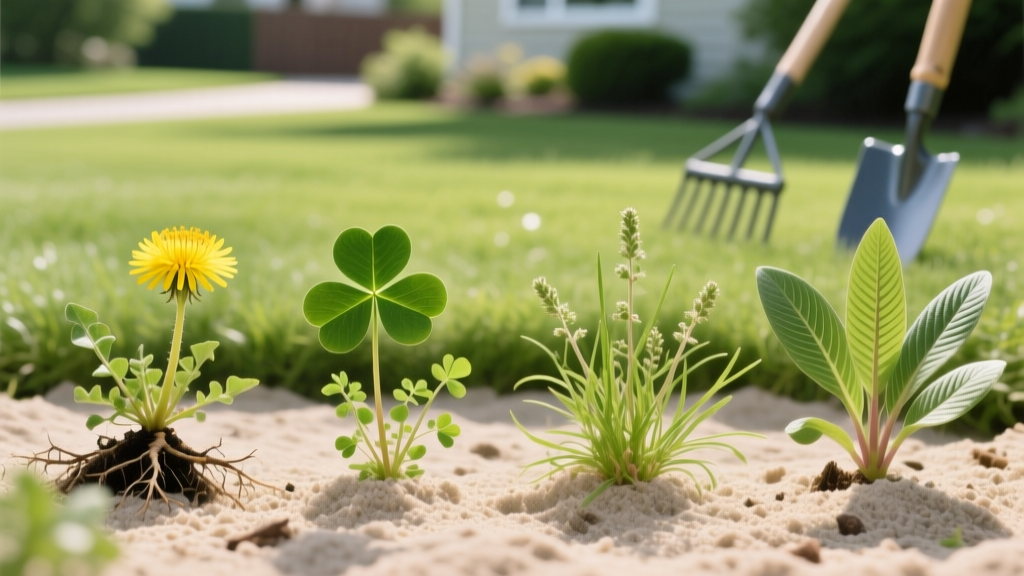
How to Identify Yard Weeds: Visual Guide to Common Lawn Invaders
The Botanical Divide: Grassy, Broadleaf, and Sedge Weeds
Effective weed control begins with accurate botanical classification. Before reaching for a broadcast herbicide, you must determine which of the three primary weed categories is invading your turf. Misidentification leads to wasted chemical applications, turf damage, and resilient weed populations. According to the University of Minnesota Extension, understanding the morphological differences between monocots, dicots, and sedges is the foundational step in integrated pest management (IPM) for residential lawns.
Pro Tip: The Ligule and Vernation Test
When trying to identify yard weeds that look like grass, examine the collar region where the leaf blade meets the sheath. Look for the ligule (a membranous or hairy appendage). Additionally, check the vernation (how the new leaf emerges). Crabgrass emerges folded, while goosegrass emerges folded but has a distinct silver-white crown.
When trying to identify yard weeds that look like grass, examine the collar region where the leaf blade meets the sheath. Look for the ligule (a membranous or hairy appendage). Additionally, check the vernation (how the new leaf emerges). Crabgrass emerges folded, while goosegrass emerges folded but has a distinct silver-white crown.
How to Identify Yard Weeds by Morphological Traits
Visual identification relies on examining specific plant structures: the leaf blade, the stem, the root system, and the inflorescence (seed head). Below is a quick-reference matrix to help you categorize the most common lawn invaders based on their physical characteristics.
| Weed Name | Category | Key Visual Identifier | Root / Spread Type |
|---|---|---|---|
| Crabgrass | Grassy | Flat, wide blades; roots at lower stem nodes | Fibrous, annual reseeding |
| Dandelion | Broadleaf | Deeply lobed leaves in a basal rosette; hollow stems | Deep, fleshy taproot |
| Yellow Nutsedge | Sedge | Triangular stem; shiny, light-green, V-shaped blades | Rhizomes and tubers (nutlets) |
| White Clover | Broadleaf | Three-leaflet leaves with white crescent marks | Stolons (above-ground runners) |
| Poa Annua | Grassy | Boat-shaped leaf tips; prolific white seed heads | Shallow fibrous, heavy seeder |
Grassy Weeds: The Mimics
Grassy weeds are monocots, meaning they share the same biological family as your turfgrass. This makes them notoriously difficult to treat with selective herbicides, as chemicals that kill the weed can also harm the lawn. Crabgrass (Digitaria sanguinalis) is identified by its prostrate growth habit, spreading outward like a starfish, with stems that root at the nodes. Goosegrass (Eleusine indica) is often confused with crabgrass but can be identified by its folded vernation and a distinct silver or white center at the crown. Annual Bluegrass (Poa annua) features a distinct boat-shaped leaf tip and produces seed heads even when mowed at 2 inches.
Broadleaf Weeds: The Dicots
Broadleaf weeds have wide, veiny leaves and are biologically distinct from turfgrass, making them easier to target with selective systemic herbicides. Dandelions feature a basal rosette of deeply toothed leaves and a thick, brittle taproot that snaps easily if pulled. Ground Ivy (Creeping Charlie) emits a distinct minty odor when crushed and features scalloped, round leaves connected by square stems. Plantain (Plantago major) grows in dense, low rosettes with thick, ribbed leaves that thrive in heavily compacted soils where turfgrass struggles.
Sedges: The Triangular Invaders
Sedges are neither grasses nor broadleaf weeds. The easiest way to identify yard weeds in this category is the tactile 'roll test'. If you roll the stem between your thumb and index finger and feel distinct edges, it is a sedge. As the University of California Statewide IPM Program notes, yellow nutsedge (Cyperus esculentus) grows significantly faster than surrounding turf in the heat of summer, often protruding two inches above the canopy just days after mowing. It reproduces via underground tubers (nutlets) that can remain dormant in the soil for up to three years.
Targeted Herbicide Selection and Application Rates
Once you accurately identify the weed, you must match it to the correct active ingredient. Blanket applications of generic 'weed and feed' products are largely ineffective against mature grassy weeds and sedges. Below are the professional-grade active ingredients and precise application rates for residential use.
- For Grassy Weeds (Crabgrass): Use Quinclorac (e.g., Drive XLR8). Apply at 1.45 fluid ounces per 1,000 square feet. Quinclorac mimics plant hormones, causing fatal tissue necrosis in susceptible grassy weeds. Note: It can cause temporary yellowing in St. Augustine and Bermuda grass.
- For Broadleaf Weeds (Dandelion, Clover): Use a three-way mixture of 2,4-D, MCPP, and Dicamba (e.g., Trimec Classic). Apply at 1.5 fluid ounces per 1,000 square feet. For eco-conscious homeowners or municipalities with 2,4-D restrictions, use FeHEDTA (Chelated Iron, e.g., Fiesta Turf Weeder) at 3 fluid ounces per 1,000 square feet. Broadleaf weeds cannot regulate iron uptake, leading to oxidative stress and death, while turfgrass remains unharmed.
- For Sedges (Yellow Nutsedge): Use Halosulfuron-methyl (e.g., SedgeHammer). Apply at 0.9 ounces per acre (roughly 1/3 teaspoon per 1,000 square feet). This sulfonylurea herbicide inhibits the ALS enzyme, halting amino acid synthesis specifically in sedges without harming cool- or warm-season turf.
"Herbicide efficacy drops by up to 40% if applied without a surfactant on waxy-leafed weeds like plantain or purslane. Always add a non-ionic surfactant (NIS) at a rate of 0.25% v/v (roughly 1/2 teaspoon per gallon of water) to break the water's surface tension and ensure the active ingredient penetrates the leaf cuticle."
Common Identification Mistakes and How to Avoid Them
Mistake 1: Confusing Nutsedge with Tall Fescue. Clump-forming tall fescue can look like nutsedge from a distance. Always perform the roll test. Fescue stems are round; nutsedge stems are triangular.
Mistake 2: Treating Poa Annua with Crabgrass Killer. Quinclorac does not control Poa annua. To manage Poa annua, you must use pre-emergent herbicides like Prodiamine in early fall (when soil temperatures drop below 70°F) or apply Mesotrione (Tenacity) as a post-emergent, which turns the Poa annua bright white before it dies.
Mistake 3: Pulling Mature Weeds Without the Root. Hand-pulling dandelions or plantain often leaves the bottom half of the taproot in the soil. The weed will regenerate within 10 to 14 days. Use a dedicated weed puller tool with a forked tip to extract the entire root system, or rely on systemic herbicides that translocate down to the root tip.
Frequently Asked Questions
Why do I need to identify yard weeds before buying a product?
Herbicides are highly specific. A product formulated for broadleaf weeds (like 2,4-D) will have absolutely zero effect on grassy weeds like crabgrass or sedges like nutsedge. Applying the wrong chemical wastes money, introduces unnecessary synthetic compounds into your soil, and delays effective treatment while the weed continues to drop seeds.
How can I identify a weed if it hasn't produced a seed head yet?
Focus on the vegetative traits: leaf shape, margin (smooth vs. toothed), venation (parallel vs. net-like), and stem structure. The ligule and auricle at the collar region are the most reliable identifiers for grassy weeds before they reach reproductive maturity.
Is there a single herbicide that kills all three weed categories?
No single active ingredient safely controls all grassy weeds, broadleaf weeds, and sedges simultaneously in all turf types. Professional lawn care operators achieve broad-spectrum control by tank-mixing specific chemicals (e.g., mixing a three-way broadleaf herbicide with a sedge-specific herbicide), but these combinations must be carefully calibrated to avoid turf phytotoxicity.

