
Lawn Care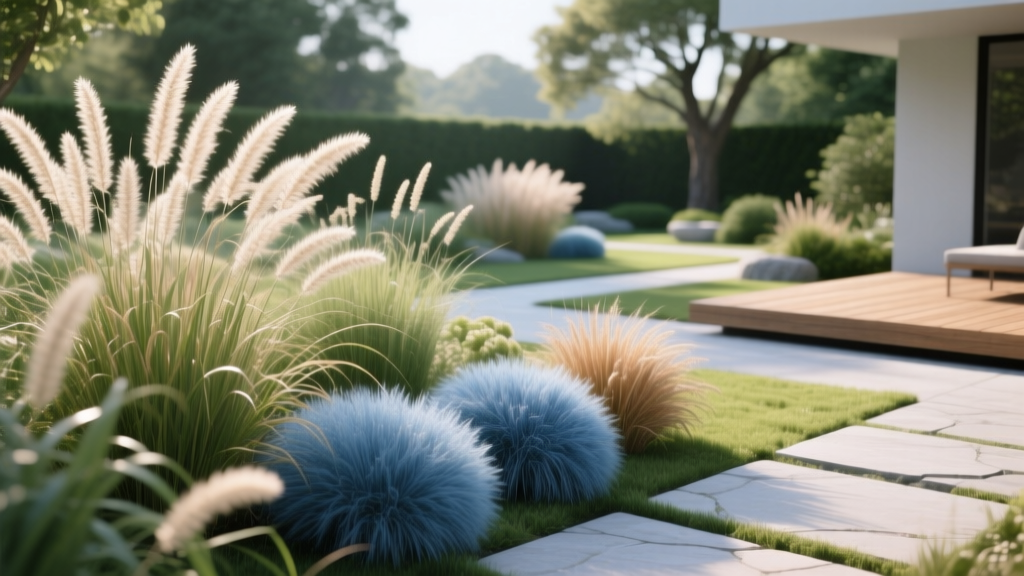
Identifying Types of Decorative Grass for Landscape Design
The Botanical Divide: Cool-Season vs. Warm-Season Grasses
Before selecting specific cultivars, you must understand the physiological divide between the primary types of decorative grass. Ornamental grasses are categorized by their photosynthetic pathways and seasonal growth cycles, which dictate when they green up, when they plume, and when they should be pruned.
Quick Identification Framework
- Cool-Season (C3 Pathway): Begin growing in early spring when soil temperatures hit 45°F. They peak in late spring/early summer, often going semi-dormant and browning during high-summer heat. Examples: Fescues, Calamagrostis, Helictotrichon.
- Warm-Season (C4 Pathway): Remain dormant and brown through spring, waiting until soil temperatures consistently reach 65°F to 70°F to push new growth. They thrive in peak summer heat and produce plumes in late summer to fall. Examples: Miscanthus, Pennisetum, Panicum, Schizachyrium.
According to University of Minnesota Extension, mixing both types in a single landscape bed ensures continuous visual interest, but requires staggered maintenance schedules to avoid cutting warm-season grasses too early or cool-season grasses too late.
Top Types of Decorative Grass by Landscape Function
Rather than choosing grasses solely by botanical family, landscape architects categorize them by their functional role in the garden. Here is a breakdown of the most reliable, commercially available cultivars for specific design needs.
1. Border, Edging, and Groundcover (Under 2 Feet)
These grasses provide textural contrast along walkways and retain soil on slopes without obscuring sightlines.
- Blue Fescue (Festuca glauca 'Elijah Blue'): A cool-season clumper forming tight, 10-inch domes of intense silver-blue foliage. It requires sharp drainage; heavy clay soils will cause crown rot within two seasons. Space plugs 12 inches apart for a continuous border.
- Japanese Forest Grass (Hakonechloa macra 'Aureola'): One of the few ornamental grasses that thrives in deep shade. Its arching, golden-variegated blades cascade like a waterfall, reaching 18 inches tall. It spreads slowly via rhizomes and requires consistent moisture.
2. Mid-Height Texture and Mass Planting (2 to 4 Feet)
Ideal for the middle layer of a perennial border, these grasses hide the fading foliage of spring-blooming bulbs and provide a backdrop for summer coneflowers.
- Dwarf Fountain Grass (Pennisetum alopecuroides 'Hameln'): A warm-season grass producing soft, bottlebrush plumes in late July. It reaches 2.5 feet tall and wide. Note that standard fountain grass can reseed aggressively; 'Hameln' is largely sterile in colder zones but may self-sow in Zones 8 and above.
- Switchgrass (Panicum virgatum 'Shenandoah'): An upright, warm-season native that turns deep burgundy in autumn. It is highly tolerant of poor soils, drought, and even brief periods of standing water, making it a versatile workhorse for rain gardens.
3. Privacy Screens and Winter Focal Points (5 to 8 Feet)
Tall grasses create kinetic privacy fences that rustle in the wind and remain standing through heavy snow loads.
- Feather Reed Grass (Calamagrostis x acutiflora 'Karl Foerster'): The gold standard for vertical accent. It shoots up to 6 feet with wheat-colored plumes in June. Because it is a sterile hybrid, it will not invade surrounding beds via seed. It is a cool-season grass, meaning it greens up weeks before warm-season alternatives.
- Zebra Grass (Miscanthus sinensis 'Zebrinus'): Features horizontal yellow bands across green blades. It reaches 7 feet tall and requires a 4-foot diameter footprint. Warning: High-nitrogen soils will cause the tall stems to lodge (flop over) during late summer storms.
2026 Cultivar Comparison and Nursery Pricing Matrix
When budgeting a landscape installation, understanding the cost-per-plant based on container size is critical. The table below outlines current 2026 wholesale-to-retail pricing averages for these specific types of decorative grass.
| Cultivar | Botanical Name | Mature Size (H x W) | USDA Zones | Water Needs | 1-Gallon Price | 3-Gallon Price |
|---|---|---|---|---|---|---|
| 'Elijah Blue' | Festuca glauca | 1' x 1' | 4-8 | Low | $8 - $12 | $22 - $28 |
| 'Aureola' | Hakonechloa macra | 1.5' x 2' | 5-9 | Medium | $14 - $18 | $35 - $45 |
| 'Hameln' | Pennisetum alopecuroides | 2.5' x 2.5' | 5-9 | Low-Med | $15 - $20 | $38 - $48 |
| 'Karl Foerster' | Calamagrostis x acutiflora | 6' x 2.5' | 4-9 | Low-Med | $16 - $22 | $42 - $55 |
| 'Zebrinus' | Miscanthus sinensis | 7' x 4' | 5-9 | Low | $18 - $24 | $45 - $60 |
Installation Rules: Avoiding Crown Rot
The most common cause of ornamental grass failure in the first 18 months is improper planting depth. Grasses are highly susceptible to crown rot if the central growing point is buried under soil or heavy mulch.
The Crown Rule: When planting decorative grasses, the top of the root ball's crown must sit exactly 0.5 inches above the surrounding soil grade. Water will naturally settle the plant slightly over the first month. Never mound mulch against the center of the clump; maintain a 3-inch mulch-free halo around the crown.
For heavy clay soils, amend the backfill with 30% expanded shale or pine bark fines to improve percolation. According to Penn State Extension, ensuring adequate drainage during winter dormancy is more critical for grass survival than summer irrigation.
Maintenance, Pruning, and Division
Ornamental grasses thrive on neglect, but they do require specific seasonal interventions to maintain structural integrity.
The Pruning Schedule
Never cut back warm-season grasses in the fall. The dried foliage and seed heads protect the crown from freeze-thaw cycles and provide essential winter forage for native birds. Wait until late February or early March, just before new green shoots emerge at the base.
- Warm-Season Cutback: Use a cordless hedge trimmer or a reciprocating saw with a pruning blade to cut the entire clump down to a 4-to-6-inch stubble. Hand pruners are too slow for mature Miscanthus clumps.
- Cool-Season Cutback: These should be cleaned up in late fall or early winter. Remove only the dead, brown foliage from the outer edges, being careful not to snip the green, actively growing center.
Troubleshooting Center Die-Out
After 4 to 7 years, most clump-forming decorative grasses will exhibit 'center die-out'—a ring of vigorous green growth surrounding a dead, thatchy core. This is a natural aging process, not a disease.
The Fix: In early spring, use a sharp spade to dig up the entire root mass. Lay it on its side and use a reciprocating saw to quarter the root ball. Discard the dead center section. Replant the vigorous outer quarters in the garden, spacing them 24 to 36 inches apart to establish new, rejuvenated clumps.
Fertilization and Flopping
Do not apply standard turfgrass fertilizer (which is typically high in nitrogen, like a 24-4-12 NPK) to ornamental grasses. Excess nitrogen causes rapid, weak cellular growth in the stems, resulting in severe lodging (flopping) when the plumes emerge and catch the wind. If a soil test indicates severe nutrient deficiency, apply a low-nitrogen, slow-release organic fertilizer (such as a 4-2-4 NPK) at half the recommended rate for standard lawns, strictly in early spring.

