
Lawn Care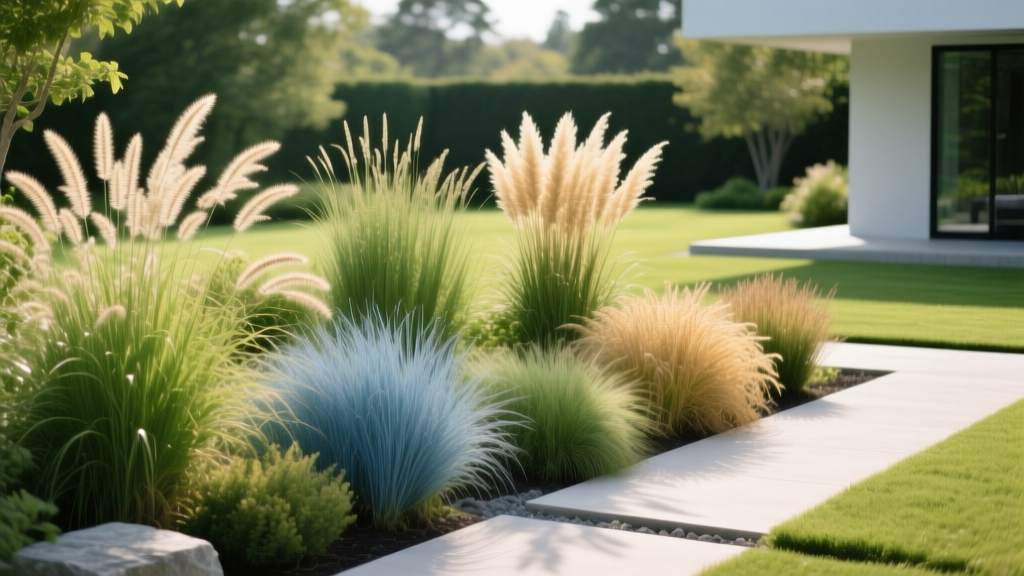
Identifying Types of Ornamental Grass for Landscape Design
Ornamental grasses bridge the gap between structural hardscaping and soft perennial borders. Unlike turfgrasses bred for low-mown density and heavy foot traffic, ornamental varieties are selected for architectural form, inflorescence (seed heads), and seasonal color shifts. When integrating these plants into your landscape, understanding the specific botanical traits of different types of ornamental grass is critical for long-term survival, aesthetic success, and minimizing maintenance.
This identification and selection guide breaks down the physiological differences between major grass categories, provides exact cultivar specifications, and outlines the precise planting and pruning frameworks required to keep them from flopping, rotting, or becoming invasive.
The Botanical Divide: Cool-Season vs. Warm-Season Grasses
The most common mistake homeowners make is treating all ornamental grasses with the same seasonal timeline. Grasses are divided by their photosynthetic pathways, which dictate their growth cycles, water needs, and pruning schedules.
Growth Cycle Framework
Cool-Season Grasses (C3 Pathway): These grasses push the majority of their growth in early spring and fall. They remain semi-evergreen in mild climates but often go dormant or suffer tip-burn during peak summer heat (above 85°F). Examples: Fescues, Tufted Hairgrass, Moor Grass.
Warm-Season Grasses (C4 Pathway): These varieties remain dormant and brown through spring, waiting until soil temperatures consistently exceed 65°F to break dormancy. They peak in late summer, produce dramatic fall plumes, and go fully dormant after the first hard freeze. Examples: Miscanthus, Switchgrass, Fountain Grass.
Identifying Top Cool-Season Ornamental Grasses
Cool-season types of ornamental grass are ideal for providing early-season color and texture. However, they are highly susceptible to crown rot if planted in poorly draining soils.
Blue Fescue (Festuca glauca)
Blue fescue is a low-growing, clumping grass prized for its intense silvery-blue foliage. The cultivar 'Elijah Blue' is the industry standard, maintaining tighter mounds and more vivid coloration than the straight species.
- Mature Dimensions: 8 to 12 inches tall and wide.
- USDA Hardiness Zones: 4 to 8.
- Site Requirements: Requires sharp drainage. It will rapidly decline in heavy, unamended clay soils. Plant on berms or slopes.
- Maintenance Gotcha: The center of the clump will naturally die out after 3 to 4 years. You must dig up and divide the clump in early spring, discarding the dead center and replanting the vigorous outer edges.
Feather Reed Grass (Calamagrostis x acutiflora)
Unlike many ornamental grasses that look sparse in early summer, Feather Reed Grass produces its wheat-colored inflorescences by late spring. The 'Karl Foerster' cultivar is a landscape staple due to its rigid, upright habit that resists lodging (flopping) in heavy rain.
- Mature Dimensions: 3 to 5 feet tall (including plumes), 2 feet wide.
- USDA Hardiness Zones: 5 to 9.
- Ecological Note: 'Karl Foerster' is a sterile hybrid. It will not self-seed and spread aggressively into naturalized areas, making it a safe choice near meadows or wetlands.
Identifying Top Warm-Season Ornamental Grasses
Warm-season grasses provide the dramatic late-summer privacy screens and winter architectural interest that define modern landscape design.
Maiden Grass (Miscanthus sinensis)
Maiden grass offers massive scale and striking winter presence. However, identification and selection require careful attention to local regulations. According to the NC State Plant Database, certain fertile cultivars of Miscanthus have escaped cultivation in parts of the Mid-Atlantic and Southeast, leading to invasive species warnings.
Warning on Invasiveness: Before planting Miscanthus sinensis, check your state's Department of Agriculture noxious weed list. If you are in an affected zone (such as Maryland or New York), pivot to sterile cultivars like 'Bandwith' or substitute with native Switchgrass (Panicum virgatum).
Switchgrass (Panicum virgatum)
A native North American prairie grass, Switchgrass is exceptionally resilient. The 'Heavy Metal' cultivar features metallic blue-green stems that turn brilliant yellow in autumn.
- Root Structure: Switchgrass develops a taproot system that can extend up to 10 feet deep. This makes it virtually drought-proof once established but nearly impossible to transplant after year two.
- Spacing: Plant 24 to 30 inches on center. Do not crowd, as poor air circulation at the base invites rust fungus.
Ornamental Grass Identification & Selection Matrix
Use this comparison chart to match the right types of ornamental grass to your specific microclimate and design requirements.
| Botanical Name | Common Name | Mature Height | Bloom Time | Moisture Tolerance |
|---|---|---|---|---|
| Festuca glauca | Blue Fescue | 8-12 in. | Early Summer | Dry / Drought |
| Calamagrostis x acutiflora | Feather Reed Grass | 3-5 ft. | Late Spring | Average to Wet |
| Miscanthus sinensis | Maiden Grass | 5-8 ft. | Late Summer | Average / Well-drained |
| Panicum virgatum | Switchgrass | 4-6 ft. | Mid-Summer | Highly Drought Tolerant |
| Pennisetum alopecuroides | Fountain Grass | 2-4 ft. | Late Summer | Average / Occasional Dry |
Site Selection and Soil Preparation Framework
According to Penn State Extension, the primary cause of ornamental grass failure in residential landscapes is over-amending the soil. Follow this strict planting protocol to ensure structural integrity:
- Test the Drainage: Dig a 12-inch test hole and fill it with water. If it does not drain within 4 hours, you must either install a French drain, plant on a raised berm, or switch to a moisture-tolerant species like Calamagrostis.
- Skip the Fertilizer: Never mix high-nitrogen fertilizers or rich compost into the backfill soil. Excess nitrogen causes rapid, weak cellular growth in the stems, resulting in 'flopping' where the grass collapses under the weight of its own plumes.
- Grade Matching: Plant the root ball so the top of the nursery soil is exactly level with or slightly above (by 1/2 inch) the surrounding grade. Burying the crown of an ornamental grass by even one inch will trigger fatal crown rot within a single wet spring.
- Mulching Protocol: Apply a 2-inch layer of shredded hardwood bark, but keep the mulch pulled back at least 3 inches from the central crown of the grass to allow for air circulation.
Maintenance: The 'Less is More' Pruning Rule
Identifying the correct pruning window is just as important as selecting the right plant. Cutting back warm-season grasses in the fall destroys their winter architectural value and exposes the hollow stems to freezing water, which can rot the crown.
When to Cut Back
Leave all warm-season grasses standing through the winter. Schedule your cutback for late winter to early spring—typically late February in Zone 7, or mid-April in Zone 5. The golden rule is to cut the grass down before the new green basal growth exceeds 3 inches in height. If you cut after the new shoots emerge, you will blunt the tips of the new growth, resulting in a ragged, brown appearance that lasts all summer.
How to Execute the Cut
For small clumps like Blue Fescue, use handheld bypass pruners to cut the foliage down to a 2-inch stubble. For massive clumps like Miscanthus or large Switchgrass, hand pruners are inefficient. Use the bungee cord method:
- Wrap a heavy-duty bungee cord tightly around the entire clump about 18 inches above the ground to bind the stems together.
- Use a gas-powered hedge trimmer or a reciprocating saw with a pruning blade to cut through the bound stems 4 to 6 inches above the soil line.
- Lift the entire bound bundle off the crown in one piece, saving you from raking thousands of sharp, splintered grass blades out of the landscape bed.
By matching the specific physiological traits of these types of ornamental grass to your site's exact soil and light conditions, you establish a dynamic, low-input landscape that provides year-round movement and structure without the constant maintenance required by traditional perennial borders.

