
Lawn Care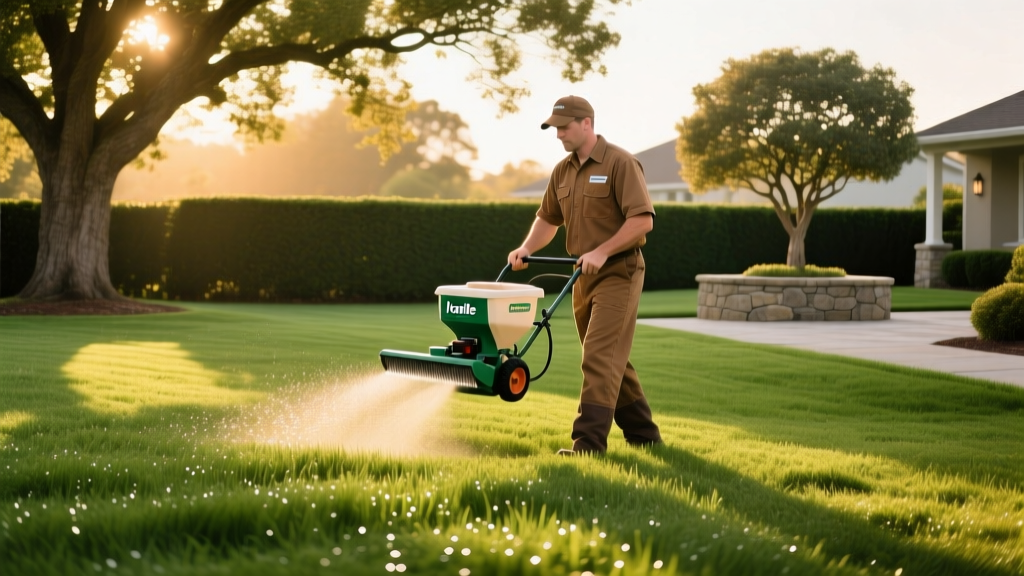
Ironite Fertilizer Application Guide: Greener Grass Without the Burn
Yellowing grass despite regular nitrogen fertilization usually points to iron chlorosis, not a nitrogen deficiency. When turfgrass lacks iron, it cannot synthesize chlorophyll efficiently, resulting in pale, yellowish blades with dark green veins. Ironite fertilizer is specifically formulated to correct this micronutrient deficiency without triggering the rapid, weak growth spurts associated with high-nitrogen fertilizers.
However, applying iron incorrectly can lead to permanent rust stains on your hardscaping or complete failure to green up your lawn due to soil pH lockout. This guide details the exact formulations, application rates, and soil chemistry requirements to get a dark green lawn using Ironite in 2026.
The Science of Iron Deficiency in Turfgrass
Iron is a catalyst for chlorophyll production. Unlike nitrogen, which is a structural building block of the plant, iron is an enzyme activator. When iron is deficient, the newest leaves at the top of the grass canopy turn yellow first (interveinal chlorosis), while older leaves remain green.
Most soils actually contain plenty of iron, but it is often locked up in an insoluble form. This lockout is primarily driven by soil pH. According to university soil management extensions, iron becomes highly unavailable to plant roots when soil pH rises above 7.0. In alkaline soils, iron oxidizes and binds with calcium and phosphorus, rendering it useless to your turf. Understanding your soil pH is the mandatory first step before purchasing any iron supplement.
Granular vs. Liquid Ironite: Formulation Breakdown
Pennington manufactures several variations of Ironite. Choosing the wrong formula for your specific soil conditions is the most common reason homeowners fail to see results. Below is a direct comparison of the two primary formulations available on the market.
| Feature | Ironite 1-0-1 (Granular) | Ironite Plus (Liquid Hose-End) |
|---|---|---|
| NPK Ratio | 1-0-1 | 0-0-0 (Micronutrients only) |
| Iron Source | Iron Sulfate & Iron Oxide | Chelated Iron (EDTA) |
| Application Rate | 10 lbs per 1,000 sq ft | 1 bottle (32 oz) per 4,000 sq ft |
| Average Cost (2026) | $15 - $18 (10 lb bag) | $12 - $15 (32 oz bottle) |
| Best Soil pH | Acidic to Neutral (5.5 - 7.0) | Neutral to Alkaline (7.0 - 8.5) |
| Speed of Results | 5 to 10 days (requires watering in) | 24 to 48 hours (foliar absorption) |
The High-pH Trap: Why Granular Ironite Might Fail
If your soil test reveals a pH of 7.2 or higher, do not buy granular Ironite 1-0-1. The iron sulfate in the granular formula will immediately react with the alkaline soil and precipitate out of the soil solution. Your grass roots will not be able to absorb it. Instead, you must use a liquid formula containing chelated iron (like Ironite Plus or a dedicated Fe-EDDHA product). Chelation wraps the iron molecule in an organic shell, protecting it from alkaline lockout and allowing the grass to absorb it directly through the leaf tissue (foliar feeding).
Step-by-Step Granular Application Guide
For lawns with a pH below 7.0, granular Ironite 1-0-1 is the most cost-effective and long-lasting option. Follow these exact steps to ensure even coverage and prevent hardscape damage.
- Calibrate Your Spreader: Set your broadcast spreader to the dial setting indicated on the back of the Ironite bag. For a standard Scotts Classic Rotary Spreader, this is typically between 3 and 4. Do not guess the setting; an incorrect dial will result in striping (alternating dark and light green bands).
- Apply to Dry Grass: Apply the granules when the grass blades are completely dry. If the grass is wet from morning dew, the heavy iron granules will stick to the blades, potentially causing localized foliar burn and preventing the product from reaching the soil.
- Sweep Hardscapes Immediately:
Critical Warning: Ironite contains iron sulfate. When iron sulfate gets wet on concrete, brick, or stone, it oxidizes and creates deep, permanent rust stains that standard power washing cannot remove. Always use a stiff broom to sweep stray granules off driveways and sidewalks back onto the lawn before watering. Never use a leaf blower, as it will scatter the granules into landscape beds and onto patios.
- Water It In: Apply 0.25 to 0.5 inches of water immediately after application. This dissolves the granules and carries the iron sulfate into the top inch of the soil profile where the feeder roots are actively absorbing nutrients.
Troubleshooting: When Ironite Doesn't Work
If you have applied Ironite at the correct rate and your lawn is still yellow after 14 days, one of three underlying issues is preventing nutrient uptake.
1. Severe Soil Compaction
Iron mobility in soil is naturally low. If your soil is heavily compacted clay, the dissolved iron cannot reach the root zone. Core aeration is required before applying iron supplements to compacted lawns to create physical channels for the nutrient to penetrate.
2. Excessive Phosphorus Levels
Phosphorus and iron are antagonistic in the soil. If you have been using heavy 'weed and feed' products or starter fertilizers high in phosphorus (the middle number in NPK) for years, the phosphorus will bind with iron, creating insoluble iron phosphate. Run a comprehensive soil test. If phosphorus levels are 'High' or 'Very High', halt all phosphorus applications and switch strictly to foliar liquid iron sprays to bypass the soil entirely.
3. Misdiagnosed Fungal Disease
Iron chlorosis presents as uniform yellowing of new growth. If your lawn has irregular, expanding brown or yellow patches with distinct margins, you are likely dealing with a fungal pathogen like Brown Patch or Dollar Spot, not a nutrient deficiency. Applying iron will not cure fungal diseases and the added moisture from watering in the granules may exacerbate the infection.
Frequently Asked Questions
Will Ironite burn my lawn in the summer heat?
Because Ironite 1-0-1 contains only 1% nitrogen, it carries a very low risk of 'nitrogen burn' compared to standard 30-0-5 synthetic fertilizers. However, applying any granular product when ambient temperatures exceed 90°F can cause osmotic stress. Apply Ironite in the early morning or late evening during summer months, and water it in immediately.
Can I apply Ironite at the same time as a pre-emergent herbicide?
Yes. Ironite is a micronutrient supplement and does not chemically interfere with pre-emergent herbicides like Prodiamine or Dithiopyr. In fact, combining them in a single spreader pass (if the physical granule sizes are similar) saves time. Just ensure the combined application rates do not exceed your spreader's hopper capacity.
How often should I apply Ironite?
For cool-season grasses (Fescue, Kentucky Bluegrass), apply once in early spring and once in early fall. For warm-season grasses (Bermuda, Zoysia), apply in late spring and mid-summer. Do not exceed four applications per year. Over-applying iron can lead to manganese deficiency, as excess iron blocks manganese uptake at the root level.

