
Lawn Care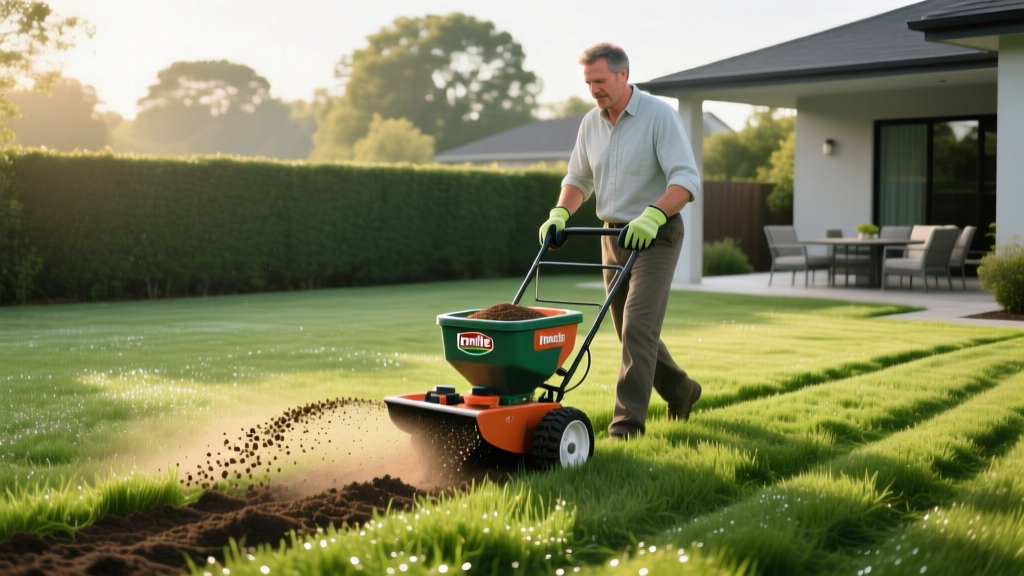
Ironite for Lawns: Application Rates, Timing, and Stain Prevention
The Formulation Shift: Modern Ironite vs. Legacy Products
If you have used Ironite in the past, you likely remember it as a dark, heavy granular product that rapidly greened up a lawn. That legacy product was mined ironite, a byproduct of iron ore mining that contained high levels of soluble iron but also trace heavy metals like lead and arsenic. Due to environmental regulations and safety concerns, the original mined formulation was discontinued.
Today, the Ironite brand is owned by Pennington. The modern Pennington Ironite Liquid Lawn & Garden Supplement and their granular alternatives rely on synthetically chelated iron and specific micronutrient blends. Understanding this shift is critical for calculating correct application rates and setting realistic expectations for soil nutrition.
| Feature | Legacy Mined Ironite (Pre-2010s) | Modern Pennington Ironite (2026 Formulations) |
|---|---|---|
| Primary Iron Source | Mined ironite (iron sulfate variants) | Chelated iron (EDTA/DTPA) or liquid iron sulfate |
| NPK Ratio | 1-0-1 (with 12%+ Iron) | Varies (Liquid supplement is typically 0-0-0 with 5% Chelated Iron) |
| Heavy Metal Risk | Moderate (Lead/Arsenic traces) | Negligible (Synthetically chelated) |
| Concrete Staining | Severe and difficult to remove | Moderate (Liquid stains less if diluted, but granular still stains) |
| Average Cost (2026) | N/A (Discontinued) | $18-$24 per 32oz liquid bottle (covers ~3,200 sq ft) |
Diagnosing the Yellowing: Iron Chlorosis vs. Nitrogen Starvation
Before applying Ironite for lawns, you must confirm that iron deficiency is actually the problem. Homeowners frequently misdiagnose nitrogen deficiency as iron chlorosis, leading to wasted money and potential turf burn.
Symptom Checker: Is Your Lawn Iron Deficient?
- Iron Chlorosis: New growth (the youngest leaves at the top of the grass blade) turns yellow first. The veins of the leaf remain distinctly green while the tissue between the veins turns yellow (interveinal chlorosis).
- Nitrogen Deficiency: Older growth (the lower, mature leaves) turns yellow first. The yellowing is uniform across the entire leaf blade, including the veins, and the lawn exhibits stunted, slow growth.
According to turfgrass pathology experts at the University of Florida IFAS Extension, iron is an immobile nutrient within the plant. Because the grass cannot translocate iron from older leaves to newer ones, deficiency symptoms always manifest in the newest growth first. If your entire lawn is uniformly pale and growing slowly, you need a nitrogen-rich fertilizer, not Ironite.
The Soil pH Trap: Why Ironite Might Not Work
The most common reason Ironite fails to green up a lawn is improper soil pH. Iron is highly sensitive to soil alkalinity. In soils with a pH above 7.2, iron rapidly oxidizes and binds with calcium and phosphorus, forming insoluble compounds that grass roots cannot absorb.
If your soil pH is 7.5 or higher, applying standard granular iron sulfate (often found in cheaper generic brands) is virtually useless. The Colorado State University Extension notes that in high-pH soils, foliar applications (spraying liquid iron directly onto the grass blades) are significantly more effective than soil applications because the nutrient bypasses the root zone entirely.
Step-by-Step pH Management Protocol
- Test the Soil: Use a digital soil pH meter or send a core sample to a local university extension lab. Do not rely on cheap, color-changing liquid test kits for precise micronutrient management.
- Lower the pH (If necessary): If pH is between 7.0 and 7.5, apply elemental sulfur at a rate of 1 to 2 lbs per 1,000 square feet in the fall or early spring. Note that sulfur takes 3 to 6 months to react in the soil.
- Choose the Right Chelate: If your pH is above 7.5 and you cannot lower it quickly, standard Ironite liquid (chelated with EDTA) will still lock up. You must upgrade to an Fe-EDDHA chelated iron product (like Southern Ag Chelated Iron or Sequestrene 138), which remains stable and available to the plant up to pH 9.0.
Exact Application Rates and Timing
When applying Pennington Ironite Liquid or a comparable chelated iron supplement, precision is required to avoid phytotoxicity (leaf burn) and maximize absorption.
Liquid Ironite Application Protocol
- Rate: Apply 2 to 4 fluid ounces of liquid Ironite per 1,000 square feet. Mix with 1.5 to 2 gallons of water to ensure even coverage.
- Timing: Apply in the early morning or late evening. Never apply liquid iron when temperatures exceed 85°F, as the rapid evaporation concentrates the salts on the leaf blade, causing severe tip burn.
- Surfactant: Add 1/2 teaspoon of a non-ionic surfactant (like dish soap or a dedicated turf wetting agent) per gallon of water. This breaks the surface tension of the water, allowing the iron solution to spread evenly across the waxy grass cuticle rather than beading up and rolling off.
- Frequency: Liquid iron provides a rapid green-up (visible in 24 to 48 hours) but degrades quickly. Reapply every 14 to 21 days during the active growing season for sustained color.
Granular Chelated Iron Protocol
If using a modern granular iron supplement, apply at a rate of 2 to 3 lbs per 1,000 square feet using a broadcast spreader. Granular iron relies on soil moisture to dissolve and move into the root zone. Always apply granular iron immediately before a scheduled irrigation cycle or a moderate rainfall event.
⚠️ Concrete Stain Prevention Warning
Iron products will leave permanent, rust-colored stains on concrete driveways, sidewalks, and stone patios. Never sweep spilled granular iron or iron-tainted grass clippings off concrete; sweeping grinds the particles into the porous surface. Instead, use a leaf blower to remove dry granules immediately. If liquid iron splashes onto concrete, rinse it with a high-pressure hose within 5 minutes. For existing stains, a commercial rust remover containing oxalic acid is required to dissolve the iron oxide bond.
Cost Analysis: Ironite vs. Generic Chelated Iron
Brand-name Ironite carries a premium. For homeowners managing large properties (over 5,000 square feet), evaluating the cost-per-ounce of actual chelated iron is a necessary financial step.
- Pennington Ironite Liquid (32oz): Costs approximately $20. Yields roughly 4 to 8 applications per 1,000 sq ft. Cost per 1,000 sq ft application: $2.50 to $5.00.
- Generic 5% Chelated Liquid Iron (1 Gallon): Costs approximately $35 to $45 from agricultural suppliers. Yields up to 40 applications per 1,000 sq ft. Cost per 1,000 sq ft application: $0.87 to $1.12.
For small urban lawns, the convenience of the hose-end Ironite bottle justifies the cost. For expansive suburban or rural properties, purchasing bulk generic chelated iron (ensure it is EDTA or DTPA chelated) and using a pump sprayer will reduce annual micronutrient costs by over 70%.
Frequently Asked Questions
Can I mix Ironite with broadleaf weed killers?
Yes, liquid iron can generally be tank-mixed with systemic herbicides like 2,4-D or Triclopyr. However, adding iron to a herbicide mixture increases the overall salt load of the solution. To prevent turf burn, reduce the herbicide rate by 10% and ensure you are applying during cool weather (below 80°F).
Will Ironite lower my soil pH?
No. Modern Ironite formulations contain chelated iron, which does not have an acidifying effect on the soil. If you are using legacy iron sulfate (ferrous sulfate), it has a mild acidifying effect, but it is not sufficient to correct highly alkaline soils. Use elemental sulfur or liquid sulfur amendments to lower pH.
Why did my lawn turn black after applying Ironite?
A dark, almost black appearance is a sign of over-application or application during high heat. The iron salts have desiccated the leaf tips, causing localized necrosis. Water the lawn deeply for 20 minutes to wash excess salts off the blades and into the soil, and refrain from mowing until the grass recovers and pushes new green growth from the crown.

