
Lawn Care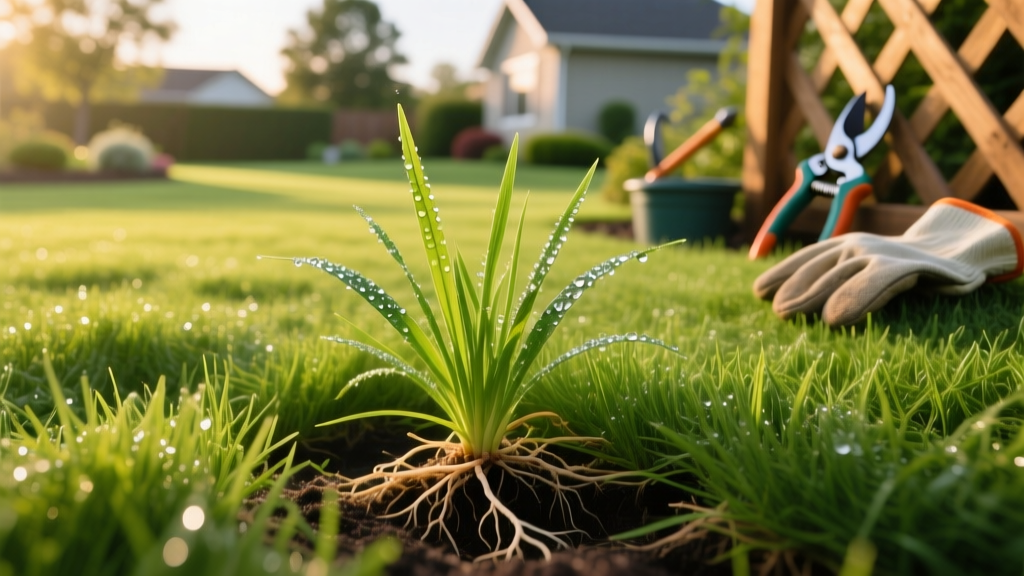
Is Grass Living? Understanding Turfgrass Biology and Care
The Biological Reality: Your Lawn is Not a Carpet
When homeowners look out at their yard, they often see a uniform green carpet. This visual illusion leads to a fundamental misunderstanding of turfgrass maintenance. To answer the foundational question—is grass living?—the answer is an absolute yes. Grass is not a static landscaping material; it is a complex, living organism comprised of millions of individual plants competing for resources, reacting to environmental stress, and undergoing continuous cellular metabolism.
A single square foot of a healthy Kentucky Bluegrass lawn contains roughly 800 to 1,200 individual grass plants. Each of these plants possesses a root system, a vascular network (xylem and phloem), and a crown—the critical growing point located at the soil surface. Understanding that your lawn is a living biological entity is the first step toward transitioning from reactive lawn repair to proactive turfgrass management. According to the NC State University TurfFiles database, treating turfgrass as a living crop rather than a static surface drastically reduces the incidence of fungal pathogens and environmental stress damage.
Expert Insight: The crown of the grass plant is its lifeline. Located right at the soil line, the crown contains the meristematic tissue responsible for generating new leaves and roots. If the leaf blades are destroyed by drought or mowing, the plant can regenerate—as long as the living crown remains hydrated and intact. If the crown dries out or is physically severed, the plant dies.
Photosynthesis and Respiration: The Lawn's Metabolic Engine
Like all living organisms, grass must generate energy to survive. It does this through two distinct but interconnected biological processes: photosynthesis and cellular respiration. While most gardeners are familiar with photosynthesis—the process of converting sunlight, water, and carbon dioxide into glucose—cellular respiration is equally critical and frequently misunderstood.
The Hidden Need for Soil Oxygen
Cellular respiration occurs in the root zone. The roots consume oxygen to break down the glucose produced in the leaves, converting it into ATP (adenosine triphosphate), the energy currency required for nutrient uptake and cellular division. Turfgrass roots require a minimum of 10% to 15% oxygen concentration in the soil pore space to maintain this process.
This biological requirement explains why soil compaction is so lethal to lawns. When foot traffic, heavy mowers, or clay-heavy soils compress the earth, the macropores that hold air are crushed. Soil oxygen levels drop below 5%, triggering root asphyxiation. The living roots literally suffocate, which manifests above ground as thinning turf, shallow rooting, and increased vulnerability to drought. The Penn State Extension Turfgrass Program emphasizes that core aeration is not merely a mechanical task; it is a biological intervention designed to restore the oxygen supply required for root respiration.
Dormancy vs. Death: How to Tell the Difference
Because grass is a living organism, it has evolved survival mechanisms to endure extreme environmental stress. The most common of these is dormancy. During severe summer droughts or freezing winter temperatures, turfgrass will intentionally shut down its above-ground growth, allowing the leaf blades to turn brown while preserving moisture and energy in the living crown and root system.
Homeowners frequently mistake dormancy for death, leading to unnecessary and expensive lawn renovations. Use the diagnostic matrix below to determine the true biological state of your brown lawn.
| Diagnostic Indicator | Dormant (Living) | Dead (Necrotic) |
|---|---|---|
| The Tug Test | Plant resists pulling; roots are firmly anchored in the soil. | Plant pulls up effortlessly with no root resistance; roots may be rotted. |
| Crown Inspection | The base of the plant (crown) feels firm and appears white or pale green inside. | The crown is mushy, brittle, or completely brown and dry. |
| Pattern of Browning | Uniform browning across the entire lawn or specific sun-exposed zones. | Irregular, localized patches often indicating fungal disease or insect feeding. |
| Recovery Timeline | Greens up within 10 to 14 days after deep watering or seasonal temperature shifts. | No recovery regardless of water or temperature; requires reseeding or sodding. |
How Biological Needs Dictate Lawn Care Practices
Once you accept that grass is a living entity with specific metabolic requirements, standard lawn care practices transform from arbitrary chores into targeted biological support systems.
The 1/3 Mowing Rule and Cellular Stress
Grass blades are essentially solar panels. When you mow, you are removing a portion of the plant's energy-gathering apparatus. The universally recommended 'one-third rule'—never removing more than 33% of the leaf blade in a single mowing session—is rooted in plant physiology. Scalping the lawn by cutting off more than half the blade induces severe cellular stress. To survive the sudden loss of photosynthetic capacity, the living grass plant will cannibalize its own root mass for stored carbohydrates. This causes the root system to shrink by up to 40% within a single growth cycle, leaving the plant highly susceptible to heat stress and nutrient deficiencies.
Fertilization: Feeding the Soil Microbiome
Living grass relies on a symbiotic relationship with soil microbes to process nutrients. When you apply synthetic nitrogen, you are providing a direct chemical food source. However, applying excessive quick-release nitrogen (like urea) forces the grass into rapid, unnatural cellular expansion. This produces weak, succulent leaf tissue with thin cell walls that are highly attractive to turfgrass pests like chinch bugs and armyworms. A biologically sound approach utilizes slow-release, methylene-urea based fertilizers that feed the living soil microbiome gradually, allowing the grass to build dense, lignin-rich cell walls that naturally resist disease.
Frequently Asked Questions About Turfgrass Biology
Does grass feel pain when it is mowed?
No. While grass is undeniably living, it lacks a central nervous system, nociceptors (pain receptors), and a brain to process sensory input. When grass is cut, it releases volatile organic compounds (VOCs)—specifically green leaf volatiles (GLVs)—which create that distinct 'fresh cut grass' smell. This is not a cry of pain, but rather a chemical distress signal designed to attract predatory insects that will eat the herbivores damaging the plant, and to trigger defense mechanisms in neighboring plants.
Does grass stop growing entirely in the winter?
Cool-season grasses (like Tall Fescue and Kentucky Bluegrass) do not completely stop living or growing during mild winter spells. While above-ground blade growth halts when soil temperatures drop below 40°F, the living root system continues to slowly expand and store carbohydrates throughout the winter months, preparing for the spring flush. Warm-season grasses (like Bermuda and Zoysia) enter a much deeper, hard dormancy when soil temperatures fall below 55°F, effectively pausing all visible metabolic activity until spring.
Can grass reproduce on its own?
Yes. Turfgrass is a living plant that reproduces both sexually (through seed heads) and asexually (through vegetative propagation). Grasses spread laterally via above-ground stems called stolons (e.g., Bermuda, St. Augustine) or below-ground stems called rhizomes (e.g., Kentucky Bluegrass, Zoysia). These living nodes root into the soil at intervals, creating new, genetically identical clones of the parent plant, which is how a single seed eventually forms a dense, interconnected sod.
Final Takeaway: Shifting your perspective from 'maintaining a yard' to 'managing a living ecosystem' is the hallmark of advanced lawn care. By respecting the biological imperatives of respiration, photosynthesis, and cellular stress, you can drastically reduce water usage, minimize chemical inputs, and cultivate a deeply rooted, resilient turf.

