Lawn Care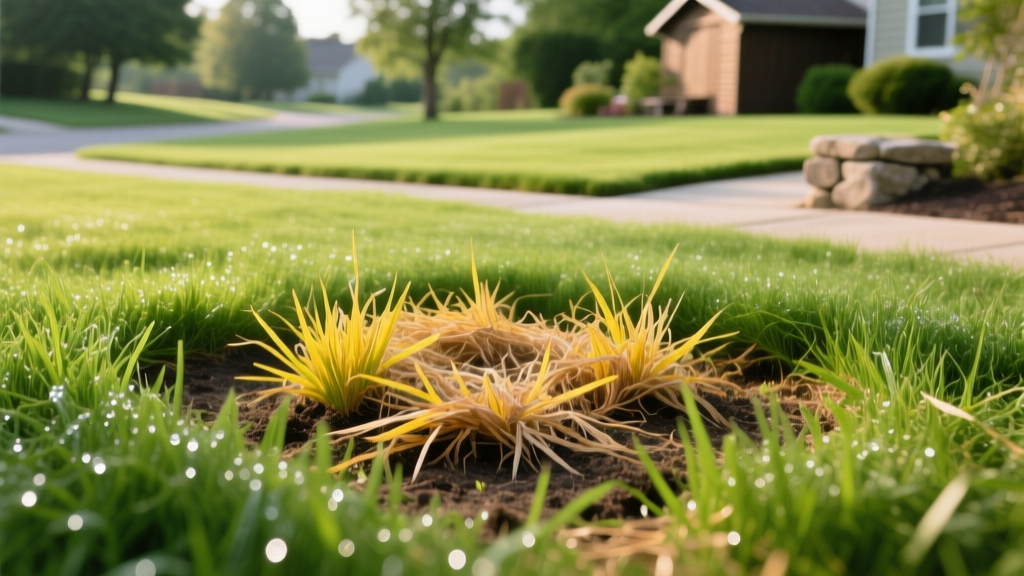
Best Johnson Grass Killer Options for Lawn Spot-Treatment
The Biology of the Invasion: Why Spot-Treatment is Complex
Johnson grass (Sorghum halepense) is widely considered one of the most difficult weeds to eradicate from residential lawns. Unlike standard annual grassy weeds like crabgrass, Johnson grass is a vigorous perennial that spreads via both seeds and an extensive, deeply rooted rhizome system. According to the University of California Integrated Pest Management (UC IPM) program, these rhizomes can penetrate up to four feet into the soil, allowing the weed to survive drought, frost, and superficial cultivation.
Furthermore, Johnson grass exhibits allelopathy—it releases natural herbicidal chemicals from its roots that actively inhibit the growth of surrounding desirable turfgrass. When selecting a johnson grass killer for spot-treatment, your primary objective is not just to burn the visible foliage, but to use a systemic herbicide capable of translocating down into the rhizome network to prevent inevitable regrowth.
Choosing the Right Johnson Grass Killer for Your Turf Type
The efficacy of a johnson grass killer depends entirely on the species of your desirable lawn grass. Herbicides that safely eliminate Johnson grass in a Bermuda lawn will severely damage or kill a St. Augustine lawn. Below is a comparison of the most effective active ingredients for spot-treatment.
| Active Ingredient | Common Brand Example | Turf Safety Profile | Translocation Efficacy | Avg. Cost per oz (2026) |
|---|---|---|---|---|
| Fluazifop-p-butyl | Fusilade II / Ortho Grass-B-Gon | Safe for Bermuda, Zoysia. Damages St. Augustine & Centipede. | Excellent (Systemic) | $1.50 - $1.80 |
| Sethoxydim | Segment / Vantage | Safe for Centipede, Bahia, Fescue. Damages St. Augustine. | Good (Systemic) | $1.20 - $1.50 |
| Glyphosate (41%) | Eraser AQ / Roundup Pro | Non-selective. Kills ALL turfgrass. Use only for wick-wiping. | Superior (Systemic) | $0.40 - $0.60 |
| Mesotrione | Tenacity | Safe for Cool-Season grasses (Fescue, KBG). Suppresses Johnson grass. | Moderate (Bleaching action) | $2.50 - $3.00 |
Selective vs. Non-Selective: The Turf Safety Trade-off
For warm-season lawns like Bermuda and Zoysia, Fluazifop-p-butyl is the gold standard johnson grass killer. It targets the ACCase enzyme specific to grassy weeds, leaving broadleaf plants and Bermuda grass unharmed. However, if you maintain a St. Augustine or Centipede lawn, selective post-emergent options are incredibly limited because these turf species share too many biological similarities with Johnson grass. In those sensitive lawns, spot-treatment requires manual wick-wiping with glyphosate or careful hand-painting to avoid turf death.
⚠️ CRITICAL WARNING: The Rhizome Regrowth Problem
Never mow your lawn immediately before applying a johnson grass killer. Systemic herbicides require adequate leaf surface area to absorb the chemical and translocate it to the roots. If you mow down to 2 inches before spraying, you remove 70% of the absorption site. The chemical will burn the remaining stubble, but the deep rhizomes will survive and push up new shoots within 10 days. Always wait at least 3 days after mowing before applying herbicide.
Step-by-Step Spot-Treatment Protocol
To achieve complete eradication, follow this precise application framework. This protocol assumes you are treating Johnson grass in a Bermuda or Zoysia lawn using a Fluazifop-based product.
Phase 1: Pre-Application Preparation
- Hydration Check: Do not spray if the lawn is drought-stressed. When grass is thirsty, it closes its stomata to conserve water, which drastically reduces herbicide uptake. Water the lawn deeply 48 hours before treatment.
- Growth Stage: Target Johnson grass when it is in the active vegetative growth stage, ideally before it develops its distinctive purple-tinged seed heads. Once it goes to seed, the plant shifts energy away from the roots, reducing chemical translocation.
Phase 2: Mixing and Application
- The Surfactant Requirement: Johnson grass leaves have a thick, waxy cuticle that repels water-based sprays. You must add a Non-Ionic Surfactant (NIS) to your tank mix. Use a rate of 0.25% v/v (approximately 0.5 fluid ounces of NIS per gallon of water).
- Herbicide Rate: Mix Fluazifop-p-butyl at a rate of 0.5 to 0.75 fluid ounces per gallon of water for spot-treatments. This covers roughly 1,000 square feet of foliage.
- Spray Technique: Use a pump sprayer with a narrow cone nozzle. Spray the Johnson grass clumps until the leaves are uniformly wet, but stop before the liquid drips onto the soil. Soil contact is wasted product and increases the risk of root uptake by desirable turf.
- Weather Windows: Apply when temperatures are between 65°F and 85°F. Applications made when temperatures exceed 90°F can cause severe phytotoxicity (burning) to your surrounding Bermuda or Zoysia grass.
Phase 3: The Waiting Game
Systemic herbicides do not work overnight. You will notice the Johnson grass leaves turning yellowish-orange within 5 to 7 days. Complete necrosis and rhizome death take 14 to 21 days. Do not mow the treated area for at least 7 days post-application to allow maximum translocation.
Handling Edge Cases: Johnson Grass in Sensitive Lawns
If you are managing a St. Augustine, Centipede, or Bahia lawn, your options for a selective johnson grass killer are severely restricted. According to turfgrass specialists at Clemson University Home & Garden Information Center, applying Fluazifop or Sethoxydim to St. Augustine will result in severe stunting or total turf death.
The Wick-Wiping Solution: For sensitive lawns, the most effective chemical method is using a 2% to 5% Glyphosate solution applied via a wick applicator or a sponge brush. Because Johnson grass typically grows taller than the surrounding St. Augustine canopy, you can drag a glyphosate-soaked sponge over the top of the weed without touching the desirable turf below. This requires patience and a steady hand, but it is the only way to achieve systemic rhizome kill without destroying your lawn.
Post-Eradication Prevention and Soil Health
Killing the visible Johnson grass is only half the battle. The soil seed bank can remain viable for years, and missed rhizome fragments will sprout the following spring. Implement these defensive strategies:
- Pre-Emergent Herbicides: Apply a pre-emergent containing Prodiamine or Dithiopyr in early spring when soil temperatures reach 55°F. While pre-emergents primarily target annuals, they provide a suppression effect on Johnson grass seedlings germinating from the seed bank.
- Canopy Density: Johnson grass requires high light intensity to germinate and establish. Maintain your turf at the higher end of its recommended mowing height (e.g., 2.5 inches for Zoysia, 3.5 inches for St. Augustine) to shade the soil surface and choke out emerging weed seedlings.
- Soil Aeration: Compacted soil favors Johnson grass over desirable turf. Core aerate your lawn annually to improve root zone oxygenation, giving your cultivated grass the competitive advantage it needs to outcompete weed invasions.
Frequently Asked Questions
Can I pull Johnson grass by hand instead of using a killer?
Hand-pulling is generally ineffective for mature Johnson grass. The rhizomes are brittle and snap easily. Leaving even a half-inch fragment of rhizome in the soil will result in a new plant sprouting within weeks. Manual removal is only viable for very young, first-year seedlings before the rhizome network has established.
Will vinegar or organic herbicides kill Johnson grass?
Horticultural vinegar (20% to 30% acetic acid) is a contact-only desiccant. It will rapidly burn the top growth of Johnson grass, but it possesses zero translocative properties. The deep rhizomes will remain entirely unaffected, and the weed will regenerate within a week. For perennial grassy weeds, synthetic systemic herbicides are currently the only reliable eradication method.
How many applications are required for total control?
Expect to make a minimum of two applications, spaced 21 to 28 days apart. The first application will kill the primary shoot and the upper rhizome network. The second application targets secondary shoots that emerge from deeper, dormant rhizome buds that survived the initial treatment.