
Lawn Care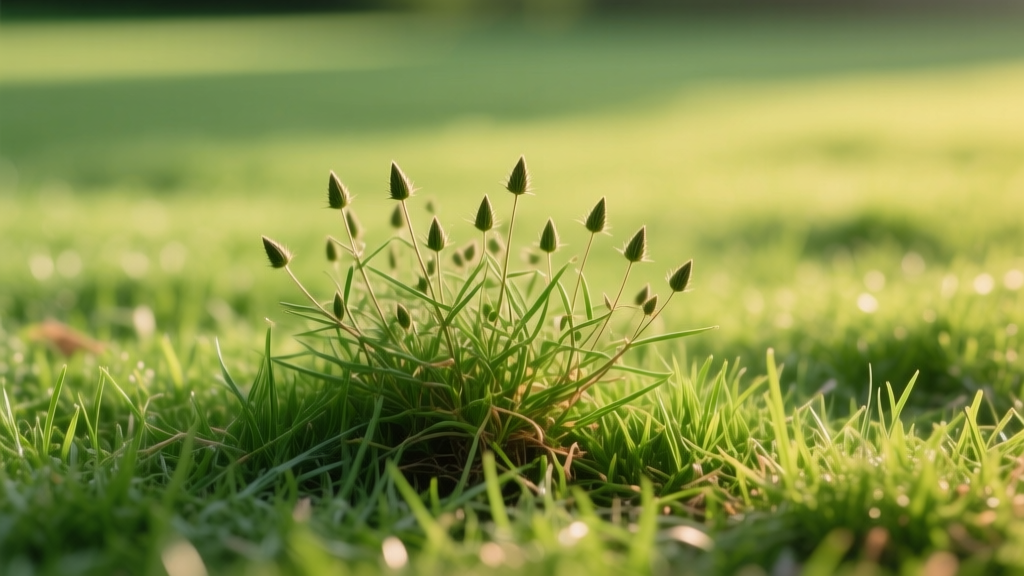
How to Spot-Treat Kalinga Weed (Kyllinga) in Lawns
The 'Kalinga' Weed Misnomer: Understanding Kyllinga
If you have been searching for how to kill 'kalinga weed,' you are likely dealing with one of the most frustrating sedges in turfgrass management: Kyllinga (specifically Green Kyllinga, Kyllinga brevifolia, or False Green Kyllinga, Kyllinga gracillima). The term 'kalinga' is a widespread phonetic misspelling of Kyllinga, but the botanical reality and the treatment protocols remain exactly the same. Unlike broadleaf weeds or standard grassy weeds, Kyllinga is a sedge. It thrives in overly moist, compacted soils and spreads aggressively through shallow, fragile rhizomes.
Standard broadleaf herbicides (like 2,4-D or Dicamba) will not touch this weed. Furthermore, because it is a sedge, it requires specific sulfonylurea or PPO-inhibitor chemistries to disrupt its cellular growth. According to the University of Florida IFAS Extension, Kyllinga species have become increasingly tolerant to older pre-emergent herbicides, making targeted post-emergent spot-treatments the most effective eradication strategy for homeowners.
Botanical Profile: Identifying the Intruder
Before mixing any chemicals, you must confirm you are actually dealing with Kyllinga and not Yellow Nutsedge or a desirable turfgrass variety. Misidentification leads to wasted money and chemical resistance. Kyllinga forms dense, low-lying mats that disrupt the uniformity of your lawn canopy, often becoming highly visible when it flowers and produces its distinct seed heads.
| Feature | Kyllinga (Kalinga Weed) | Yellow Nutsedge | Standard Lawn Grass |
|---|---|---|---|
| Stem Shape | Triangular, solid | Triangular, solid | Round or flat, hollow |
| Seed Head | Small, spherical globe | Yellowish, branched clusters | Varies (spikes, panicles) |
| Growth Habit | Dense, low-lying mats | Tall, upright, isolated shoots | Uniform turf canopy |
| Odor when Mowed | Sweet, pleasant fragrance | Earthy, mildly pungent | Standard 'green' grass smell |
⚠️ CRITICAL WARNING: Do Not Pull Kyllinga by Hand
Pulling kalinga weed by hand is a guaranteed way to make your infestation worse. The rhizomes are extremely brittle and sit just 1 to 2 inches below the soil surface. When you pull the plant, the rhizome snaps, leaving behind fragments containing dormant tubers. Each fragment will sprout 2 to 3 new plants within weeks. Always rely on systemic herbicides for eradication.
The Science of Spot-Treating Sedges
Spot-treatment is highly effective for Kyllinga because the weed typically emerges in localized, clustered patches rather than evenly across the entire lawn. However, sedges possess a thick, waxy cuticle on their leaves and triangular stems. This cuticle is an evolutionary defense mechanism that causes water-based herbicide solutions to bead up and roll off onto the soil, resulting in a 100% failure rate if not properly addressed.
To bypass this defense, you must use a Non-Ionic Surfactant (NIS). The surfactant breaks the surface tension of the water droplet, allowing the active ingredient to spread evenly across the waxy leaf surface and penetrate the plant tissue. Without a surfactant, even the most expensive professional-grade herbicides will fail to control kalinga weed.
Herbicide Selection Matrix
Not all sedge killers are created equal. Your choice of active ingredient should depend on the size of the infestation, your grass type, and how quickly you need results. Below is a comparison of the top three professional-grade active ingredients available to homeowners for Kyllinga control.
| Active Ingredient | Common Brand | Speed of Control | Spot-Treat Rate (per 1 Gal) | Best For |
|---|---|---|---|---|
| Halosulfuron-methyl (75%) | SedgeHammer | Slow (14-21 days) | 0.017 oz (1/2 packet) + Surfactant | Severe, mature patches |
| Sulfentrazone (40%) | Dismiss | Fast (7-10 days) | 0.15 fl oz | Quick knockdown, young shoots |
| Imazaquin | Image for Nutsedge | Medium (14-28 days) | Follow label (varies by formulation) | Warm-season lawns (St. Augustine/Bermuda) |
For the most stubborn, mature kalinga weed patches, Halosulfuron-methyl is the gold standard. It is a systemic herbicide that translocates down into the shallow rhizome network, killing the tubers that would otherwise regenerate. While it takes up to three weeks to see complete browning, it provides the most thorough long-term control.
Step-by-Step Spot-Treatment Protocol
Follow this exact protocol to ensure maximum efficacy while protecting your surrounding desirable turfgrass.
Step 1: Calibrate and Mix
- Prepare the Tank: Fill a 1-gallon pump sprayer halfway with clean water.
- Add Surfactant: Add 1/2 teaspoon (approx. 2.5 ml) of a high-quality Non-Ionic Surfactant. Agitate the tank gently to mix.
- Add Herbicide: Add 0.017 ounces of Halosulfuron-methyl (75% WDG). If using a pre-measured packet, use exactly half of a standard 0.034 oz packet.
- Top Off: Fill the sprayer to the 1-gallon mark and shake vigorously for 30 seconds.
Step 2: Application Technique
Do not use a broadcast fan nozzle for spot treatments. Switch your sprayer wand to a pinpoint stream or narrow cone setting. This allows you to paint the herbicide directly onto the Kyllinga leaves without overspraying your Bermuda, Zoysia, or Fescue lawn. Apply just enough solution to wet the leaves until they glisten; do not spray to the point of runoff.
Step 3: Environmental Timing
Apply the treatment when daytime temperatures are between 65°F and 85°F. Avoid spraying if rain is forecasted within 24 hours, or if the lawn is currently under drought stress. Herbicides require active plant growth to translocate effectively; if the weed is dormant from extreme heat or drought, the chemical will not reach the rhizomes.
Pro-Tip: The 10-Day Rule
Do not mow your lawn for 2 days before and 2 days after your spot-treatment. This ensures the Kyllinga has maximum leaf surface area to absorb the chemical, and allows 48 hours for the herbicide to move out of the leaves and down into the root system before being physically removed by mower blades.
Addressing the Root Cause: Cultural Controls
Herbicides are only a temporary fix if the underlying environmental conditions favor sedge over turfgrass. The University of California Statewide IPM Program emphasizes that Kyllinga is a primary indicator of poor soil drainage and excessive surface moisture.
Modifying Your Irrigation Strategy
Kyllinga relies on constant surface moisture to germinate and spread rhizomes. If you are watering your lawn for 15 minutes every day, you are actively cultivating kalinga weed. Transition immediately to a deep-and-infrequent watering schedule. Apply 1 inch of water per week, split into two separate irrigation events. This forces your desirable turfgrass to grow deep roots while allowing the top 1/2 inch of soil to dry out, effectively starving the shallow Kyllinga rhizomes.
Alleviating Soil Compaction
Sedges thrive in anaerobic, compacted soils where desirable grass roots suffocate. Schedule core aeration during your turf's peak growing season (late spring for warm-season grasses, early fall for cool-season grasses). Core aeration pulls physical plugs of soil from the ground, introducing oxygen to the root zone and improving water infiltration, which shifts the competitive advantage back to your lawn.
Common Failure Modes and Edge Cases
- Skipping the Surfactant: As mentioned, this is the number one reason homeowners report that 'the weed killer didn't work.' The chemical simply rolls off the waxy sedge leaves.
- Treating in Winter: Kyllinga is a warm-season perennial. If you attempt to spot-treat in late fall or winter when soil temperatures drop below 60°F, the plant's metabolic processes slow down, and the herbicide will fail to translocate to the roots.
- Ignoring Secondary Flushes: Even with a perfect Halosulfuron-methyl application, a secondary flush of Kyllinga may emerge 4 weeks later from deeper, untouched tubers. This is normal. Simply repeat the exact same spot-treatment protocol on the new growth to exhaust the tuber bank.
By understanding the true botanical nature of the 'kalinga' weed and adhering to strict chemical and cultural protocols, you can permanently eradicate Kyllinga from your lawn without resorting to expensive, full-scale lawn renovations.

