
Lawn Care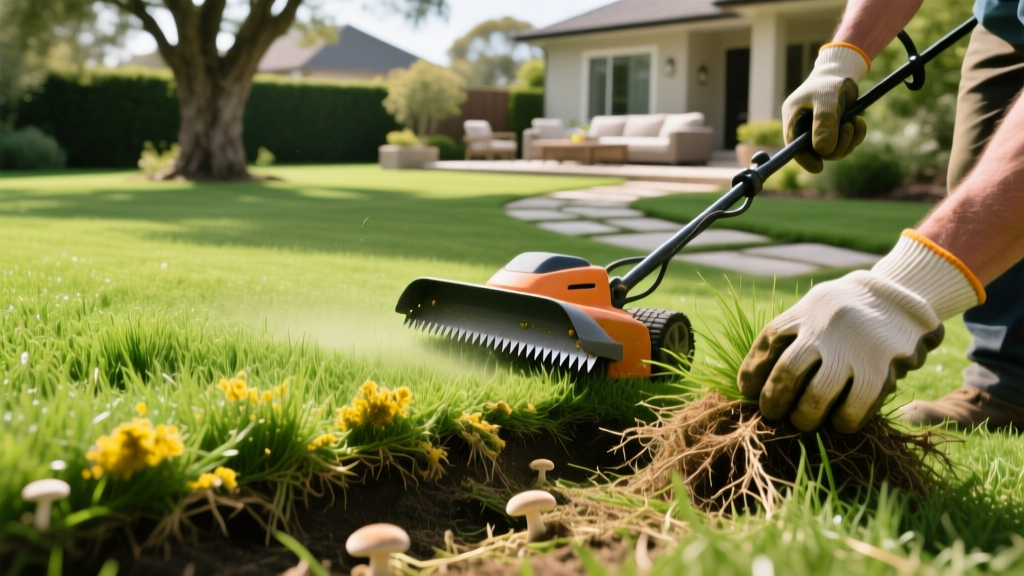
Step-by-Step Kikuyu Grass Maintenance: Mowing, Thatch & Disease Guide
The Anatomy of Kikuyu Maintenance
Kikuyu (Pennisetum clandestinum) is a fiercely aggressive, deep-rooted warm-season grass prized for its drought tolerance and rapid recovery. However, its vigorous stoloniferous and rhizomatous growth habit creates a unique maintenance paradox: the very traits that make it resilient also make it highly susceptible to severe thatch buildup and fungal pathogens. Maintaining a pristine kikuyu lawn requires moving beyond generic lawn care advice and implementing a targeted, step-by-step agronomic protocol.
⚠️ The Thatch Warning: Unlike couch or buffalo grass, kikuyu produces a dense, spongy mat of organic matter just below the canopy. If this thatch layer exceeds 25mm, it will block water penetration, harbor fungal spores, and cause your mower to scalp the lawn, exposing ugly brown stems.
Step 1: Precision Mowing Protocols
Mowing is the single most critical variable in kikuyu management. Cutting too low scalps the stolons, while cutting too high encourages vertical, puffy growth that invites disease. You must adjust your mower deck based on the seasonal growth rate and ambient temperature.
| Season | Target Cut Height | Frequency | Mower Type & Strategy |
|---|---|---|---|
| Spring (Sep-Nov) | 30mm - 35mm | Every 5-7 days | Rotary with catcher to remove clippings |
| Summer (Dec-Feb) | 35mm - 45mm | Every 4-5 days | Rotary; raise deck during heatwaves >35°C |
| Autumn (Mar-May) | 40mm - 50mm | Every 10-14 days | Mulching mower acceptable as growth slows |
| Winter (Jun-Aug) | 50mm - 60mm | Every 3-4 weeks | Rotary; avoid mowing when frost is present |
Pro-Tip: Never use a cylinder (reel) mower on kikuyu unless the lawn is professionally leveled and dethatched bi-annually. The thick stolons will jam the reel blades, resulting in torn leaf tips that turn brown and invite Pythium blight.
Step 2: Strategic Fertilization & Soil Chemistry
Kikuyu is a heavy nitrogen feeder, but it has a critical vulnerability: it is highly sensitive to excess phosphorus. High phosphorus levels in the soil bind with iron, leading to severe chlorosis (yellowing), and simultaneously accelerate thatch production.
The Ideal NPK Ratio
Seek out fertilizers with an N-P-K ratio where the middle number (Phosphorus) is as close to zero as possible. A blend like 20-2-8 or 24-0-6 is optimal. As of 2026, premium slow-release formulations like Paul Munns Green Keeper or Scotts Lawn Builder Premium Slow-Release (priced around $45-$60 per 10kg bag) provide 12 weeks of steady nutrient delivery without triggering thatch spikes.
- Spring Application: Apply 2.5kg per 100m² of a high-nitrogen, low-phosphorus blend in early September to fuel stolon recovery.
- Summer Application: Switch to a liquid kelp and seaweed extract (e.g., Seasol) to build root heat tolerance. Avoid granular nitrogen when temperatures exceed 32°C to prevent fertilizer burn.
- Autumn Application: Apply a potassium-rich winterizer (e.g., 10-0-20) in late April to harden the cell walls against frost and winter fungal pressure.
Step 3: Thatch Eradication and Vertimowing
If a screwdriver pushed into your lawn meets a spongy resistance of more than 20mm before hitting soil, your kikuyu requires mechanical dethatching. According to turf agronomists at Lawn Solutions Australia, vertimowing is the only effective way to remove deep kikuyu thatch without destroying the root zone.
- Timing: Schedule vertimowing for mid-to-late spring (October/November in the Southern Hemisphere, or April/May in SoCal) when the grass is actively growing and can recover within 3 weeks.
- Preparation: Mow the lawn at your lowest safe setting (approx. 25mm) and collect all clippings.
- Execution: Set the vertimower blades to penetrate 10mm-15mm into the soil profile. Run the machine in a grid pattern (north-south, then east-west).
- Extraction: Rake and remove the extracted thatch cores immediately. Leaving them on the surface will smother the remaining grass.
- Recovery: Apply a soil wetting agent (like Paul Munns Oxafert) and a light dressing of washed river sand (0.5 cubic meters per 100m²) to fill the voids and promote stolon re-rooting.
Cost Expectation: Hiring a professional turf contractor to vertimow and extract thatch currently averages between $0.15 and $0.28 per square meter, depending on access and thatch severity. DIY rental units cost roughly $120-$180 per day, but require significant physical effort to maneuver.
Step 4: Diagnosing and Treating Kikuyu Yellows
One of the most common misdiagnoses in kikuyu care is confusing nutritional iron deficiency with Kikuyu Yellows, a devastating root-rot disease. The NSW Department of Primary Industries notes that Kikuyu Yellows is primarily caused by Pythium and Volutella species, which thrive in compacted, poorly drained soils during cool, wet periods.
Diagnostic Decision Matrix
| Symptom | Iron Chlorosis (Nutritional) | Kikuyu Yellows (Disease) |
|---|---|---|
| Leaf Appearance | Uniform yellowing, but leaf veins remain distinctly green. | Entire leaf turns pale yellow to white; veins do not stay green. |
| Root Health | Roots are white, firm, and extensive. | Roots are stunted, brown, rotting, and easily pull from soil. |
| Pattern on Lawn | Widespread, general thinning across high-pH zones. | Distinct circular or irregular yellow patches (1m to 5m wide). |
| Treatment | Foliar spray of Iron Chelate (Fe-EDDHA). | Soil drench of Phosphorous Acid or Metalaxyl fungicide. |
If you confirm Kikuyu Yellows, immediate intervention is required. Apply a systemic fungicide containing phosphorous acid (e.g., Yates Anti Rot) or metalaxyl at the label-specified rate for turf. Simultaneously, aerate the affected patches with a solid-tine fork to introduce oxygen to the root zone, as the pathogens are anaerobic and thrive in waterlogged conditions.
Step 5: Deep-Root Irrigation Schedules
Kikuyu's extensive root system can reach depths of over 2 meters, making it incredibly drought-tolerant once established. However, frequent, shallow watering forces roots to stay near the surface, exacerbating thatch and disease. Research from UC Davis Integrated Pest Management emphasizes deep, infrequent irrigation cycles.
- Target Volume: Apply 25mm of water per week during peak summer, dropping to 10-15mm in autumn.
- Application Method: Water twice a week (e.g., Tuesday and Saturday) for longer durations rather than daily 10-minute sprinkler bursts.
- Soil Wetting Agents: Kikuyu thatch is highly hydrophobic. If water pools on the surface or runs off into storm drains, apply a liquid soil wetting agent containing polyacrylamide every 8 weeks during summer to break the surface tension and drive moisture into the subsoil.
By adhering to these precise mowing heights, managing phosphorus inputs, and aggressively controlling thatch and root pathogens, your kikuyu lawn will maintain a dense, dark-green carpet that outcompetes weeds and survives extreme environmental stress.

