
Lawn Care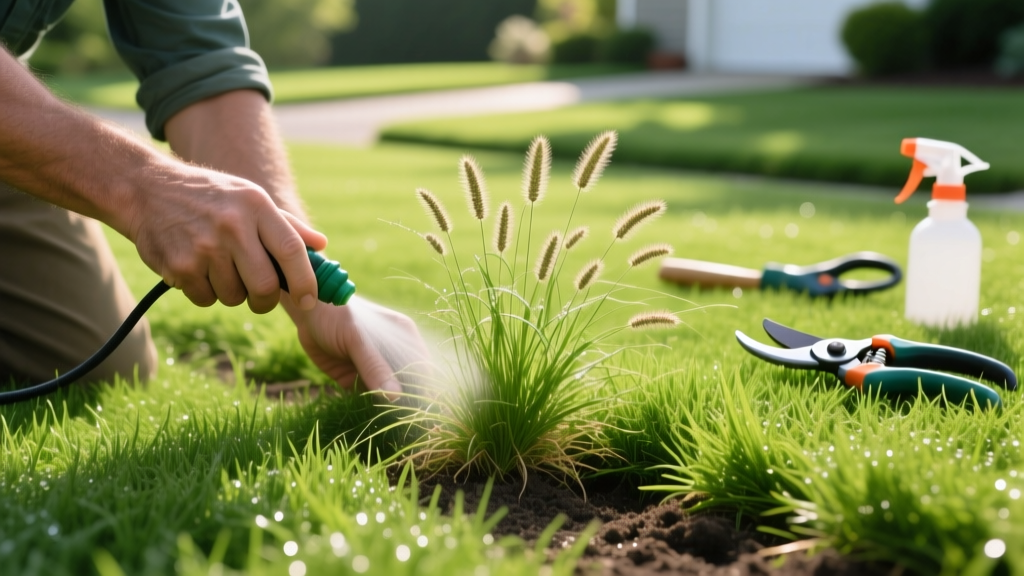
How to Kill Dallisgrass Without Killing Grass: Spot-Treatment Guide
The Biological Hurdle: Why Dallisgrass Survives Standard Herbicides
Dallisgrass (Paspalum dilatatum) is a warm-season perennial grassy weed that plagues both cool- and warm-season lawns. When homeowners ask how do you kill dallisgrass without killing grass, they are confronting a fundamental botanical paradox: dallisgrass is a grass. Standard broadleaf herbicides containing 2,4-D, dicamba, or MCPP will not harm it. Furthermore, because it shares similar physiological pathways with desirable turfgrasses like bermudagrass, zoysia, and tall fescue, applying a non-selective grass killer (like standard fluazifop or sethoxydim) will often result in severe phytotoxicity to your actual lawn.
Unlike crabgrass, which is an annual that dies with the first frost, dallisgrass possesses a deep, fibrous root system and short rhizomes that allow it to survive winter dormancy and regenerate aggressively in the spring. According to Clemson HGIC, its ability to produce viable seedheads even at extremely low mowing heights makes cultural control via mowing entirely ineffective. To eradicate it, you must use highly specific selective herbicides or precision non-selective application techniques.
The Turfgrass Decision Matrix: Selective Herbicide Options
Your chemical strategy is entirely dictated by the species of grass you are trying to protect. What is safe for tall fescue will annihilate St. Augustinegrass. Below is the professional decision framework for selective dallisgrass control.
| Your Lawn Type | Recommended Selective Herbicide | Active Ingredients | Efficacy & Notes |
|---|---|---|---|
| Bermudagrass & Zoysia | Tribute Total | Foramsulfuron + Thiencarbazone + Halosulfuron | Excellent. The industry standard for warm-season turf. Requires 2-3 applications spaced 21 days apart. |
| Tall Fescue & Kentucky Bluegrass | Tribute Total or MSMA (Commercial only) | See above / Monosodium methanearsonate | Good to Excellent. MSMA is highly effective but largely restricted by the EPA for residential use. Tribute Total is the legal residential alternative. |
| St. Augustine & Centipedegrass | Celsius WG | Thiencarbazone + Iodosulfuron + Dicamba | Poor to Fair. Provides suppression only. Multiple applications required. High risk of turf stunting if applied during summer heat stress. |
Warning on MSMA: Many outdated lawn care forums recommend MSMA for dallisgrass. As of recent EPA regulations, MSMA is heavily restricted and generally unavailable for residential lawn care. Do not attempt to source agricultural-grade MSMA for home lawns, as this violates federal pesticide application laws and poses severe environmental risks.
Step-by-Step Selective Spot-Treatment Protocol
If you have bermudagrass, zoysia, or tall fescue, Tribute Total is your most viable selective option. However, it is a premium professional-grade product, typically costing between $150 and $170 for a 2.8 oz bottle. Because of the cost, precise spot-treatment is essential.
- Timing the Application: Apply when dallisgrass is actively growing but before it forms mature seedheads. Late spring to early summer (when soil temperatures consistently exceed 65°F at a 2-inch depth) is the optimal window. Avoid applications when daytime temperatures exceed 85°F to prevent turf phytotoxicity.
- Mixing the Solution: For spot treatments, mix 0.036 oz (approximately 1 gram) of Tribute Total per 1,000 square feet of target area. You must include a Non-Ionic Surfactant (NIS) at a rate of 0.25% v/v (roughly 1/2 teaspoon per gallon of water). Dallisgrass leaves have a waxy cuticle; without a surfactant, the herbicide will bead up and roll off.
- Application Technique: Use a 1-to-2-gallon pump sprayer with a pin-stream or cone nozzle to target only the dallisgrass clumps. Do not broadcast spray the entire lawn unless you are treating a severe, widespread infestation.
- The Mandatory Follow-Up: Tribute Total does not kill dallisgrass in a single pass. The first application will cause the weed to yellow and stunt. You must apply a second treatment 21 to 28 days after the initial application to kill the rhizomes. According to Texas A&M AgriLife Extension, a third application may be necessary for mature, multi-year clumps.
The 'Glove-over-Glove' Method: For St. Augustine and Centipede Lawns
If you maintain St. Augustinegrass or Centipedegrass, selective chemical options are virtually non-existent without causing severe damage to your turf. Celsius WG will only suppress dallisgrass, often requiring 4+ applications that can stunt your lawn's growth. In these scenarios, the most effective and economical method to kill dallisgrass without killing grass is precision non-selective wiping using the 'Glove-over-Glove' technique.
How to Execute the Wiper Method
This method utilizes glyphosate (a non-selective herbicide that kills any plant it touches) but applies it physically only to the dallisgrass leaves, completely bypassing your desirable turf.
- Preparation: Mix a 2% glyphosate solution (approximately 2.5 fluid ounces of standard 41% glyphosate concentrate per gallon of water). Add a few drops of blue food coloring to the mix so you can visually track which weeds you have already wiped.
- Gear Up: Put on a standard waterproof nitrile or rubber chemical-resistant glove on your dominant hand. Over that, pull on a thick, 100% white cotton work glove.
- Application: Dip the cotton-gloved hand into the glyphosate solution until it is damp, but not dripping. Gently grasp the dallisgrass seedheads and leaves, wiping the solution directly onto the weed tissue from base to tip.
- Execution: Because dallisgrass typically grows taller and coarser than surrounding St. Augustine or Centipede, you can easily isolate the weed blades. The cotton glove acts as a wick, delivering the herbicide directly into the plant's vascular system without spraying drift onto your lawn.
Pro Tip: Do not pull or yank the dallisgrass while wiping it. You need the plant's vascular system intact to translocate the glyphosate down into the deep rhizomes. Simply wipe the leaves and let the chemical do the work over the next 7 to 14 days.
Preventing Reinfestation: The Pre-Emergent Reality
Killing existing dallisgrass is only half the battle. A single mature dallisgrass plant can produce thousands of seeds that remain viable in the soil profile for years. To stop the next generation, you must deploy a robust pre-emergent herbicide program.
Pre-emergents like Prodiamine (Barricade) or Dithiopyr (Dimension) create a chemical barrier in the top half-inch of soil that inhibits cell division in germinating seeds. However, pre-emergents will not kill established dallisgrass plants. They only stop new seeds from sprouting.
Optimal Pre-Emergent Timing for Dallisgrass
Dallisgrass seeds germinate when soil temperatures reach 60°F to 65°F in the spring. You must apply your pre-emergent before this threshold is crossed. In most transition zones and southern climates, this means applying a granular pre-emergent between late February and mid-March. For severe infestations, a split-application strategy is highly recommended:
- Application 1: Early Spring (Soil temp 55°F) at half the maximum annual rate.
- Application 2: Mid-Spring (Soil temp 65°F) at the remaining half rate.
By combining targeted selective spot-treatments (or precision wiping) with a disciplined pre-emergent schedule, you can systematically deplete the dallisgrass population in your lawn over a 12-to-18-month period without sacrificing your desirable turfgrass.

