
Lawn Care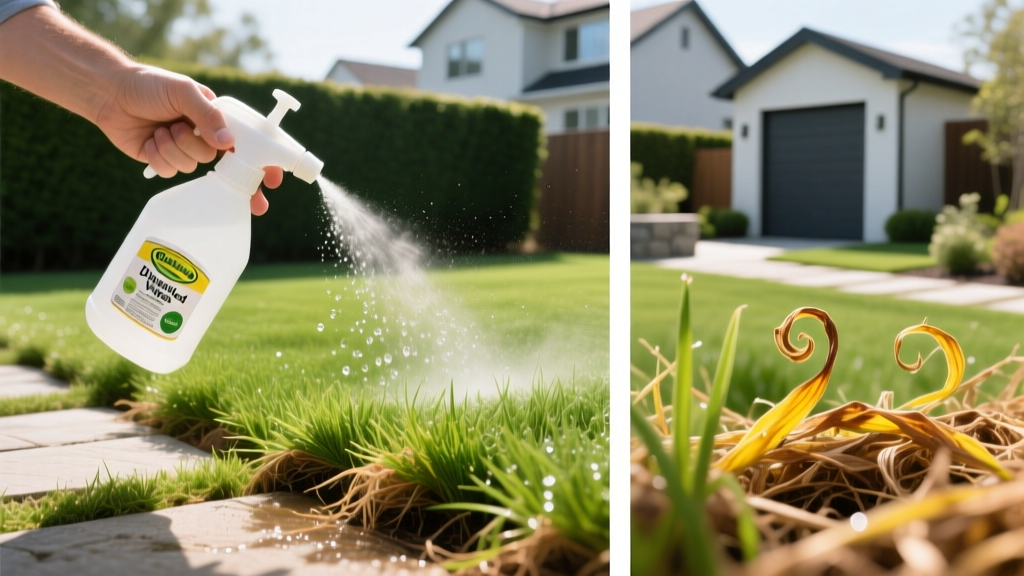
Kill Grass with Vinegar: Step-by-Step Organic Removal Guide
The Science of Acetic Acid as a Contact Herbicide
Using acetic acid to kill grass with vinegar is a highly effective organic alternative to synthetic herbicides like glyphosate, but it requires a precise understanding of plant biology. Acetic acid acts as a rapid desiccant. When it contacts grass blades, it dissolves the lipid waxy cuticle protecting the leaf, causing immediate cell membrane rupture and severe water loss. The grass visibly wilts and browns within 2 to 4 hours under optimal conditions.
However, acetic acid is strictly a contact herbicide, not a systemic one. It does not translocate down into the root system. This creates a distinct edge case depending on your grass type. Annual grasses (like annual bluegrass or crabgrass) will die completely because their root systems cannot survive without active foliage. Deep-rooted perennial grasses (like Bermuda, Zoysia, or Quackgrass) possess extensive rhizome and stolon networks. The top growth will burn off, but the roots will likely push up new shoots within 10 to 14 days, requiring a secondary application.
⚠️ Safety Warning for Horticultural Vinegar: Household vinegar (5% acidity) is harmless to skin. Horticultural vinegar (20% to 30% acidity) is highly corrosive and can cause severe chemical burns to the eyes and skin. Always wear ANSI Z87.1-rated splash goggles, long sleeves, and chemical-resistant nitrile gloves when mixing and applying concentrations above 10%.
Formulating the Ultimate Organic Grass Killer
The most common failure mode when attempting to kill grass with vinegar is using standard culinary vinegar. A 5% acetic acid solution lacks the chemical potency to penetrate the thick cuticle of mature lawn grass. To achieve a complete burn-down, you must formulate a mixture using horticultural-grade vinegar, a surfactant, and an essential oil booster.
Concentration Efficacy Matrix
| Vinegar Type | Acetic Acid % | Cost per Gallon | Efficacy on Established Grass |
|---|---|---|---|
| Household White | 5% | $3.00 - $5.00 | Poor (Only kills young seedlings) |
| Cleaning Vinegar | 6% - 10% | $8.00 - $12.00 | Fair (Requires 3+ heavy applications) |
| Horticultural | 20% - 30% | $25.00 - $38.00 | Excellent (1-2 applications) |
The High-Penetration Recipe
For every 1 gallon of 30% horticultural vinegar, add the following to your pump sprayer tank:
- 2 Tablespoons of Non-Ionic Surfactant: Acetic acid naturally beads up on waxy grass blades. A surfactant (like CapSurf or standard Dawn dish soap) breaks the water's surface tension, forcing the acid to lay flat and coat the entire leaf surface.
- 1 Ounce of d-Limonene (Orange Oil): Citrus oil acts as a natural solvent that strips the remaining protective waxes from the grass blade, accelerating the desiccation process by up to 40%.
According to research on organic weed control methods by the University of Minnesota Extension, combining acetic acid with essential oil-based adjuvants significantly increases the mortality rate of mature perennial weeds and grasses compared to acetic acid alone.
Step-by-Step Application Protocol
Environmental conditions dictate the success of your organic grass removal. Acetic acid relies on heat and sunlight to maximize cellular destruction. Follow this exact protocol for optimal burn-down.
- Check the Forecast: Select a day with zero chance of rain for at least 24 hours. Acetic acid washes off instantly. If it rains within 4 hours of application, the treatment is entirely wasted. Ensure ambient temperatures will exceed 75°F (24°C).
- Calibrate the Sprayer Nozzle: Swap out the standard cone-nozzle on your pump sprayer for a flat fan-nozzle. A fan-nozzle produces a uniform, overlapping spray pattern that guarantees complete foliar coverage without excessive runoff into the soil.
- Mow the Grass (Optional but Recommended): If the grass is taller than 4 inches, mow it down to 2 inches. This exposes the tender, younger growth at the base of the plant and reduces the total volume of herbicide required.
- Apply During Peak Sun: Spray between 10:00 AM and 2:00 PM. The intense midday UV radiation and heat work synergistically with the acetic acid to rapidly dehydrate the plant tissue.
- Spray to the Point of Runoff: Coat the grass thoroughly until the blades are visibly wet and dripping slightly. Do not just mist the surface; the acid must penetrate the entire canopy.
Troubleshooting and Edge Cases
Even with perfect formulation, organic lawn removal presents unique challenges that synthetic chemicals do not. Anticipate these scenarios to avoid frustration.
Perennial Grass Regrowth
If you are removing Bermuda grass, St. Augustine, or Tall Fescue, expect a 15% to 30% regrowth rate after the first application. Wait exactly 7 to 10 days for the new shoots to emerge and expand their leaf surface area, then apply a second targeted spot-treatment. The repeated defoliation will eventually exhaust the carbohydrate reserves stored in the rhizomes, killing the root system.
Equipment Degradation
30% acetic acid will rapidly corrode the rubber O-rings and metal components of cheap pump sprayers. Use a sprayer with Viton seals and a fiberglass or polyethylene wand. After finishing, flush the entire sprayer system with a baking soda and water solution (1/2 cup baking soda per gallon) to neutralize residual acid and protect the equipment.
Post-Treatment Soil Recovery and Replanting
A common misconception is that vinegar permanently sterilizes the soil. The Environmental Protection Agency (EPA) classifies acetic acid as a minimum-risk active ingredient because it breaks down rapidly in the environment. Soil microbes metabolize the acetic acid within 48 to 72 hours, converting it back into water and carbon dioxide.
However, a heavy application will temporarily drop your soil's pH, making it highly acidic and potentially toxic to new grass seed or garden plants. To prepare the soil for replanting:
- Wait 5 to 7 days after the final vinegar application.
- Apply pelletized garden lime (calcium carbonate) at a rate of 5 lbs per 1,000 square feet to buffer and neutralize the soil pH.
- Water the area deeply for two consecutive days to flush the neutralized salts through the topsoil profile.
- Top-dress with 1/2 inch of organic compost to reintroduce beneficial mycorrhizal fungi and bacteria before laying new sod or sowing seed.
Frequently Asked Questions
Will vinegar kill grass permanently?
It will kill annual grasses permanently in one application. Perennial grasses with deep rhizomes will require two to three applications spaced 10 days apart to exhaust the root system's energy reserves and achieve permanent removal.
Can I use Epsom salt and vinegar together?
While adding Epsom salt (magnesium sulfate) is a popular internet myth for killing grass, it is counterproductive if you plan to replant the area. The salt accumulates in the soil, causing long-term salinity issues that inhibit future seed germination and disrupt soil structure. Stick to the acetic acid and surfactant recipe for a clean, plantable result.
Is horticultural vinegar safe for pets?
Once the liquid has completely dried (usually within 1 to 2 hours), the area is safe for pets. During the wet application phase, keep dogs and cats off the lawn to prevent the highly acidic solution from irritating their paw pads or causing gastrointestinal distress if ingested while grooming.

