
Lawn Care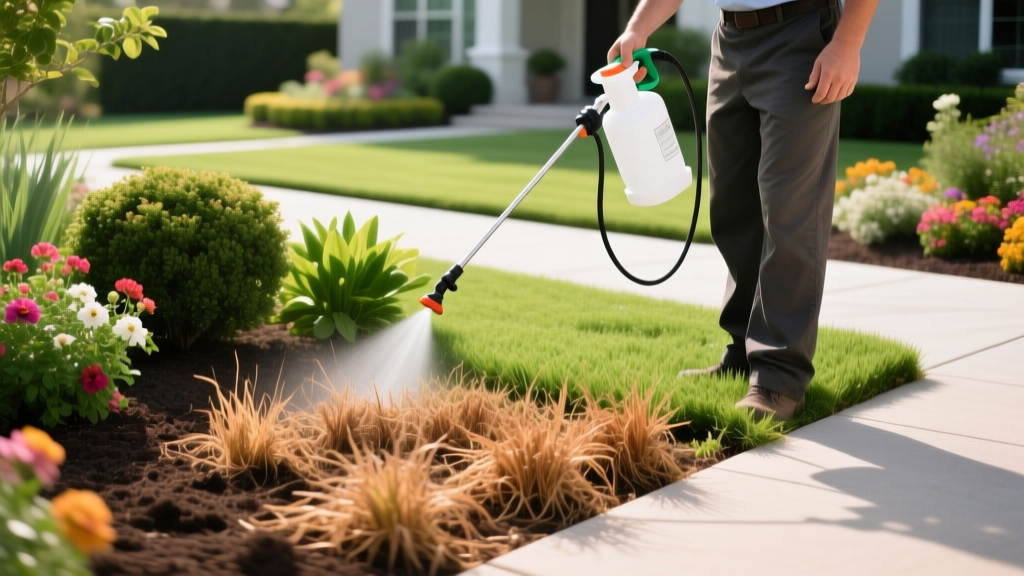
How Do You Kill Grass in Flower Beds Without Harming Plants?
When ornamental beds become overrun by creeping turf, homeowners inevitably ask: how do you kill grass in flower beds without destroying the surrounding shrubs and perennials? Grass encroachment is not just an aesthetic nuisance; aggressive species like Bermuda grass (Cynodon dactylon) and Quackgrass (Elymus repens) compete directly with ornamentals for water, nitrogen, and root space. Eradicating these invaders requires a targeted approach that addresses the root system without causing phytotoxicity to broadleaf plants.
The Biology of Bed Invaders: Rhizomes vs. Seeds
Before selecting an eradication method, you must identify how the grass is entering the bed. Annual grassy weeds (like crabgrass) spread via seed and are easily managed with pre-emergent herbicides. However, perennial turfgrasses spread via rhizomes (underground stems) and stolons (above-ground runners).
Warning: Tilling or using a rototiller in a bed infested with Bermuda or Quackgrass will chop the rhizomes into hundreds of viable nodes. Each 1-inch node can generate a new plant, turning a minor infestation into a total bed takeover within a single growing season. Never till infested soil.
Method 1: Selective Chemical Eradication (The Fluazifop Route)
For beds heavily infested with perennial grasses where hand-pulling is impossible, selective post-emergent herbicides are the most efficient solution. The active ingredient Fluazifop-p-butyl targets the ACCase enzyme found only in grasses, leaving broadleaf ornamentals, hostas, daylilies, and shrubs completely unharmed.
Product Selection and Pricing
- Ortho Grass-B-Gon Ready-to-Spray: Contains 0.05% Fluazifop-p-butyl. Ideal for small residential beds. Cost: ~$18 per 32oz bottle (covers up to 5,000 sq ft).
- Fusilade II: A professional-grade concentrate containing 23.4% Fluazifop-p-butyl. Cost: ~$65 for a 16oz bottle. Requires a pump sprayer and precise mixing (0.5 oz per gallon of water with a non-ionic surfactant).
Application Protocol
- Timing: Apply when the rogue grass is actively growing and not drought-stressed (typically late spring or early fall). The grass must have at least 2 to 3 inches of green foliage to absorb the chemical.
- Spraying: Spray the grass blades until wet, but avoid runoff. Fluazifop is translocated; it moves from the leaves down into the rhizomes over 7 to 14 days.
- Patience: Do not pull the grass immediately. Wait 21 days for the rhizomes to necrotize. The grass will turn yellow, then brown, before dying completely.
Method 2: Non-Selective Precision Application (The Glyphosate Shield)
If you are dealing with mixed weeds (both grasses and broadleaf weeds) or prefer a non-selective approach, Glyphosate is highly effective. However, because it kills any plant it touches, application in a flower bed requires extreme precision. According to the EPA guidelines on glyphosate, careful spot treatment minimizes environmental exposure while effectively targeting the root systems of perennial weeds.
The Wick and Shield Technique
Never broadcast spray glyphosate near ornamentals. Instead, use a physical barrier or a wick applicator.
- Cardboard Shield: Cut a 2-foot square of heavy corrugated cardboard with a slit in the middle. Slide the shield around the base of your ornamental plant, isolating the rogue grass. Spray the grass, wait 30 seconds for the droplets to settle, and carefully lift the shield straight up.
- Rope Wick Applicator: Fill a wick wand with a 2% glyphosate solution (approx. 2.6 oz of 41% concentrate per gallon of water). Physically wipe the saturated rope over the tops of the grass blades. This transfers the herbicide via contact without risking spray drift.
Method 3: Organic Smothering (The Sheet Mulching Protocol)
For homeowners strictly adhering to Integrated Pest Management (IPM) principles and avoiding synthetic herbicides, sheet mulching starves the grass of sunlight while improving soil biology. This method takes 8 to 12 weeks but yields a weed-free, nutrient-rich bed.
Step-by-Step Smothering Guide
- Mow Low: Cut the invading grass as short as your mower allows (under 1 inch).
- Lay the Barrier: Use uncoated, corrugated brown cardboard (remove all tape and staples). Overlap every seam by at least 6 inches to prevent grass shoots from finding the gaps.
- Wet the Cardboard: Soak the cardboard thoroughly with a garden hose. This initiates decomposition and keeps it pinned to the soil.
- Apply Mulch: Top with 3 to 4 inches of coarse hardwood mulch or arborist wood chips. As noted by the Arbor Day Foundation's mulching guidelines, coarse wood chips allow water and gas exchange while effectively blocking light.
Eradication Methods: Comparison Matrix
| Method | Active Agent | Cost per 100 sq ft | Time to Results | Risk to Broadleaves |
|---|---|---|---|---|
| Selective Herbicide | Fluazifop-p-butyl | $0.50 - $1.20 | 14 - 21 Days | Zero |
| Precision Non-Selective | Glyphosate (2%) | $0.10 - $0.25 | 7 - 14 Days | High (if drift occurs) |
| Sheet Mulching | Cardboard + Wood Chips | $3.00 - $6.00 | 60 - 90 Days | Zero |
Debunking Internet Myths: Vinegar and Boiling Water
Many DIY blogs recommend pouring boiling water or horticultural vinegar (20% acetic acid) on grass in flower beds. From a soil science perspective, these methods fail against perennial grasses. Acetic acid is a contact burn herbicide; it destroys the cell walls of the foliage it touches but does not translocate to the roots. The grass will brown within hours, but the rhizomes will push up new shoots within 10 days. Furthermore, repeated use of high-concentration vinegar severely depresses soil pH, locking up essential nutrients like phosphorus and calcium, which harms your ornamental plants.
Preventative Barriers: Keeping Grass Out for Good
Eradication is only half the battle. To stop rhizomes from re-entering the bed, you must install a physical subterranean barrier.
Pro Tip: Avoid cheap black plastic coil edging. UV degradation makes it brittle within two seasons, and frost heave will push it out of the ground, creating gaps for rhizomes to exploit.
The Steel Trench Method: Dig a trench along the bed border that is exactly 6 inches deep and 2 inches wide. Insert 6-inch galvanized steel landscape edging, ensuring the top lip sits 1/2 inch above the soil grade. Backfill and tamp the soil tightly. The steel forces grass roots to grow deeper, where they lack the oxygen required to cross the barrier. Combine this physical trench with a pre-emergent herbicide like Dimension (Dithiopyr) applied to the bed's perimeter in early spring to stop any wind-blown seeds from germinating.
Expert Troubleshooting FAQ
Q: Can I use grass clippings from my treated lawn as mulch in my flower beds?
A: No. If you have treated your lawn with broadleaf herbicides (like 2,4-D or Dicamba) or long-residual pre-emergents, the clippings can carry those chemicals into your beds, causing severe leaf curl and stunting in sensitive ornamentals like tomatoes, redbuds, and roses. Always compost treated clippings for at least one year before using them near broadleaf plants.
Q: How do you kill grass in flower beds that are covered in landscape fabric?
A: If grass is growing through woven landscape fabric, the fabric has likely degraded or the gaps have widened. You cannot effectively spray through the fabric. Cut an 'X' in the fabric around the weed, pull the rhizome out, and apply a targeted drop of glyphosate directly to the cut stem. If the bed is heavily compromised, remove the fabric entirely and switch to the 3-inch coarse wood chip sheet mulching method, which is vastly superior for soil health and weed suppression.

