
Lawn Care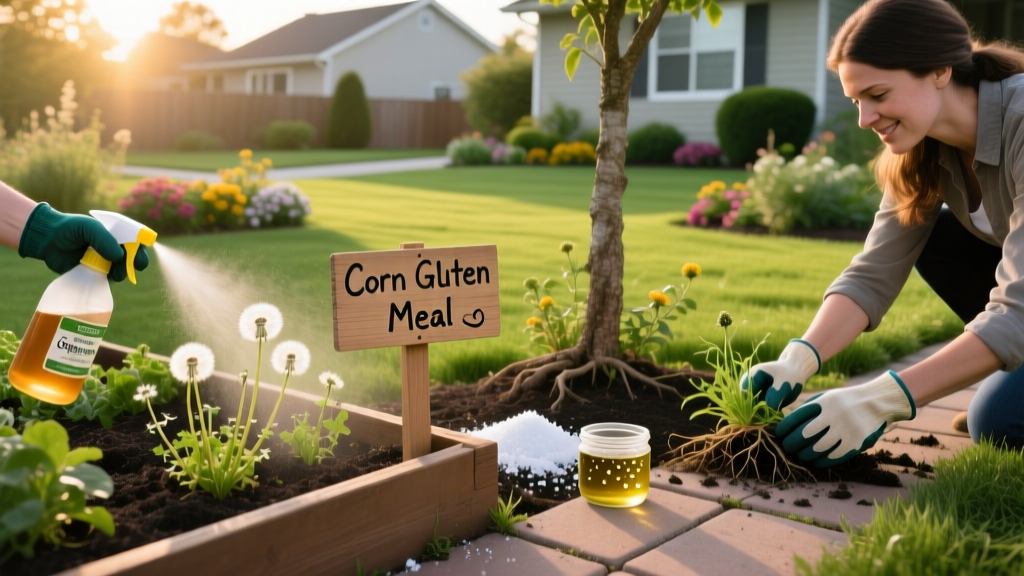
How to Kill Weeds Naturally: 5 Organic Treatments That Work
Synthetic herbicides like 2,4-D and dicamba are facing increased municipal bans and environmental scrutiny due to runoff concerns and toxicity. For homeowners asking how to kill weeds naturally, the internet is flooded with ineffective myths—such as using 5% kitchen vinegar, boiling water on large lawns, or baking soda—that fail to address the deep taproots of perennial weeds. True organic weed control relies on specific biochemical interactions, precise application timing, and cultural density to eradicate weeds without harming your turf or soil microbiome.
Core Principle of Organic Herbicides: Unlike systemic synthetic chemicals that translocate to the roots over weeks, natural herbicides are primarily contact burn-downs or metabolic disruptors. They require thorough foliar coverage, specific temperature windows, and repeat applications to exhaust the root reserves of perennial weeds.
The Biochemistry of Natural Weed Control
Understanding how to kill weeds naturally requires knowing the biological difference between your grass and the weeds invading it. Most lawn grasses (Bermuda, Fescue, Kentucky Bluegrass) are monocots. Most broadleaf weeds (Dandelion, Clover, Plantain) are dicots. This biological divergence is the key to selective organic weed control. Dicots absorb and hoard certain minerals and acids differently than monocots, allowing us to target the weeds while leaving the grass structurally intact.
Top 5 Natural Weed Killers Ranked by Efficacy
Not all organic treatments are created equal. Below is a comparison matrix of the most effective natural compounds, ranked by their practical utility in a residential lawn care program.
| Active Ingredient | Best Target Weeds | Est. Cost per 1,000 sq ft | Grass Safety | Time to Visible Results |
|---|---|---|---|---|
| FeHEDTA (Chelated Iron) | Broadleaf dicots (Dandelion, Clover) | $12 - $18 | High (Safe for monocots) | 24 - 48 hours |
| Horticultural Vinegar (20-30%) | All vegetation (Non-selective) | $4 - $6 | None (Kills grass) | 2 - 4 hours |
| Corn Gluten Meal (CGM) | Pre-emergent (Crabgrass, Spurge) | $18 - $25 | High (Fertilizes grass) | Prevents germination |
| D-Limonene (Citrus Oil) | Hardscape weeds, annuals | $8 - $12 | Low (Contact burn) | 1 - 3 hours |
| Pelargonic Acid (Nonanoic Acid) | Young annual broadleaves | $15 - $20 | Low (Contact burn) | 12 - 24 hours |
Deep Dive: Chelated Iron (FeHEDTA) for Broadleaf Weeds
When learning how to kill weeds naturally in the middle of a lawn, Chelated Iron (specifically FeHEDTA) is the undisputed champion. Products like Fiesta or Natria Lawn Weed Control utilize iron toxicity. Broadleaf weeds (dicots) cannot regulate iron uptake; they absorb massive quantities, leading to fatal oxidative stress and tissue necrosis. Grasses (monocots) naturally restrict iron absorption, remaining completely unharmed.
Step-by-Step Application Protocol for FeHEDTA
- Calculate and Mix: Dilute the FeHEDTA concentrate at a ratio of 1 part product to 23 parts water (approximately 5.5 fluid ounces per gallon of water). Add 1 teaspoon of a non-ionic surfactant (like Coco-Wet) per gallon to break the surface tension of the waxy weed leaves.
- Check the Thermometer: Apply only when ambient temperatures are between 50°F and 85°F. Critical Warning: Applying FeHEDTA when temperatures exceed 85°F will cause temporary tip-burn on cool-season grasses like Tall Fescue and Kentucky Bluegrass.
- Spray to Drip: Use a pump sprayer with a fan nozzle. Coat the weed foliage until it is uniformly wet and just beginning to drip. Do not mist lightly; thorough coverage is mandatory for contact herbicides.
- Timing the Reapplication: Perennial weeds like dandelions store energy in deep taproots. The first application will blacken the top growth in 48 hours. Wait 14 days, then apply a second treatment to catch any regrowth from the root crown.
Horticultural Vinegar: The Hardscape Burn-Down
Standard 5% grocery store vinegar is entirely useless for mature lawn weeds. To achieve a chemical-free burn-down, you must use horticultural vinegar containing 20% to 30% acetic acid. According to University of Minnesota Extension guidelines on organic lawn care, high-concentration acetic acid destroys plant cell membranes on contact, causing rapid desiccation.
Where to use it: Driveway cracks, sidewalk edges, and fence lines.
Where NOT to use it: In the middle of your lawn. 20% acetic acid is non-selective. It will kill your Bermuda grass and Fescue just as aggressively as it kills crabgrass. Furthermore, handling 30% acetic acid requires strict PPE—including chemical splash goggles and nitrile gloves—as it can cause severe corneal damage upon contact.
Corn Gluten Meal (CGM): The Organic Pre-Emergent
Killing weeds naturally also means preventing them from sprouting in the first place. Corn Gluten Meal (CGM) is a byproduct of corn milling that acts as a natural pre-emergent herbicide and a mild nitrogen fertilizer (9-0-0 NPK). CGM inhibits the formation of the initial root (radicle) of a germinating seed, effectively killing the weed seedling before it breaks the soil surface.
The Application Window is Everything: CGM must be applied before weed seeds germinate. For crabgrass, apply when soil temperatures at a 2-inch depth consistently hit 55°F (typically when forsythia bushes drop their blooms). Apply at a heavy rate of 20 lbs per 1,000 square feet. Water it in lightly with 1/4 inch of irrigation, then allow the soil surface to dry out to activate the root-inhibiting proteins.
Troubleshooting Common Organic Weed Control Failures
Organic treatments are highly sensitive to environmental variables. If your natural weed control program is failing, diagnose the issue using this troubleshooting matrix:
- Symptom: Grass tips turned brown and crispy after iron application.
Cause: Applied when ambient temperature exceeded 85°F, or mixed at too high a concentration.
Fix: Limit FeHEDTA applications to early morning. The grass will naturally recover and grow out the tip burn in 7-10 days. - Symptom: Weeds turned black but grew back two weeks later.
Cause: Perennial taproots (like thistle or mature dandelion) were not exhausted by a single contact burn.
Fix: Implement a mandatory 14-day follow-up spray schedule. Organics require persistence to deplete root carbohydrate reserves. - Symptom: Corn Gluten Meal failed to stop crabgrass.
Cause: Applied too late (after seeds had already germinated and established roots) or washed away by heavy rain immediately after application.
Fix: Use a soil thermometer to time your application perfectly. Avoid heavy watering immediately after spreading; only a light mist is needed to bind the proteins to the soil surface.
Cultural Density: The Ultimate Natural Weed Barrier
The EPA guidelines on safe pest control emphasize that the most effective long-term organic strategy is maintaining a dense, vigorous turf that naturally outcompetes weeds for sunlight and nutrients. No natural herbicide can replace proper cultural practices.
- Mowing Height: Increase your mower deck to 3.5 or 4 inches for cool-season grasses. This shades the soil surface, preventing weed seeds from receiving the UV light required for germination.
- Overseeding: Weeds are opportunistic; they fill bare spots. Overseed your lawn annually in the fall with a competitive turf blend to eliminate the physical space weeds need to establish.
- Soil pH Management: Many weeds, such as plantain and dandelions, thrive in compacted, acidic soils. Conduct a soil test and apply pelletized lime to raise your pH to the optimal 6.5 - 7.0 range, which favors turfgrass over broadleaf invaders.

