
Lawn Care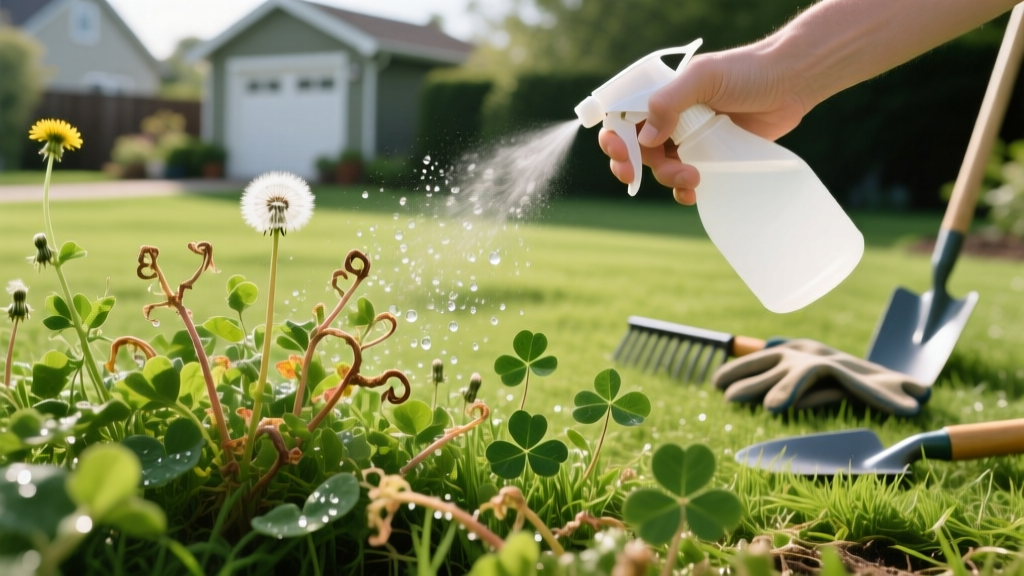
How to Kill Weeds With White Vinegar: The Organic Formulation Guide
The Chemistry of Acetic Acid as a Contact Herbicide
When homeowners search for ways to kill weeds white vinegar solutions are often the first recommendation, but few understand the underlying botanical mechanics. White vinegar contains acetic acid (CH3COOH), which acts as a rapid-desiccant contact herbicide. Upon contact with plant tissue, the acid strips the waxy cuticle from the leaf surface and causes the cell membranes to rupture. This leads to immediate cellular leakage and severe dehydration of the foliage.
Because acetic acid is a contact agent rather than a systemic one, it does not translocate down into the root system. It destroys the top growth it touches, which is highly effective for young annual weeds but presents distinct limitations for established perennials with deep taproots. Understanding this distinction is critical for setting realistic expectations and formulating the correct application strategy.
⚠️ The Internet "Salt" Myth: A Soil Health Warning
Countless DIY recipes online suggest adding table salt (sodium chloride) to your vinegar mixture to "ensure the weed never comes back." Do not do this. Sodium is highly toxic to soil microbiology and destroys soil structure by causing clay particles to disperse, leading to severe compaction and drainage failure. While it will sterilize the soil and kill the weed, it will also prevent any desirable turfgrass or ornamental plants from growing in that spot for years. Stick to acid and surfactants to protect your soil ecosystem.
Formulating the Ideal Organic Vinegar Solution
To effectively kill weeds white vinegar must be combined with a surfactant. Water and vinegar have high surface tension (approximately 72 mN/m), causing the liquid to bead up and roll off the waxy leaves of broadleaf weeds. Adding a surfactant reduces the surface tension to roughly 30 mN/m, allowing the solution to spread evenly across the leaf surface and maximize cellular contact.
The Core Recipe
- 1 Gallon of standard household white vinegar (5% acetic acid concentration).
- 2 Tablespoons (1 oz) of liquid dish soap (such as Dawn) or liquid Castile soap. This acts as the non-ionic surfactant.
- Optional: 1 cup of orange oil (d-limonene) for added cuticle-stripping power on stubborn broadleaves.
Mix the ingredients gently in a pump sprayer to avoid creating excessive suds. Agitate the tank briefly before every few sprays to ensure the soap remains evenly suspended in the acid.
Household vs. Horticultural Vinegar: Which Do You Need?
Not all vinegar is created equal. The concentration of acetic acid dictates the size and maturity of the weeds you can successfully eradicate. According to the University of Minnesota Extension, higher concentrations require strict safety protocols.
| Feature | Household White Vinegar (5%) | Horticultural Vinegar (20-30%) |
|---|---|---|
| Target Weeds | Seedlings, young annuals (< 3 inches tall) | Mature annuals, tough broadleaves, light perennials |
| Cost per Gallon | $3.00 - $5.00 | $25.00 - $40.00 |
| PPE Required | Standard eye protection | Chemical goggles, face shield, nitrile gloves, mask |
| Soil Impact | Temporary, minor pH drop | Severe temporary pH drop, can harm shallow turf roots |
Precision Application Protocol
The efficacy of acetic acid is heavily dependent on environmental conditions. Spraying on a cool, overcast day will yield poor results. Follow this protocol to maximize desiccation:
- Check the Forecast: Ensure zero rainfall is expected for at least 24 hours. Rain will wash the acid off the foliage before cell rupture is complete.
- Time the Spray: Apply between 10:00 AM and 2:00 PM. The combination of peak UV radiation and high temperatures accelerates the acid's burning action.
- Temperature Threshold: Only apply when ambient temperatures are above 75°F (24°C). Heat stress weakens the weed's cellular defenses, making the vinegar significantly more lethal.
- Nozzle Selection: Adjust your pump sprayer to a wide fan mist rather than a pinpoint stream. You need complete, uniform coverage of the leaf surface, not heavy runoff.
- Shield Desirable Plants: Acetic acid is non-selective. Use a piece of cardboard as a physical shield to prevent drift from killing your turfgrass or ornamental plants.
Efficacy Matrix: Which Weeds Will It Actually Kill?
Managing expectations is vital when utilizing organic controls. The UC Davis Integrated Pest Management program notes that non-chemical controls require precise targeting based on weed life cycles.
| Weed Category | Examples | Vinegar Efficacy (5%) | Vinegar Efficacy (20%) |
|---|---|---|---|
| Young Annual Broadleaf | Chickweed, Henbit, Purslane | High (85-100% kill) | High (100% kill) |
| Mature Annual Grasses | Crabgrass, Goosegrass | Medium (Top burn only) | High (Complete kill) |
| Perennial Broadleaf | Dandelion, Plantain, Thistle | Low (Regrows in 2 weeks) | Medium (Requires 2-3 apps) |
| Perennial Grasses | Bermudagrass, Quackgrass | Very Low (Ineffective) | Low (Rhizomes survive) |
Post-Application Soil Recovery and pH Buffering
While acetic acid breaks down rapidly in the soil—typically metabolized by soil microbes within 48 to 72 hours according to the National Pesticide Information Center (NPIC)—repeated applications in the same localized area can temporarily depress soil pH. If you are treating cracks in a driveway or a specific garden bed repeatedly, monitor the soil pH.
If the soil pH drops below 6.0 in turf areas adjacent to your treatment zones, apply a light dusting of pulverized agricultural limestone (calcitic lime) at a rate of 5 lbs per 1,000 square feet to buffer the acidity and restore optimal conditions for turfgrass root development.
Frequently Asked Questions
Will white vinegar kill my lawn grass if I accidentally spray it?
Yes. Acetic acid is a non-selective herbicide, meaning it does not differentiate between a weed and your desirable Kentucky Bluegrass or Bermuda turf. Any grass foliage that receives a thorough coating will suffer severe desiccation and dieback. Spot-treat carefully and use a physical shield.
Can I use apple cider vinegar instead of white vinegar?
You can, but it is not recommended. Apple cider vinegar typically contains the same 5% acetic acid concentration as white vinegar, but it is significantly more expensive and contains organic sugars that can attract insects and promote unwanted fungal growth in the soil. Stick to distilled white vinegar for pure, cost-effective acid delivery.
How many times do I need to spray a dandelion to kill it completely?
Because dandelions possess a deep, fleshy taproot that stores massive energy reserves, a 5% vinegar solution will only burn the top growth. The weed will likely regrow from the root crown within 10 to 14 days. To kill a mature dandelion organically, you must repeatedly spray the new foliage every time it emerges, eventually starving the root of its ability to photosynthesize, or use a manual dandelion digger to extract the taproot physically.

