
Lawn Care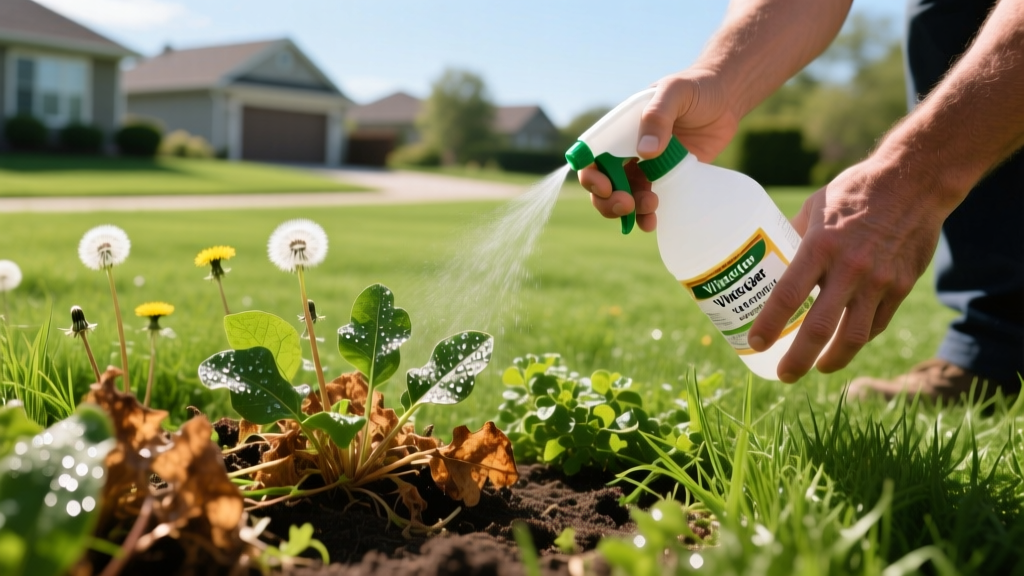
How to Kill Weeds with Vinegar: Recipes, Timing, and Limits
The Reality of Acetic Acid as a Herbicide
Homeowners seeking organic lawn care often attempt to kill weeds with vinegar, but the internet is flooded with ineffective recipes and dangerous advice. To use acetic acid successfully as a non-selective contact herbicide, you must understand its biological mechanism. Unlike systemic herbicides (such as glyphosate) that travel down to the root system, acetic acid works strictly through contact desiccation. It strips the waxy cuticle from the leaf surface, causing rapid moisture loss and cell membrane rupture. When executed correctly, you can achieve 90% to 100% top-kill on susceptible broadleaf weeds within 24 hours. However, mismanaging the concentration, timing, or surfactant will result in wasted money and rapid weed regrowth.
Household vs. Horticultural Vinegar: The Concentration Matrix
The most common reason organic weed control fails is the use of standard culinary vinegar. The concentration of acetic acid dictates the pH level and the speed of cellular destruction. Below is a breakdown of what you are actually buying and how it performs in the field.
| Vinegar Type | Acetic Acid % | Approx. pH | Efficacy on Mature Weeds | Cost per Gallon | Safety Profile |
|---|---|---|---|---|---|
| Household (Culinary) | 5% | 2.4 | Poor (Only kills very young seedlings) | $3.00 - $5.00 | Food-safe, mild irritant |
| Horticultural | 20% | 1.5 | High (Effective on most broadleaves) | $25.00 - $35.00 | Corrosive, requires PPE |
| Industrial / Ag | 30%+ | 1.0 | Extreme (Rapid desiccation) | $40.00+ | Severe burn hazard, toxic vapor |
To effectively kill weeds with vinegar on a mature lawn or hardscape, you must use a minimum of 20% horticultural acetic acid. Products labeled as OMRI-listed for organic use are available in this concentration, ensuring they meet strict ecological standards without synthetic adjuvants.
The Ultimate Organic Vinegar Weed Killer Recipe
Acetic acid alone will bead up and roll off the waxy leaves of mature weeds like plantain or thistle. You must reduce the surface tension of the liquid using a surfactant. While many amateur guides suggest synthetic dish soaps, true organic compliance requires a natural surfactant.
- Base: 1 Gallon of 20% Horticultural Vinegar.
- Surfactant: 1 ounce (2 tablespoons) of liquid Castile soap or an OMRI-listed insecticidal soap. This breaks the water's surface tension, allowing the acid to coat the leaf entirely.
- Emulsifier (Optional): 1 teaspoon of food-grade lecithin or a commercial organic silicone-based spreader sticker if treating highly waxy leaves.
- Mixing: Always add the soap to the vinegar gently to prevent excessive foaming. Agitate the pump sprayer tank before every few passes to prevent the soap from separating.
⚠️ The Salt Myth Warning: Do not add Epsom salt, table salt, or rock salt to your vinegar mixture. While sodium chloride will kill weeds, it permanently destroys soil structure. Sodium ions displace calcium and magnesium, causing soil particles to bind tightly together (flocculation failure). This results in severe soil compaction, zero water infiltration, and a sterile environment where neither grass nor weeds will grow for years.
Application Strategy: Timing the Desiccation Window
Because acetic acid relies on rapid moisture evaporation to destroy plant tissue, environmental conditions dictate your success rate. Spraying on a cloudy, cool, or humid day will yield poor results, as the liquid will dry too slowly and the plant will metabolize the minor damage.
- Temperature Threshold: Apply only when ambient temperatures are above 75°F (24°C). Heat accelerates the chemical breakdown of the leaf cuticle.
- Time of Day: Spray between 10:00 AM and 2:00 PM. Avoid early morning applications; residual dew on the leaves will dilute your 20% solution down to an ineffective 10% or lower upon contact.
- UV Index: Full, direct sunlight is mandatory. The combination of high UV radiation and high heat creates a thermal shock that maximizes cellular rupture.
- Wind Speed: Keep applications to days with wind speeds under 5 mph. Horticultural vinegar is non-selective; drift will severely burn your desirable turfgrass and ornamental shrubs.
Where Vinegar Fails: The Taproot Limitation
Understanding the limits of organic contact herbicides is crucial for long-term lawn renovation. Acetic acid does not translocate. It only kills the tissue it physically touches. Annual weeds (like crabgrass, chickweed, and spurge) have shallow, fibrous root systems and will usually die completely after one application. However, perennial weeds with deep taproots or rhizomes present a different challenge.
Troubleshooting Common Failure Modes
| Weed Type | Root Structure | Vinegar Efficacy | Required Follow-Up Action |
|---|---|---|---|
| Dandelion | Deep Taproot (up to 10 inches) | Top-kill only; regrows in 14 days | Repeat spray on new shoots to exhaust root carbohydrates, or manual extraction. |
| Field Bindweed | Extensive Rhizome Network | Very Low; burns leaves but ignores roots | Smothering with landscape fabric or repeated mowing; vinegar is ineffective here. |
| White Clover | Stolons (above ground runners) | Moderate; kills sprayed nodes | Must saturate all creeping stems; missed nodes will re-root immediately. |
| Crabgrass | Shallow Fibrous | High; complete kill on seedlings | None required if caught before seed head formation. |
Essential Safety Gear for 20%+ Acetic Acid
While culinary vinegar is harmless, 20% to 30% horticultural acetic acid is a severe corrosive hazard. The EPA's minimum risk pesticide guidelines exempt certain low-toxicity substances, but high-concentration acetic acid requires strict adherence to safety protocols to prevent permanent injury.
- Eye Protection: Unvented chemical splash goggles are mandatory. Standard safety glasses do not prevent liquid from splashing up from the weeds into the eyes, which can cause permanent corneal scarring and blindness.
- Hand Protection: Thick nitrile or neoprene gloves. Latex gloves will degrade rapidly upon contact with high-strength acids.
- Respiratory Protection: When spraying in enclosed areas (like narrow side-yards or near fences) on hot days, the vaporized acetic acid can cause severe respiratory tract irritation. Use an N95 or a half-face respirator with organic vapor/acid gas cartridges.
- Equipment Care: Acetic acid will corrode metal pump sprayer components. Use a sprayer with a fiberglass or polyethylene tank, and flush the system with clean water and a baking soda solution (to neutralize the acid) immediately after use.
Cost Analysis: DIY Vinegar vs. Commercial Organic Sprays
Is mixing your own horticultural vinegar actually cheaper than buying pre-formulated organic herbicides? Let us look at the real-world economics for treating a standard 5,000 square foot hardscape and perimeter zone.
A gallon of 20% horticultural vinegar costs roughly $30. Mixed with a $5 bottle of Castile soap, your cost per gallon of ready-to-use spray is about $32. A single gallon covers approximately 1,000 square feet of dense weed growth. Therefore, treating 5,000 square feet costs around $160.
Conversely, commercial OMRI-listed d-limonene (citrus oil) or pre-mixed acetic acid products (like Avenger Weed Killer or Captain Jack's Deadweed Brew) typically retail for $25 to $35 per 32-ounce ready-to-use bottle. To cover 5,000 square feet with these commercial sprays, you would need roughly 10 bottles, pushing the cost to $250 - $350. Mixing your own 20% acetic acid solution yields a 40% to 50% cost savings while delivering identical desiccation results, provided you are willing to handle the corrosive raw materials safely.
Mastering how to kill weeds with vinegar requires respecting the chemistry of acetic acid. By utilizing 20% concentrations, incorporating a proper organic surfactant, and applying the solution during peak thermal windows, you can maintain a pristine, chemical-free landscape without sacrificing efficacy or damaging your underlying soil biology.

