
Lawn Care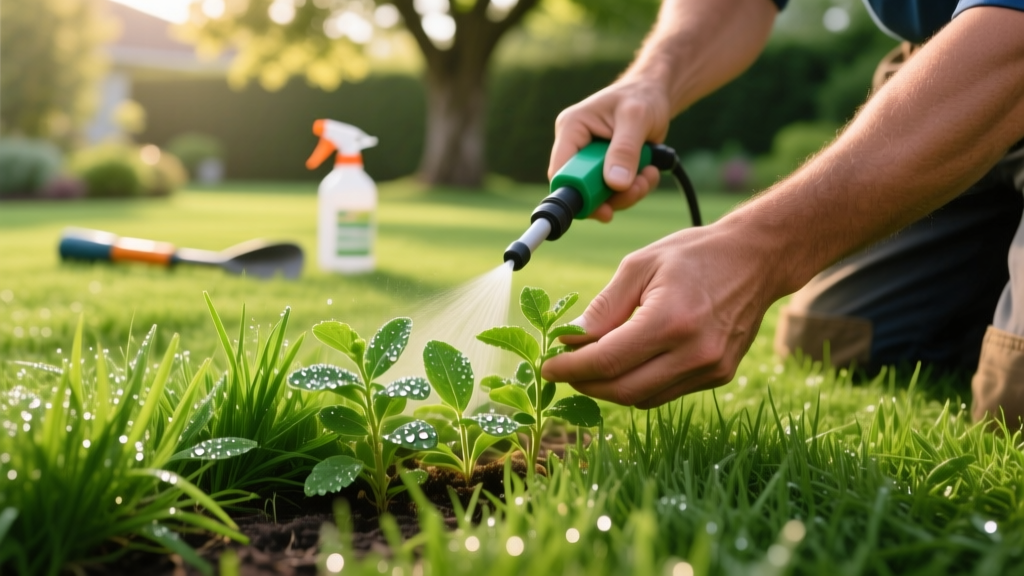
How to Kill Weeds Without Killing Grass: Selective Spot Guide
The Science of Selective Weed Control
When homeowners ask how to kill weeds without killing grass, the answer lies in plant biology and selective chemistry. Broadleaf weeds (dicots) and turfgrasses (monocots) possess fundamentally different vascular systems, leaf structures, and metabolic pathways. Selective herbicides exploit these differences. For instance, synthetic auxins like 2,4-D and Dicamba mimic natural plant growth hormones. When absorbed by a broadleaf weed, the herbicide triggers unregulated, explosive cellular growth that literally tears the plant's vascular tissue apart. Turfgrasses, however, possess enzymes that rapidly metabolize and neutralize these compounds before damage occurs.
However, 'selective' does not mean 'universally safe.' The most common mistake in lawn care is applying a selective herbicide formulated for cool-season grasses to a warm-season lawn, or vice versa. What safely eradicates clover in Kentucky Bluegrass can severely stunt or kill St. Augustine grass. Understanding your specific turf type and the exact chemical mechanism required for your target weed is the only way to achieve zero-grass-damage spot treatments.
Grass-Type Herbicide Compatibility Matrix
Before purchasing any product, cross-reference your turf species with this compatibility matrix. Applying the wrong active ingredient will result in severe phytotoxicity, manifesting as yellowing, stunting, or complete necrosis of your lawn.
| Turfgrass Species | Safe Broadleaf Herbicides | Safe Grassy Weed Herbicides | Herbicides to STRICTLY Avoid |
|---|---|---|---|
| St. Augustine | Atrazine, Celsius WG | Sethoxydim | Quinclorac, 2,4-D (high rates), MSMA |
| Bermudagrass | SpeedZone, 2,4-D Amine, Celsius WG | Quinclorac, Fluazifop | Atrazine (during summer heat), Sethoxydim |
| Kentucky Bluegrass | SpeedZone, Trimec, Tenacity | Quinclorac, Mesotrione | Celsius WG, Sethoxydim, MSMA |
| Centipedegrass | Atrazine, 2,4-D (low rates) | Sethoxydim | Quinclorac, high-rate Dicamba |
| Zoysiagrass | SpeedZone, Celsius WG | Quinclorac, Fluazifop | Atrazine (high rates), MSMA |
Broadleaf Weed Spot-Treatment Protocols
Broadleaf weeds like dandelions, white clover, and plantain are the easiest to eliminate without harming surrounding grass, provided you use the correct formulation and surfactant.
Dandelions and Deep-Rooted Perennials
Dandelions possess a deep taproot that stores energy. Contact herbicides will only burn the top growth, leading to regrowth within weeks. You need a systemic herbicide. SpeedZone (containing 2,4-D, MCPP, Dicamba, and Carfentrazone) is the gold standard for cool-season lawns. For warm-season lawns, Celsius WG (Thiencarbazone, Iodosulfuron, Dicamba) offers superior systemic translocation.
- Mix Rate (SpeedZone): 1.0 to 1.5 fl oz per gallon of water.
- Mix Rate (Celsius WG): 0.06 to 0.11 oz (using the included scoop) per gallon.
- Surfactant Requirement: Celsius WG strictly requires a Methylated Seed Oil (MSO) surfactant at 0.25% v/v (approx. 1/3 oz per gallon) to penetrate the waxy cuticle of mature weeds. SpeedZone performs best with a standard Non-Ionic Surfactant (NIS).
White Clover and Ground Ivy
Clover features a highly hydrophobic (water-repellent) waxy leaf surface. If you spray plain herbicide, it will bead up and roll off. You must include a high-quality surfactant to break the surface tension. Additionally, Clover is highly susceptible to Triclopyr. If standard 3-way herbicides fail, look for a product containing Triclopyr (like Ortho WeedClear for Lawns) to ensure complete vascular shutdown.
⚠️ Temperature and Volatility Warning: Never apply ester-based 2,4-D products when temperatures exceed 85°F. Esters vaporize in high heat and drift through the air, damaging nearby ornamental trees, shrubs, and garden plants. Always opt for amine formulations for spot-treatments during late spring and summer months.
Grassy Weed Spot-Treatment Protocols
Learning how to kill weeds without killing grass becomes exponentially harder when the weed is also a grass. Because crabgrass, dallisgrass, and Poa annua share the same monocot biology as your lawn, selective options are limited and highly specific to your turf type.
Crabgrass and Foxtail
Quinclorac (sold as Drive XLR8) is the premier post-emergent crabgrass killer. It triggers a unique auxin-like response specifically in certain grassy weeds. However, Quinclorac is highly toxic to St. Augustine and Centipedegrass. If you have St. Augustine, you cannot chemically spot-treat crabgrass safely; you must rely on pre-emergent barriers (like Prodiamine) in early spring.
Poa Annua (Annual Bluegrass)
Poa Annua is notoriously difficult to kill post-emergence in cool-season lawns because it is genetically very close to Kentucky Bluegrass and Perennial Ryegrass. Tenacity (Mesotrione) is one of the few safe options. It acts as an HPPD inhibitor, blocking photosynthesis. The weed will turn stark white before dying. Note that Tenacity will also temporarily bleach your desirable turfgrass white for 7-14 days, but the grass will recover while the Poa Annua dies.
Step-by-Step Application Framework for Zero Grass Damage
Even the safest selective herbicide will kill your grass if applied incorrectly. Over-application is the primary cause of turf damage during spot-treatments. Follow this exact protocol:
- Ditch the Hose-End Sprayer: Hose-end sprayers are wildly inaccurate and encourage over-application. Use a dedicated 1-gallon or 2-gallon pump tank sprayer.
- Calibrate Your Output: Fill the sprayer with 1 gallon of plain water. Spray a 10x10 foot area (100 sq ft) at a normal walking pace. If you run out of water before finishing the square, you are walking too fast. If you have water left over, you are walking too slow. Adjust your pace until 1 gallon perfectly covers 1,000 sq ft.
- Mix with Blue Marker Dye: Add a turf-marking blue dye to your tank mix. This allows you to see exactly where you have sprayed, preventing accidental overlapping. Overlapping a spot-spray doubles the chemical dose, which can cause severe phytotoxicity and burn the grass.
- Spray to the Point of Runoff: Do not drench the weed. Apply a fine mist until the leaves are uniformly coated and just beginning to drip. The plant only needs to absorb the chemical through the stomata on the leaf surface.
- Wait 48 Hours to Mow: Allow the herbicide 48 hours to translocate down into the root system before mowing the lawn.
Organic and Non-Chemical Alternatives
For homeowners seeking to avoid synthetic auxins, Iron-based herbicides (specifically FeHEDTA, sold under brand names like Fiesta or Bayer Advanced Natria Lawn Weed Control) offer a viable alternative. FeHEDTA causes massive oxidative stress in broadleaf dicots, leading to rapid desiccation and necrosis within hours, while monocot grasses easily tolerate the iron.
According to Penn State Extension, iron-based herbicides are highly effective against dandelions and plantain but require multiple applications (spaced 3 weeks apart) to fully eradicate deep-rooted perennials. Furthermore, because iron is a nutrient, your grass will temporarily turn a very dark, almost black-green where sprayed, which is a harmless cosmetic effect that fades after a few mowings.
Frequently Asked Questions
Can I use vinegar to kill weeds without killing grass?
No. Horticultural vinegar (20% to 30% acetic acid) is a non-selective contact burn-down herbicide. It will destroy the cellular walls of any plant it touches, including your grass. It also lacks systemic action, meaning perennial weeds will simply resprout from their roots within a week.
Why did my grass turn yellow after spot-treating weeds?
Yellowing is usually caused by one of three factors: overlapping your spray pattern (chemical overdose), spraying during temperatures above 85°F (heat stress combined with chemical stress), or using an herbicide not rated for your specific grass species. Always consult the product label for your exact turf type, as recommended by Texas A&M AgriLife Extension.
How long should I wait to water my lawn after spot-spraying?
Most systemic selective herbicides require 2 to 4 hours of dry time to fully absorb through the leaf cuticle. Check your specific product label, but as a general rule, avoid watering or allowing rain for at least 4 hours post-application to prevent washing the active ingredient off the target weed.

