
Lawn Care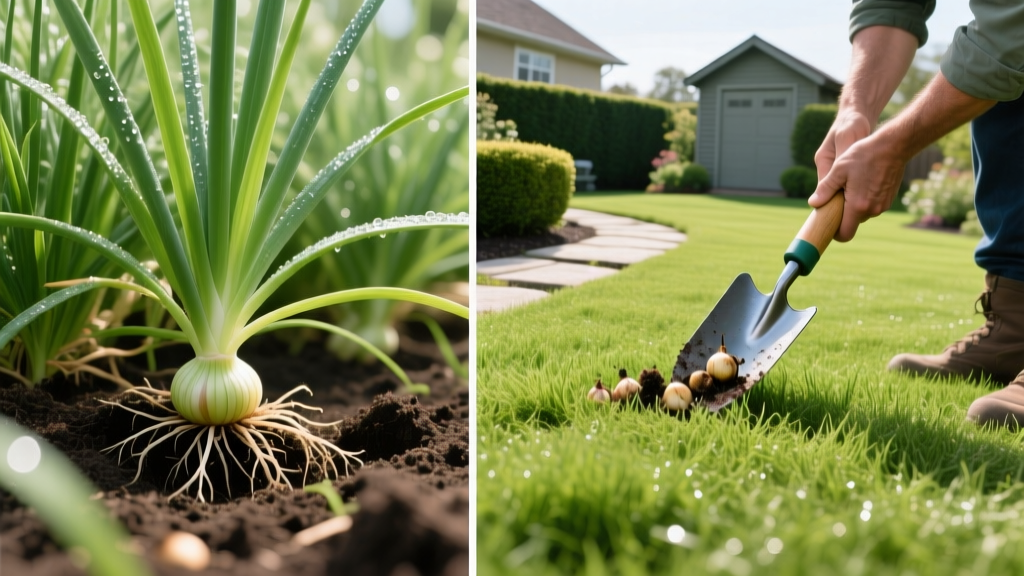
How to Kill Wild Onion Grass: A Step-by-Step Eradication Guide
There are few things more frustrating to a dedicated homeowner than mowing a pristine lawn only to be hit with the pungent, unmistakable smell of onions. Wild onion grass (often a colloquial catch-all for Allium canadense and its close cousin, wild garlic, Allium vineale) is one of the most stubborn perennial weeds in turfgrass. It thrives in cool weather, bypasses standard broadleaf weed killers, and multiplies aggressively underground.
Eradicating this weed requires more than just spraying a generic hose-end herbicide. Because of its unique biological defenses, wild onion grass demands a targeted, multi-step maintenance protocol. Below is the definitive, step-by-step procedure to eliminate wild onion grass from your lawn and prevent its return.
The Biology of the Bulb: Why Standard Weed Killers Fail
Before mixing any chemicals, you must understand why wild onion grass survives standard lawn care treatments. According to turf pathology experts at NC State TurfFiles, Allium species possess two primary defense mechanisms that render amateur herbicide applications useless:
- The Waxy Cuticle: The leaves of wild onion and wild garlic are coated in a thick, waxy layer. When you spray a standard water-based herbicide (like basic 2,4-D amine), the liquid beads up and rolls off the leaf before it can be absorbed into the plant's vascular system.
- The Bulblet Network: What you see above ground is only a fraction of the plant. Underground, the mother bulb produces a network of offset bulblets. If you pull the weed by hand, the stem snaps, leaving the bulblets behind to regenerate next season.
⚠️ The "Pulling" Trap: Never attempt to hand-pull or dig out wild onion grass unless you are willing to excavate 6 to 8 inches of soil and sift through it to remove every micro-bulblet. For 99% of homeowners, chemical eradication is the only viable path.
Step 1: Accurate Identification
While the treatment protocol for wild onion and wild garlic is identical, correctly identifying what is invading your turf helps you understand its growth cycle. Furthermore, homeowners frequently confuse Allium species with nutsedge, which requires an entirely different chemical approach (like SedgeHammer).
| Feature | Wild Onion (Allium canadense) | Wild Garlic (Allium vineale) | Yellow Nutsedge (Lookalike) |
|---|---|---|---|
| Leaf Structure | Solid, flat, narrow leaves | Hollow, round, tube-like leaves | Solid, triangular (V-shaped) stem |
| Odor | Strong onion scent when crushed | Strong garlic scent when crushed | No distinct odor |
| Underground | White bulbs with thick fibrous roots | Bulbs with multiple offset bulblets | Nut-like tubers (nutlets) |
Step 2: Mechanical Preparation and Surfactant Strategy
This is the most critical step that amateur guides miss. You must compromise the plant's waxy defense system before introducing herbicides.
Mow Immediately Before Spraying
Set your mower to its standard height and mow the lawn no more than 12 hours before your herbicide application. The mower blade will slice the hollow, waxy tubes of the wild onion grass, leaving a fresh, jagged, open wound at the top of the plant. This exposes the unprotected inner vascular tissue, allowing the herbicide to bypass the waxy cuticle and travel directly down to the mother bulb.
Add a Penetrating Surfactant
Water alone will not carry the active ingredient through the plant's defenses. You must add a Non-Ionic Surfactant (NIS) or a Methylated Seed Oil (MSO) to your tank mix.
Dosing Rate: Add 0.25% v/v of surfactant to your mixture. In practical terms, this is roughly 1/2 ounce (1 tablespoon) of surfactant per gallon of water. MSO is generally superior to NIS for Allium species because the oil actively softens and dissolves the waxy leaf cuticle.
Step 3: Selecting the Right Herbicide Chemistry
Standard 3-way broadleaf herbicides (containing only 2,4-D, Mecoprop, and Dicamba) often fail against wild onion grass unless applied in perfect conditions. For reliable eradication, you need herbicides that contain fast-acting contact chemicals paired with systemic translocators.
According to weed management guidelines from Penn State Extension, formulations containing Sulfentrazone or Carfentrazone are highly effective because they cause rapid cell membrane disruption, burning through the waxy barrier while the systemic ingredients travel to the roots.
Recommended Professional-Grade Products
- SpeedZone Southern (or Broadleaf): Contains Carfentrazone-ethyl, 2,4-D ester, MCPP, and Dicamba. The ester formulation of 2,4-D penetrates wax much better than amine. Rate: 1.5 to 2.0 oz per 1,000 sq ft.
- Blindside Herbicide: Contains Sulfentrazone and Metsulfuron-methyl. Exceptional for stubborn broadleaves and suppresses underground bulblet regeneration. Rate: 0.5 to 1.0 oz per 1,000 sq ft.
- Ortho WeedClear for Lawns (Consumer Option): If professional products are unavailable, ensure you buy the version that explicitly lists Sulfentrazone on the active ingredient label, not just basic 2,4-D.
Step 4: The Two-Application Eradication Protocol
Wild onion grass cannot be killed in a single application. The first application kills the mother plant and the visible foliage, but the stress often triggers the dormant offset bulblets to sprout weeks later. A mandatory follow-up application is required.
Timing the Applications
Do not spray in the summer. Allium species go semi-dormant in high heat, meaning they will not translocate the herbicide down to the roots.
Primary Application: Mid-to-Late Fall (October to November), when the weed is actively growing and pulling nutrients (and herbicide) down into the bulb for winter storage.
Secondary Application: Early Spring (March to April), targeting any surviving offset bulblets that sprouted as soil temperatures crossed 50°F.
The Application Checklist
- Check the Forecast: Ensure no rain is expected for at least 48 hours post-application, and avoid spraying if temperatures exceed 85°F to prevent turfgrass phytotoxicity (chemical burn).
- Mix the Solution: In a 1-gallon or 2-gallon pump sprayer, mix the selected herbicide at the label rate, add the MSO or NIS surfactant, and agitate thoroughly.
- Spot Treat: Spray the wild onion patches until the foliage is visibly wet, but not dripping. The fresh mower cuts will absorb the liquid rapidly.
- Wait 48 Hours: Do not mow, water, or disturb the lawn for two full days to allow maximum translocation to the root zone.
- Mark Your Calendar: Set a reminder for 14 to 21 days out to inspect for secondary sprouts, and repeat the exact process if new hollow tubes emerge.
Step 5: Cultural Prevention and Soil Remediation
Wild onion grass thrives in compacted, poorly drained, and slightly acidic soils. Once the chemical eradication is complete, you must alter the soil environment so your desirable turfgrass can outcompete future weed seeds.
- Core Aeration: Perform core aeration in the fall to relieve soil compaction. Allium bulbs struggle to establish in loose, highly oxygenated soil profiles.
- pH Adjustment: Test your soil pH. Wild onion favors a pH below 6.0. Apply pelletized lime in the late fall to raise the pH to the 6.5–7.0 range, which optimizes nutrient uptake for your turf while making the environment less hospitable to Allium species.
- Overseeding: Thick turf is the ultimate pre-emergent. Overseed bare patches immediately after the final herbicide application (respecting the herbicide's reseeding waiting period, usually 3 to 4 weeks for products containing Carfentrazone) to close the canopy and block sunlight from reaching the soil surface.
Frequently Asked Questions
Will vinegar or boiling water kill wild onion grass?
No. Horticultural vinegar and boiling water are strictly contact burners. They will scorch the top inch of the hollow leaves but will leave the underground mother bulb and offset bulblets completely unharmed. The weed will regrow within 10 days.
Can I use a pre-emergent to stop wild onion from coming back?
Standard pre-emergents like Prodiamine or Dithiopyr are designed to stop grassy and small-seeded broadleaf weeds from germinating. They have virtually zero efficacy against the underground vegetative reproduction of wild onion bulblets. Post-emergent systemic herbicides are mandatory.
Is wild onion grass toxic to my pets?
Yes. Members of the Allium family contain thiosulphate, which is toxic to dogs and cats if ingested in large quantities, potentially causing hemolytic anemia. Eradicating it from play areas is highly recommended for pet owners.

