
Lawn Care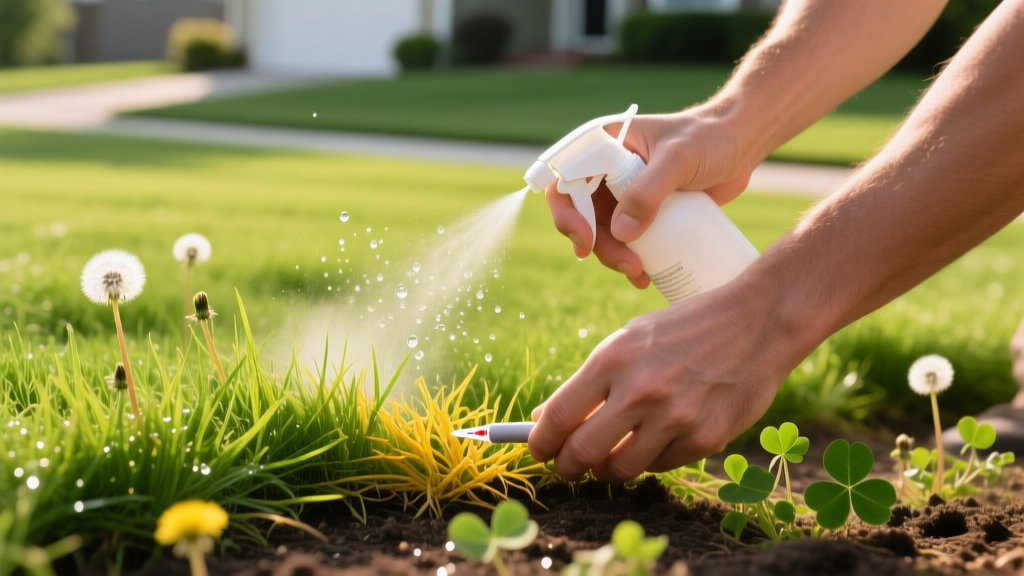
Killing Crabgrass in Established Lawns: Spot-Treatment Guide
The Biology of the Enemy: Why Timing Dictates Success
Successfully killing crabgrass (Digitaria sanguinalis) in an established lawn is rarely a matter of simply spraying a generic weed killer. It requires a precise understanding of the weed's growth stages and the chemical limitations of post-emergent herbicides. Crabgrass is an annual summer grass that germinates when soil temperatures consistently reach 55°F to 60°F. Once it emerges, it rapidly progresses through distinct vegetative stages, each requiring a different chemical approach.
The most critical metric for spot-treatment efficacy is the tiller count. A tiller is a secondary stem that grows from the base of the plant. According to NC State Extension, herbicide absorption rates drop drastically as the plant matures:
- 1- to 3-leaf stage: Highly susceptible. Single application mortality rate exceeds 95%.
- 4- to 5-tiller stage: Moderate susceptibility. Requires two applications spaced 14 to 21 days apart for complete control.
- 6+ tillers (mature/mid-summer): Low susceptibility. Spot treatment often results in severe phytotoxicity to surrounding desirable turf before the crabgrass dies.
⚠️ The Tiller Threshold Warning: If you are attempting to kill crabgrass in late July or August when the plants have 6 or more tillers, post-emergent spot treatment is generally a waste of chemicals. At this stage, focus on manual removal or wait for the first autumn frost to naturally kill the annual weed, followed immediately by a fall pre-emergent and overseeding strategy.
Selecting the Right Active Ingredient
The market is saturated with broad-spectrum herbicides, but for targeted crabgrass eradication, you need specific grassy-weed chemistries. The two industry-standard active ingredients for post-emergent crabgrass control are Quinclorac and Mesotrione.
| Active Ingredient | Common Pro Brand | Best Application Window | Turfgrass Safety |
|---|---|---|---|
| Quinclorac | Drive XLR8 | 1 to 5-tiller stage | Safe for KBG, Fescue, Bermuda, Zoysia. NOT safe for St. Augustine or Centipede. |
| Mesotrione | Tenacity | Pre-emergent or early post (1-2 leaf) | Safe for most cool-season grasses. Safe to use at the time of seeding. |
| Fenoxaprop-p-ethyl | Acclaim Extra | Early post-emergence | Excellent safety on cool-season turf; slower visual results than Quinclorac. |
Why Quinclorac Dominates Spot Treatments
For established lawns suffering from isolated crabgrass patches, Quinclorac (specifically the XLR8 formulation) is the gold standard. It mimics the plant hormone auxin, causing rapid, uncontrolled cell division that literally tears the weed apart from the inside out. As of 2026, a 32oz bottle of Drive XLR8 retails for approximately $85 to $95, but because spot-treatment dilution rates are so low, this single bottle can treat over 1.5 acres of targeted patches, bringing the cost per application down to mere pennies.
Step-by-Step Spot-Treatment Protocol
To achieve maximum efficacy without damaging your desirable turf, follow this exact mixing and application protocol. This guide assumes the use of a standard 2-gallon handheld pump sprayer, which is ideal for spot treatments.
Step 1: Calculate the Dilution Rate
The label rate for Quinclorac is 0.367 fluid ounces per 1,000 square feet. When spot-treating, you are not treating 1,000 square feet at once. You must mix based on the volume of water needed to cover your specific target area. A general rule of thumb for handheld sprayers is that 1 gallon of water covers roughly 500 square feet when walking at a normal pace.
- For 1,000 sq ft of targeted weeds: Mix 0.73 fl oz of Quinclorac into 2 gallons of water.
- For smaller, isolated patches (approx. 250 sq ft): Mix 0.18 fl oz (roughly 1 teaspoon) into 0.5 gallons of water.
Step 2: Add the Surfactant (Non-Negotiable)
Crabgrass leaves are coated in a waxy cuticle that repels water-based sprays. If you apply Quinclorac without a surfactant, up to 40% of the herbicide will roll off the leaf blade and waste into the soil. You must add a Non-Ionic Surfactant (NIS) or a Methylated Seed Oil (MSO).
Expert Mixing Tip: Add the surfactant at a rate of 0.25% v/v. In practical terms, this equals roughly 1/2 teaspoon of NIS per gallon of mixed solution. Always add water first, then the herbicide, then the surfactant last to prevent excessive foaming in your tank.
Step 3: Application Technique and Timing
According to Penn State Extension, environmental conditions at the exact moment of application dictate success. Spray your targeted patches between 8:00 AM and 11:00 AM when the weed is actively photosynthesizing and translocating nutrients (and herbicide) down to the roots.
- Nozzle Selection: Use a flat fan nozzle rather than a cone jet. This ensures an even, uniform coating over the grassy weed without excessive runoff.
- Moisture: Do not spray if rain is expected within 24 hours. Ensure the lawn is not drought-stressed; if it hasn't rained in a week, irrigate the lawn deeply 24 hours before applying the herbicide.
🌡️ Temperature Restriction Alert: Never apply Quinclorac when daytime high temperatures are forecasted to exceed 85°F (29°C). High heat causes the herbicide to vaporize and drift, and it severely amplifies phytotoxicity, resulting in chemical burn to your Kentucky Bluegrass or Tall Fescue. If it is mid-July and consistently over 85°F, wait for a cooler front or switch to manual extraction.
Troubleshooting Common Spot-Treatment Failures
Even experienced lawn care professionals encounter edge cases. If your crabgrass is turning yellow but not dying, or if your surrounding turf is showing stress, review these common failure modes:
Failure Mode 1: The "Green Center" Phenomenon
Symptom: The outer leaves of the crabgrass turn purple and necrotic, but the center crown remains green and pushes new growth two weeks later.
Cause: You treated a mature, 5+ tiller plant with a single application. The root mass was too large for the single auxin dose to kill.
Fix: Apply a second treatment of Quinclorac exactly 14 to 21 days after the first application. Do not wait longer, or the plant will fully recover.
Failure Mode 2: Desirable Turf Yellowing (Chlorosis)
Symptom: The Tall Fescue or Kentucky Bluegrass surrounding the spot-treated area turns pale yellow.
Cause: Over-spray or mixing the solution too hot (exceeding the 0.367 oz per 1k sq ft rate). Quinclorac can cause temporary stunting and chlorosis in cool-season grasses.
Fix: This is usually cosmetic and temporary. Apply a liquid foliar fertilizer high in nitrogen and iron (such as a chelated iron spray) to help the desirable turf mask the yellowing and push new green growth within 7 days.
Post-Treatment Recovery and Overseeding
Once the crabgrass is dead and turns a papery brown, it will leave a bare void in your turf canopy. According to UMass Amherst Extension, leaving these bare spots exposed invites the next flush of weed seeds. You must fill the void.
Quinclorac has a relatively short soil residual life compared to pre-emergents. You can safely overseed the spot-treated areas 14 days after your final Quinclorac application. Rake out the dead crabgrass debris, expose the topsoil, apply a starter fertilizer, and drop high-quality, weed-free Tall Fescue or Kentucky Bluegrass seed. Keep the patched area consistently moist for 14 to 21 days until the new grass reaches a height of 3 inches.
By adhering to strict dilution rates, respecting temperature thresholds, and utilizing the correct surfactant chemistry, you can systematically eradicate crabgrass patches without sacrificing the health and density of your established lawn.

