
Lawn Care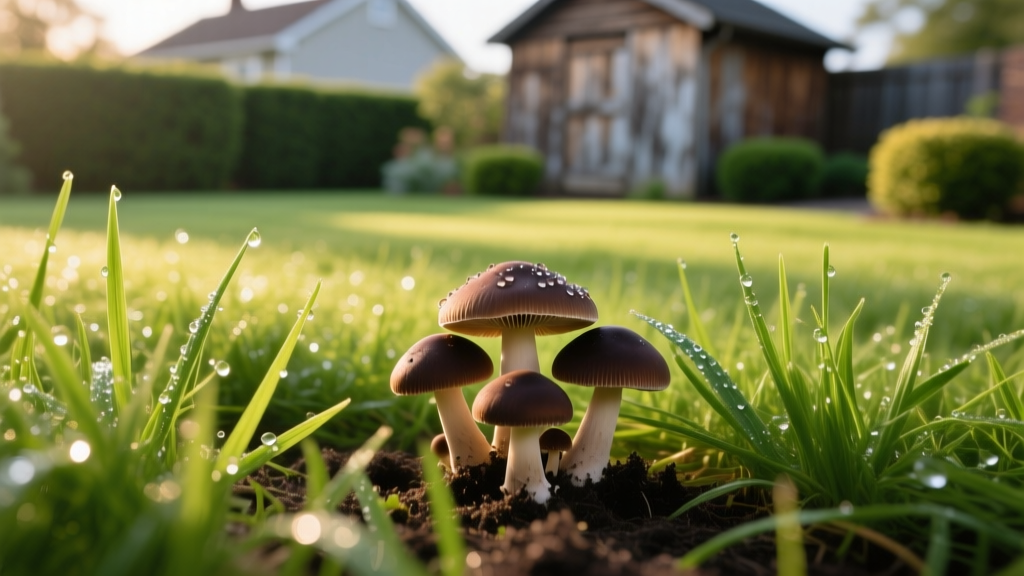
Killing Lawn Mushrooms: Step-by-Step Fungus Removal Guide
The Biology of Lawn Fungi: Why They Appear
Most homeowners approach killing lawn mushrooms by simply kicking them over or applying random surface sprays. This strategy inevitably fails because the mushrooms you see are merely the reproductive fruiting bodies of a vast, underground mycelium network. This network feeds on decaying organic matter—such as buried construction debris, rotting tree roots, or excessive thatch—thriving in environments with high soil moisture and poor air circulation.
To achieve permanent eradication, you must shift your focus from the surface fruit to the subterranean food source and environment. According to turf pathology experts at the University of Minnesota Extension, mushrooms are actually indicators of healthy, biologically active soil. However, when they invade high-traffic play areas or form destructive fairy rings, targeted cultural and chemical interventions become necessary.
Step 1: Physical Extraction and Debris Management
Before altering the soil profile, you must clear the immediate hazard and reduce the surface spore load.
- Manual Removal: Wear waterproof gardening gloves and pull the mushrooms from the base of the stipe (stem). Do not just kick them, as this scatters mature spores across the turf canopy.
- Spore Containment: Place extracted fungi directly into a sealed plastic bag. Do not compost them, as standard home compost piles rarely reach the 140°F required to kill fungal spores.
- Subsurface Debris Clearing: Use a soil probe or a long screwdriver to test the soil beneath the mushroom clusters. If you hit buried wood, old stumps, or construction backfill, excavate and remove this decaying material. The mycelium will starve once its primary carbon source is gone.
⚠️ Toxicity Warning: Never attempt to identify lawn mushrooms using consumer apps for foraging purposes. Many toxic species, such as Chlorophyllum molybdenum (the green-spored parasol), closely resemble edible varieties and pose severe gastrointestinal risks to children and dogs playing in the yard.
Step 2: Modifying the Soil Environment
Mycelium requires consistent moisture and compacted, poorly drained soil to fruit. Altering the physical soil structure is the most effective long-term method for killing lawn mushrooms.
Core Aeration and Sand Topdressing
Rent a walk-behind core aerator (costing roughly $85 for a half-day rental in 2026) and pass over the affected zones. The machine must pull plugs that are at least 3 to 4 inches deep and 0.5 inches in diameter. Leave the plugs on the lawn to dry and break down naturally. Immediately following aeration, apply a coarse masonry sand topdressing at a rate of 1 cubic yard per 1,000 square feet. Drag the sand into the aeration holes using a heavy mat. This permanently improves drainage and deprives the fungus of the waterlogged conditions it requires.
Irrigation Recalibration
Fungi fruit when the top inch of soil remains perpetually damp. Transition your irrigation schedule from daily, shallow 10-minute watering to deep, infrequent soakings. Apply 0.5 to 1 inch of water per week in one or two sessions, preferably between 4:00 AM and 6:00 AM. This allows the grass canopy to dry rapidly in the morning sun while driving moisture deep into the root zone.
Step 3: Accelerating Thatch Decomposition
If your lawn has a thatch layer exceeding 0.5 inches, it acts as a sponge and a secondary food source for fungi. While mechanical dethatching is an option, biological acceleration is often less disruptive to the turf.
Apply a high-nitrogen, fast-release fertilizer (such as a 32-0-4 formulation) at a rate of 1 lb of actual nitrogen per 1,000 square feet. The nitrogen spike feeds the soil bacteria responsible for breaking down thatch. As the bacteria consume the thatch, they outcompete the fungi for resources, naturally suppressing mushroom growth. Avoid using organic, slow-release fertilizers like Milorganite in heavily infested zones, as they can temporarily feed the fungal network.
Step 4: Targeted Fungicide Application
Cultural practices should always precede chemical treatments. However, if environmental modification fails, or if you are dealing with a high-value turfgrass (like a pristine Kentucky Bluegrass exhibition lawn), systemic fungicides can suppress mycelial activity.
| Active Ingredient | Consumer Product Example | Application Rate | Estimated Cost (2026) | Efficacy Profile |
|---|---|---|---|---|
| Azoxystrobin | Scotts DiseaseEx | 2.0 - 4.0 lbs / 1,000 sq ft | $35 per 10lb bag | Excellent preventative; moderate curative on basidiomycetes. |
| Flutolanil | ProStar 70WP (Commercial) | 1.5 - 2.0 oz / 1,000 sq ft | $140 per 8oz bottle | Industry standard for fairy rings; highly systemic. |
| Penthiopyrad | Velista (Commercial) | 0.3 - 0.5 oz / 1,000 sq ft | $180 per 8oz bottle | Broad-spectrum; excellent rotational partner to prevent resistance. |
Application Protocol: Fungicides must be watered in immediately after application to reach the root zone where the mycelium lives. Apply 0.25 inches of irrigation right after spreading granular products or spraying liquids. Repeat applications every 28 days during peak fruiting seasons (spring and early fall).
Advanced Troubleshooting: Eradicating Fairy Rings
Fairy rings are a specific, highly visible manifestation of lawn mushrooms that form expanding circles. According to NC State University Turf Pathology, treating them requires identifying the specific ring type, as the damage mechanisms differ entirely.
Type I: Hydrophobic Soil and Dead Grass
- Symptoms: A ring of dead, brown grass surrounded by a band of mushrooms. The soil beneath is completely dry and hydrophobic (repels water).
- The Fix: Fungicides will not fix Type I. You must break the soil's water repellency. Core aerate heavily, then apply a soil surfactant (wetting agent) like Revive or Lesco AQUA-AID. Hand-water the ring daily for two weeks to force moisture back into the soil profile.
Type II: Dark Green Growth Rings
- Symptoms: A lush, dark green, rapidly growing ring of grass with or without mushrooms. The mycelium is breaking down organic matter and releasing massive amounts of nitrogen.
- The Fix: Do not apply nitrogen fertilizer to this zone. Mask the ring by applying a balanced nitrogen fertilizer to the rest of the lawn to even out the color. If mushrooms are present, physically remove them and apply Azoxystrobin to suppress fruiting.
Type III: Mushroom Rings Only
- Symptoms: A ring of mushrooms with no visible effect on the grass color or health.
- The Fix: This is purely a cosmetic nuisance. Rake or mow the mushrooms off before they open their caps and drop spores. Chemical intervention is rarely justified for Type III unless the area is used by small children or pets.
Frequently Asked Questions
Will applying lime or baking soda kill lawn mushrooms?
No. While baking soda (sodium bicarbonate) can alter surface pH temporarily, it does not penetrate the soil deeply enough to affect the mycelium network. Furthermore, applying lime without a prior soil test risks locking up essential micronutrients like iron, leading to severe turf chlorosis without solving the fungal issue.
Does dish soap kill mushroom roots?
A mixture of dish soap and water is a common internet myth. While surfactants help water penetrate hydrophobic soil (useful for Type I fairy rings), the soap itself does not possess fungicidal properties and will not kill the mycelium. Use a commercial, turf-safe soil wetting agent instead.
How long does it take to completely eliminate a fungal network?
Starving a mycelium network by removing buried wood and adjusting irrigation typically takes 1 to 3 growing seasons. The network will eventually die off once its carbon food source is exhausted and the soil environment becomes unfavorable for sustained moisture retention.

