
Lawn Care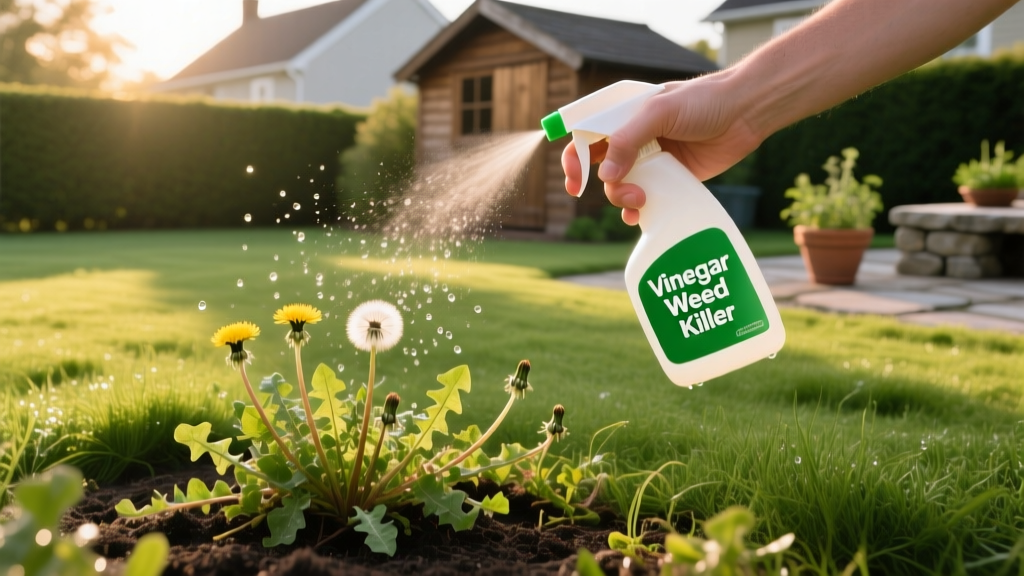
Killing Weeds Vinegar Recipe: Formulation, Application, and Lawn Safety
The Reality of Acetic Acid for Weed Control
When formulating a reliable killing weeds vinegar recipe, the most critical mistake homeowners make is reaching for the pantry. Standard culinary white vinegar contains 5% acetic acid. While 5% acetic acid can desiccate the tender, newly germinated cotyledons of annual weed seedlings, it is entirely ineffective against mature broadleaf weeds, established grasses, or deep-rooted perennials like dandelions and bindweed.
To achieve systemic-level top-kill on mature weeds without synthetic herbicides like glyphosate or 2,4-D, you must use horticultural vinegar, which is concentrated to 20% or 30% acetic acid. According to the Environmental Protection Agency (EPA), acetic acid functions as a contact desiccant. It rapidly strips the epicuticular wax layer from plant leaves, rupturing cell membranes and causing the plant tissue to dehydrate and collapse within hours.
⚠️ CRITICAL SAFETY WARNING: 20% to 30% acetic acid is a severe skin and eye irritant. It can cause irreversible corneal damage. When mixing and applying this solution, OSHA guidelines dictate the use of ANSI Z87.1 certified splash goggles, heavy-duty nitrile gloves, and long sleeves. Never spray on windy days to prevent drift into your eyes or onto desirable ornamental plants.
The Exact Killing Weeds Vinegar Recipe
A successful organic herbicide requires three components: the active desiccant (acetic acid), a cuticle solvent (d-limonene), and a surfactant to break water's surface tension. This specific formulation costs approximately $48 to $55 per gallon to mix, comparable to commercial organic herbicides.
Ingredients & Measurements
- 1 Gallon 20% Horticultural Vinegar: (Brands like Green Gobbler or Harris). Cost: ~$35-$40.
- 1 oz d-Limonene (Orange Oil): Acts as a powerful solvent to dissolve the waxy cuticle of stubborn weeds like plantain and thistle. Cost: ~$12 per bottle.
- 1 tsp Non-Ionic Surfactant: (e.g., Southern Ag Surfactant). Do not use dish soap, as the high sodium and degreasing agents can harm soil biology and foam excessively in the sprayer. Cost: ~$8 per bottle.
Mixing Protocol
- Fill a 1-gallon or 2-gallon polyethylene pump sprayer with the 20% horticultural vinegar.
- Add the 1 oz of d-limonene. Swirl gently to integrate the oils.
- Add the non-ionic surfactant last to prevent excessive foaming during the mixing process.
- Pressurize the sprayer to 40-50 PSI. A finer mist ensures complete foliar coverage without drenching the soil.
Application Timing and Weather Matrix
Because acetic acid relies on rapid cellular dehydration, environmental conditions dictate your success rate. Applying this solution on a cool, overcast day will yield poor results, as the plant's transpiration rate is too low to pull the acid through the leaf tissue rapidly.
| Condition | Optimal Parameter | Why It Matters |
|---|---|---|
| Temperature | 75°F to 90°F | Heat accelerates the desiccation process and stresses the weed's vascular system. |
| Time of Day | 10:00 AM to 2:00 PM | Peak solar radiation maximizes leaf temperature and evaporation rates. |
| Rainfastness | 2 Hours | The surfactant and d-limonene need time to penetrate the cuticle before wash-off. |
| Wind Speed | Under 5 MPH | Prevents drift onto desirable turfgrass, which is equally susceptible to acid burn. |
Soil Health and the pH Myth
A pervasive myth in organic gardening forums is that repeatedly applying vinegar will permanently acidify your soil, locking up essential nutrients like phosphorus and calcium. This is chemically false.
Acetic acid is a weak organic acid that is highly biodegradable. According to the National Pesticide Information Center (NPIC), soil microbes rapidly metabolize acetic acid, breaking it down into water and carbon dioxide. The half-life of acetic acid in active soil is typically between 1 to 4 days. While a heavy application might temporarily drop the pH of the top millimeter of soil for 48 hours, it has zero long-term impact on your lawn's foundational soil pH or base saturation levels. However, the high concentration of hydrogen ions can temporarily disrupt localized microbial activity, so avoid drenching the soil; focus strictly on foliar application.
Troubleshooting: Why Your Spray Failed
If your weeds are turning brown at the edges but recovering within a week, you have encountered one of the common edge cases of organic contact herbicides.
1. Hard Water Buffering
If you are diluting your 30% vinegar down to 20% using tap water, the dissolved calcium and magnesium bicarbonates in hard water will act as a buffer, neutralizing the acetic acid before it even leaves the sprayer nozzle. The Fix: Always use distilled water or clean rainwater if dilution is required, or simply apply 20% horticultural vinegar straight from the jug without dilution.
2. The Perennial Taproot Problem
Vinegar is a contact herbicide, not a systemic one. It does not translocate down into the roots. When you spray a mature dandelion or wild violet, the top growth will die, but the deep taproot will simply push out new leaves two weeks later. The Fix: You must exhaust the root's carbohydrate reserves. Spray the initial flush, wait 7 days for the weed to push new growth, and spray again immediately. Repeat this cycle up to three times to starve the root system.
3. Waxy Cuticle Defenses
Weeds like broadleaf plantain and puncturevine have evolved thick, waxy epicuticles that cause water-based solutions to bead up and roll off. The Fix: This is exactly why the d-limonene and non-ionic surfactant are non-negotiable in the recipe. If you omit the surfactant, the acid will simply roll onto the soil and degrade.
DIY vs. Commercial Organic Herbicides
Is mixing your own killing weeds vinegar recipe worth the effort compared to buying pre-mixed commercial organic herbicides? Here is how they compare in a real-world lawn care program.
| Feature | DIY 20% Vinegar Recipe | Commercial Organic (e.g., Burnout, Avenger) |
|---|---|---|
| Cost per Gallon | $48 - $55 | $65 - $85 |
| Active Ingredients | Acetic Acid, d-Limonene | Acetic Acid, d-Limonene, Clove Oil (Eugenol) |
| Mixing Required | Yes (Requires PPE) | No (Ready-to-spray or simple dilution) |
| Shelf Life | Indefinite (if stored in sealed HDPE) | 2-3 Years |
For spot-treating a few driveway cracks or garden bed edges, a commercial ready-to-use spray is convenient. However, for treating large lawn areas or extensive patio pavers where you need multiple gallons, the DIY recipe offers significant cost savings while allowing you to control the exact concentration of the surfactant and solvent.

