
Lawn Care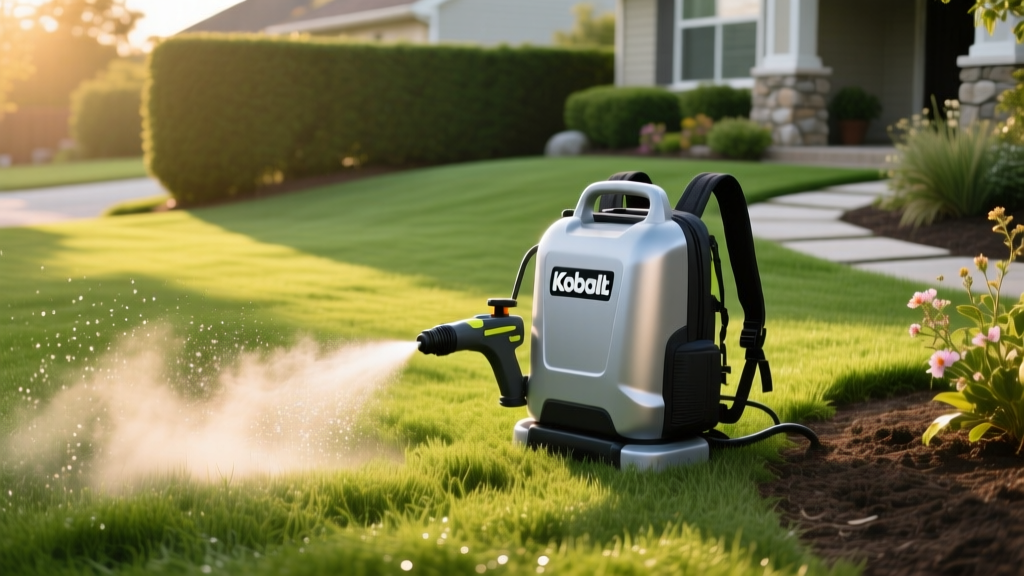
Kobalt Backpack Sprayer Guide: Battery vs Manual & Maintenance Tips
The Kobalt 4-Gallon Lineup: 40V Battery vs. Manual Diaphragm
Selecting the right Kobalt backpack sprayer hinges on your property size, the viscosity of your chemicals, and your physical tolerance for manual pumping. The Kobalt 4-gallon lineup dominates the big-box store aisles, but the internal mechanics of the 40V Lithium-Ion battery model and the manual diaphragm model serve entirely different application workflows. The battery model utilizes an internal diaphragm pump regulated by a pressure switch (cutoff at ~40 PSI), while the manual version relies on a lever-action piston/diaphragm hybrid that can peak at 60 PSI.
| Specification | Kobalt 40V 4-Gallon Battery | Kobalt 4-Gallon Manual |
|---|---|---|
| Max Pressure | 40 PSI (Regulated) | 60 PSI (Variable) |
| Empty Weight | 11.5 lbs (with battery) | 7.2 lbs |
| Flow Rate | 0.4 - 0.5 GPM (constant) | Variable based on pump cadence |
| Run Time | ~90 mins continuous (4.0Ah) | Unlimited (Manual effort) |
| Approx. Price (2026) | $149.00 | $59.00 |
Expert Verdict: Choose the 40V Battery model if you are spraying liquid aeration amendments, humic acids, or large areas of 2,4-D amine herbicide where a constant, uninterrupted flow rate is critical for even coverage. Stick to the Manual model for spot-treating small weed patches with glyphosate or applying viscous wettable powders that require higher pressure agitation.
Calibration and Nozzle Selection for Lawn Chemicals
The stock adjustable cone nozzle included with Kobalt sprayers is notorious for uneven distribution patterns, often leading to chemical burn in the center of the spray swath and under-application on the edges. For professional-grade lawn care, swap the stock tip for a flat-fan nozzle.
The 1/128th Acre Calibration Method
To ensure you are applying the exact ounces per 1,000 square feet required by your herbicide label, use the 1/128th acre method. According to NC State Extension, this method directly translates ounces caught in a jar to gallons per acre (GPA).
- Measure out an area of 340 square feet (e.g., 17 ft x 20 ft).
- Spray the area using your normal walking speed and the specific nozzle you intend to use (e.g., a TeeJet XR11003).
- Catch the output in a graduated cylinder for the exact time it took to spray that 340 sq ft area.
- The ounces of water collected equals the GPA. If you collect 20 oz, your sprayer is calibrated to 20 GPA.
For most cool-season turfgrass applications of broadleaf herbicides like Trimec, a target of 1.5 to 2.0 gallons per 1,000 sq ft (roughly 65 to 87 GPA) is ideal. The constant 40 PSI from the Kobalt 40V battery pairs perfectly with a TeeJet XR11002 (Yellow) nozzle at a walking speed of 2.5 MPH to hit this exact rate without manual pressure fluctuations.
The 3-Step Post-Application Flush (Preventing Check Valve Failure)
The most common point of failure in the Kobalt 40V battery sprayer is the internal check valve seizing due to crystallized surfactant or ester-based herbicide residue. Ester formulations (common in cold-weather broadleaf killers) are highly corrosive to the cheap rubber O-rings used in big-box sprayers. To prevent a $149 unit from becoming e-waste after one season, execute this flush protocol immediately after use.
Warning: Never use bleach to clean a sprayer that previously contained ammonia-based fertilizers or ammonium sulfate. This creates toxic chloramine gas. Use a dedicated tank cleaner or plain water.
- The Surfactant Breakdown: Fill the tank with 1 gallon of warm water and 1 tablespoon of liquid dish soap (a mild degreaser). Run the sprayer for 60 seconds to pull the soapy water through the suction filter, pump, and hose. Spray it out completely.
- The Neutralizing Rinse: Add 1 gallon of clean water and 1/4 cup of household ammonia (if you sprayed acidic herbicides) or white vinegar (if you sprayed alkaline fertilizers). Agitate the tank, run it through the lines, and spray out.
- The Final Clear-Out: Fill with 1 gallon of plain water. Spray until empty, then detach the hose from the wand and hold it vertically to drain residual liquid from the low points of the manifold.
Winterization & 40V Lithium-Ion Storage Protocol
Storing your equipment in an unheated shed from November to March will destroy both the pump diaphragm and the lithium-ion cells if not prepped correctly. The EPA's pesticide safety guidelines mandate proper equipment storage to prevent environmental contamination from cracked tanks, but protecting your investment requires specific thermal management.
Fluid Winterization
Water expands by 9% when it freezes, which will crack the Kobalt pump housing and the rigid internal pickup tube. After your final flush, pour 8 ounces of pink RV antifreeze (propylene glycol) into the empty tank. Turn on the battery sprayer and spray until you see the pink fluid exit the nozzle. This coats the internal diaphragm and prevents freezing without degrading the rubber seals like automotive antifreeze (ethylene glycol) would.
Battery Voltage Management
Lithium-ion batteries degrade rapidly when stored at 100% charge in high heat, or when left at 0% in freezing temperatures. For long-term winter storage, discharge or charge your Kobalt 40V battery to exactly 50% capacity (2 solid LED bars). Store the battery indoors in a climate-controlled environment between 50°F and 70°F. Do not leave the battery clicked into the sprayer; the micro-controllers in the sprayer handle can draw a parasitic drain over a 4-month period, bricking the battery cells.
Troubleshooting Common Kobalt Sprayer Failures
Before discarding a malfunctioning unit, run it through this diagnostic matrix. Most issues stem from maintenance oversights rather than catastrophic motor failure.
| Symptom | Probable Cause | Exact Fix |
|---|---|---|
| Motor hums, but no pressure at wand | Clogged suction filter or airlock in the pump manifold. | Remove the internal pickup tube and clean the mesh screen. Prime the pump by filling the tank with 2 inches of water and rocking the unit side-to-side while running. |
| Sprayer pulses on and off rapidly | Pressure switch is out of calibration or wand valve is partially restricted. | Clean the wand shutoff valve. If pulsing continues, locate the pressure switch on the pump housing and turn the adjustment screw counter-clockwise 1/4 turn to lower the cutoff threshold. |
| Battery dies in under 15 minutes | Voltage sag from cold weather operation or degraded cells. | Li-ion batteries lose 30% of their effective capacity below 40°F. Allow the battery to reach room temperature before use. If issue persists indoors, the BMS (Battery Management System) has flagged a dead cell; utilize the 5-year Kobalt warranty for replacement. |
| Leaking at the wand connection | Flattened or chemically degraded O-ring. | Replace the standard 1/4-inch NPT O-ring with a Viton (fluoroelastomer) O-ring, which resists degradation from harsh ester-based herbicides and xylene solvents. |
For further reading on maintaining application accuracy and preventing chemical drift, refer to the University of Minnesota Extension's comprehensive guide on backpack sprayer calibration. Proper equipment selection, paired with rigorous maintenance, ensures your lawn receives the exact chemical dosage required for optimal turf health without wasting expensive inputs.

