
Lawn Care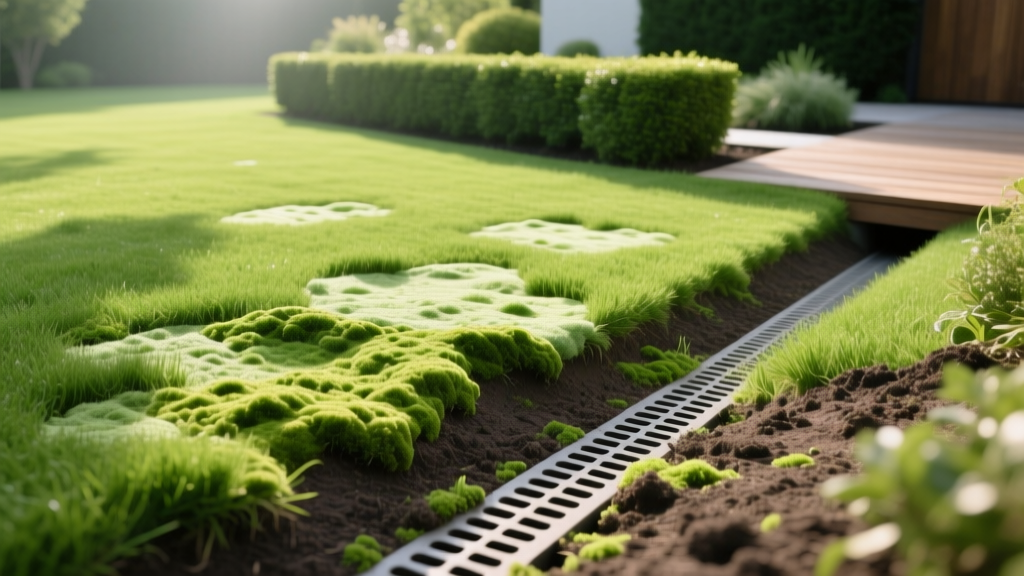
Eradicating Lawn Algae: A Step-by-Step Soil and Drainage Guide
The Biology of Lawn Algae: Why It Forms
Lawn algae is not a single organism but a collective term for primitive, non-vascular plants (Chlorophyta) and cyanobacteria that colonize bare, compacted soil. Unlike moss, which has leaf-like structures, true lawn algae forms a dark green, gelatinous, and slimy crust when wet. When dry, it hardens into a black, crusty layer that completely seals the soil surface, preventing water infiltration, gas exchange, and turfgrass seed germination.
Diagnostic Warning: Algae vs. Nostoc
Before treating, identify the organism. If the growth looks like dark, jelly-like blobs that swell dramatically after rain and turn into hard, black, horn-like crusts when dry, you are dealing with Nostoc commune (cyanobacteria, often called witch's butter). While the eradication steps below apply to both, Nostoc requires more aggressive mechanical disruption because its hardened dry state is highly resistant to chemical algaecides.
Before treating, identify the organism. If the growth looks like dark, jelly-like blobs that swell dramatically after rain and turn into hard, black, horn-like crusts when dry, you are dealing with Nostoc commune (cyanobacteria, often called witch's butter). While the eradication steps below apply to both, Nostoc requires more aggressive mechanical disruption because its hardened dry state is highly resistant to chemical algaecides.
Algae thrives under a specific triad of environmental stressors: soil compaction exceeding 250 psi, surface shade blocking more than 70% of sunlight, and prolonged surface moisture. According to the Clemson University Home and Garden Information Center, algae is fundamentally a symptom of poor soil hydrology and absent turf competition, not a pathogenic disease attacking healthy grass.
Step-by-Step Lawn Algae Eradication Protocol
Eliminating lawn algae requires a phased approach that prioritizes physical removal and soil structural repair over chemical applications. Chemical treatments alone will fail if the underlying soil crust remains intact.
Step 1: Mechanical Disruption and Removal
Algae forms an impermeable barrier. You must break this seal before any amendments or chemicals can reach the soil profile.
- Timing: Perform this step when the algae is dry and crusty. Wet algae is too slippery and will simply smear into the soil pores, worsening compaction.
- Tools: Use a heavy-duty steel thatching rake or a mechanical dethatcher (power rake) set to a shallow depth (1/4 inch).
- Procedure: Aggressively scarify the affected areas to fracture the black crust. Rake up and dispose of all debris. Do not compost algae-infested soil crusts, as dormant spores can survive standard composting temperatures.
Step 2: Deep Core Aeration
Liquid aeration products are insufficient for algae-prone areas because they cannot physically extract the compacted clay cores sealing the surface.
- Equipment: Rent a walk-behind gas-powered core aerator (e.g., Ryan Lawnaire or Classen models). Avoid tow-behind spike aerators, which merely poke holes and increase lateral compaction.
- Execution: Make two passes over the affected zone in perpendicular directions. The machine must pull soil plugs that are a minimum of 3 inches deep and 0.5 to 0.75 inches in diameter.
- Spacing: Aim for 15 to 20 holes per square foot. Leave the extracted cores on the lawn to break down naturally; they contain beneficial soil microbes that will help recolonize the sterile surface.
Step 3: Targeted Algaecide Application
Once the soil is opened, apply a targeted algaecide to kill remaining subsurface spores and cyanobacteria colonies.
| Active Ingredient | Product Example | Coverage & Cost (2026) | Best Use Case |
|---|---|---|---|
| Potassium Salts of Fatty Acids | Bonide Moss & Algae Killer | $28-$35 / 32oz RTU (Covers ~1,000 sq ft) | Organic lawns, pet-safe areas, rapid knockdown of surface slime. |
| Copper Sulfate Pentahydrate | Lily Miller Moss & Algae Killer | $22-$30 / 32oz RTU (Covers ~2,000 sq ft) | Severe Nostoc infestations, non-organic turf programs, long-lasting residual. |
Application Note: Apply copper-based products when temperatures are below 80°F to prevent turf phytotoxicity. Water the area lightly 24 hours after application to move the active ingredient into the aeration holes.
Correcting Soil Physics and Hydrology
According to research from the University of Minnesota Extension, failing to correct the soil's physical structure guarantees algae will return within a single wet season. You must alter the soil matrix to increase macroporosity and surface drainage.
Topdressing with Coarse Silica Sand
After aerating, topdress the area with coarse sand to permanently improve drainage and prevent the soil pores from sealing shut again.
Material Specification: Use only coarse silica sand or #2 mortar sand with a particle size between 0.25 mm and 0.5 mm. Never use play sand, masonry sand, or river sand. These materials have particle sizes under 0.15 mm and will mix with native clay to create a concrete-like substance, drastically worsening the compaction and algae problem.
- Application Rate: Apply 1/4 inch to 1/2 inch of coarse sand over the aerated lawn (approximately 1 cubic yard per 1,000 square feet).
- Integration: Use a stiff push broom or a drag mat to work the sand down into the aeration holes. The sand-filled cores will act as permanent vertical drainage channels.
Surface Grading and Slope Correction
If water pools on the surface for more than 4 hours after a rainfall, the grade must be corrected. The lawn should have a minimum slope of 2% (a drop of 1/4 inch per horizontal foot) away from structures and toward designated drainage zones. For minor depressions, use a 70/30 mix of coarse sand and compost to level the area, applying no more than 1/2 inch of leveling mix at a time to avoid smothering existing turf.
Re-establishing Turf Competition
Algae cannot compete with a dense, aggressive turfgrass canopy that intercepts sunlight and consumes surface moisture. Once the soil is aerated, amended, and treated, immediate overseeding is critical.
Selecting Shade-Tolerant Cultivars
In heavily shaded areas where algae typically forms, standard Kentucky Bluegrass or Bermudagrass will fail. You must select species engineered for low-light, high-moisture environments.
- Fine Fescues (Festuca spp.): Cultivars like 'Shade Survivor' or 'Beacon' hard fescue require only 3 to 4 hours of filtered sunlight and possess needle-like blades that allow air circulation at the soil level, reducing surface humidity.
- Seeding Rate: Apply Fine Fescue at a rate of 5 to 6 lbs per 1,000 square feet. Use a starter fertilizer high in phosphorus (e.g., 10-18-10) at a rate of 1 lb of actual nitrogen per 1,000 square feet to drive rapid root establishment.
- Watering Protocol for Establishment: Water newly seeded areas lightly 2 to 3 times a day for 10 minutes to keep the top 1/2 inch of soil moist, but avoid deep soaking which will recreate the saturated conditions that favor algae. Once the grass reaches 2 inches, transition to deep, infrequent watering (1 inch per week) to force roots deep into the newly aerated soil profile.
By mechanically breaking the algae crust, physically restructuring the soil matrix with coarse sand, and establishing a competitive shade-tolerant turf canopy, you eliminate the environmental niche that lawn algae requires to survive. Consistent annual core aeration and adherence to deep-watering protocols will ensure the algae does not return.

