Lawn Care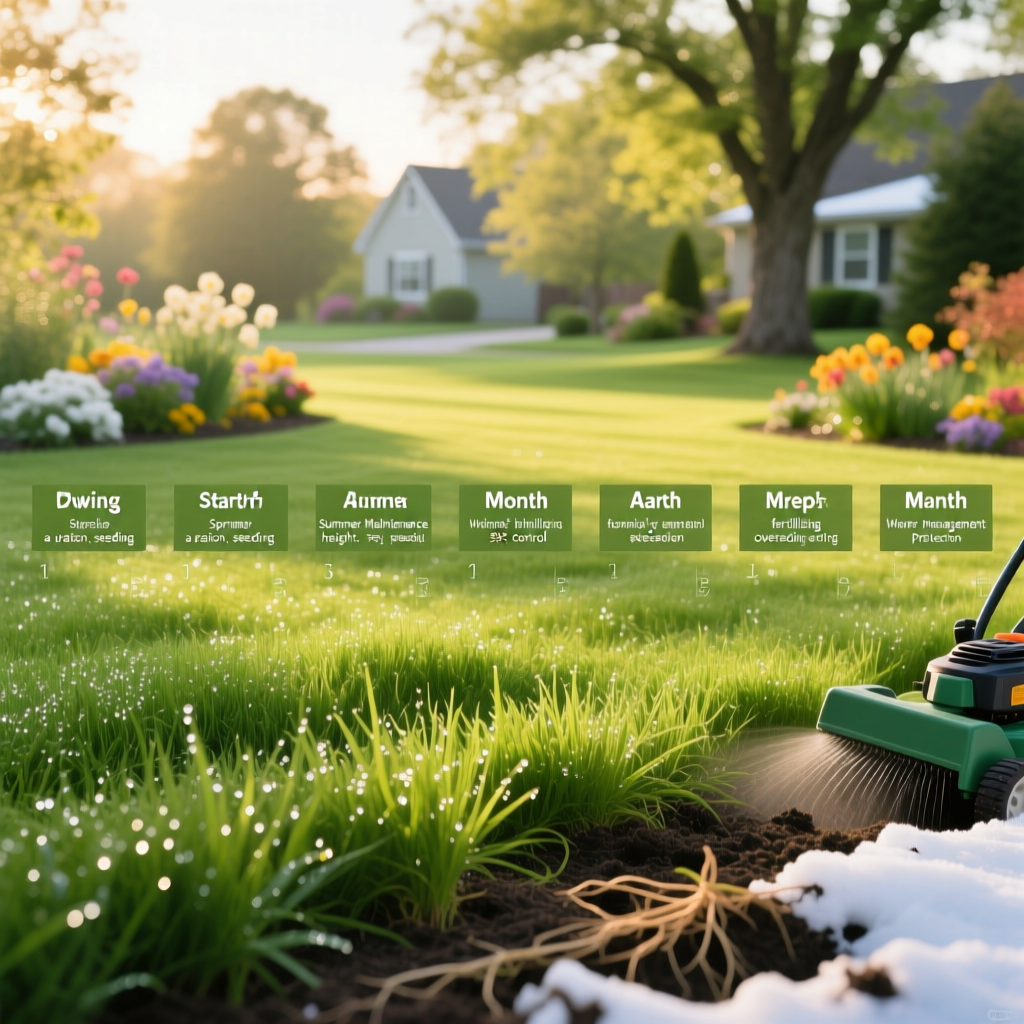
Lawn Care Schedule for Minnesota: A Complete Seasonal Guide
Lisa ThompsonPublished
Minnesota's extreme climate presents unique challenges for lawn care. With brutal winters, unpredictable springs, and hot, humid summers, maintaining a healthy lawn in the North Star State requires a strategic, season-by-season approach. Whether you're tending to Kentucky bluegrass in the Twin Cities or nurturing a fine fescue blend up near Duluth, timing is everything.
This comprehensive lawn care schedule for Minnesota breaks down exactly what you need to do—and when—to keep your turf thick, green, and resilient year-round. From the first signs of spring thaw to the final winterization steps before the snow flies, every task is mapped out so you can stop guessing and start growing the lawn your neighbors will envy.
Minnesota falls primarily in USDA Hardiness Zones 3 and 4, with some Zone 5 areas in the southern portion of the state. This means your growing season is shorter than most of the country, and cool-season grasses dominate the landscape. Understanding this climate context is the foundation of every decision in your lawn care calendar.
Early Spring Lawn Care in Minnesota (March–April)
Spring in Minnesota arrives slowly and unpredictably. While southern states are already mowing, Minnesota homeowners are often still watching snow melt and waiting for the ground to thaw. Resist the urge to jump into aggressive lawn work too early—patience during this window prevents long-term damage to your turf.
Assess Winter Damage
Once the snow has fully melted and the ground begins to firm up, take a thorough walk around your lawn. Look for signs of snow mold, which appears as circular, matted patches of gray or pinkish grass. Voles may have created tunneling damage beneath the snow, and ice sheets may have suffocated sections of turf. Note these problem areas so you can address them as the season progresses.
For snow mold, gently rake affected areas with a flexible leaf rake to break up matted grass and improve air circulation. Most minor snow mold damage recovers on its own as temperatures rise and the grass begins active growth.
Wait to Rake and Dethatch
One of the most common mistakes Minnesota homeowners make is raking the lawn while the soil is still saturated. Walking and raking on soggy ground compacts the soil and tears grass crowns, setting your lawn back weeks. Wait until the soil has dried enough that you can walk on it without leaving deep footprints.
When the lawn is dry enough, give it a light raking to remove dead grass blades and debris that accumulated over winter. This improves sunlight penetration to the soil surface and encourages new growth. For more detailed guidance, check out our spring lawn care tips for a complete early-season checklist.
Apply Pre-Emergent Crabgrass Control
Timing pre-emergent herbicide application correctly is critical in Minnesota. Crabgrass germinates when soil temperatures consistently reach 55°F at a depth of two inches, which typically occurs in late April to mid-May depending on your location within the state.
A good rule of thumb: apply your pre-emergent when forsythia bushes finish blooming or when lilac buds begin to swell. Products containing prodiamine or dithiopyr are excellent choices for Minnesota lawns. Apply evenly with a broadcast spreader and water in lightly according to label directions.
Important: If you plan to overseed in spring, do not apply pre-emergent herbicide, as it will prevent grass seed from germinating as well. Choose one or the other.
First Mowing of the Season
Your first mow should happen when grass reaches about 3 to 3.5 inches in height. Set your mower to cut no more than one-third of the blade length. For most Minnesota cool-season grasses, this means a cutting height of around 2.5 to 3 inches for the first mow. Leaving grass slightly taller helps shade the soil, suppress weeds, and encourage deeper root development. Learn more about proper techniques in our mowing tips guide.
Summer Lawn Maintenance in Minnesota (May–August)
Summer is when Minnesota lawns face their greatest stress. Temperatures can soar into the 90s, humidity spikes, and thunderstorms may deliver too much rain one week and none the next. Your summer lawn care strategy should focus on building resilience, managing weeds, and keeping disease at bay.
Fertilizing for Summer Strength
Apply a slow-release, granular fertilizer in late May or early June. Look for a product with a balanced NPK ratio such as 20-5-10 or 24-0-10 that includes iron for deep green color without excessive top growth. Slow-release nitrogen feeds your lawn steadily over six to eight weeks, reducing the risk of fertilizer burn during hot weather.
Avoid heavy nitrogen applications during peak summer heat (July and early August). Pushing rapid growth during heat stress makes your lawn more susceptible to disease and drought damage. If your lawn shows signs of nutrient deficiency mid-summer, a light application of a liquid iron supplement can green up the grass without the risks associated with granular nitrogen.
Watering Wisely
Minnesota lawns need approximately 1 to 1.5 inches of water per week during the growing season, whether from rainfall or irrigation. The key is deep, infrequent watering rather than light daily sprinklings.
Water early in the morning, ideally between 4:00 AM and 8:00 AM. This minimizes evaporation and allows grass blades to dry before evening, reducing the risk of fungal diseases like brown patch and dollar spot—both common in Minnesota summers.
Use a rain gauge or empty tuna cans placed around your yard to measure how much water your sprinkler delivers in a given time period. Adjust your irrigation schedule based on weekly rainfall totals. For an in-depth look at efficient watering strategies, visit our lawn watering guide.
Weed Control Throughout Summer
Broadleaf weeds like dandelions, plantain, and clover are persistent problems in Minnesota lawns. Spot-treat weeds with a selective broadleaf herbicide when they are actively growing and temperatures are below 85°F. Applying herbicides in extreme heat can damage surrounding grass.
For creeping Charlie (ground ivy)—one of the most frustrating weeds in Minnesota—target treatments in early fall when the plant is actively pulling nutrients into its roots for winter storage. Products containing triclopyr are particularly effective against this stubborn perennial.
Crabgrass that escaped your pre-emergent barrier can be pulled by hand when the soil is moist, or treated with a post-emergent crabgrass killer. Act quickly, as a single crabgrass plant can produce thousands of seeds.
Mowing Height Adjustments
Raise your mower blade to 3 to 3.5 inches during the heat of summer. Taller grass shades the soil, keeping root zones cooler and reducing moisture loss. It also crowds out weed seedlings and promotes deeper root systems that help your lawn survive dry spells.
Keep mower blades sharp throughout the season. Dull blades tear grass rather than cutting it cleanly, leaving ragged tips that turn brown and invite disease. Sharpen or replace blades at least once during the summer, or more often if you mow frequently. Our mower maintenance guide covers blade care in detail.
Grub Monitoring and Control
Japanese beetle grubs and other white grubs are common in Minnesota lawns. Monitor for grubs in late July and August by cutting a one-foot square section of turf and peeling it back. If you find more than 5 to 10 grubs per square foot, treatment is warranted.
Preventive grub control products containing chlorantraniliprole should be applied in June or early July for season-long protection. Curative treatments with trichlorfon can be applied in late summer if an active infestation is discovered. Always water grub control products into the soil immediately after application.
Fall Lawn Care in Minnesota (September–October)
Fall is the single most important season for Minnesota lawn care. Cool temperatures, consistent moisture, and warm soil create ideal conditions for root growth, seed germination, and nutrient storage. The work you do in fall determines how well your lawn survives winter and how quickly it greens up the following spring.
Core Aeration
Core aeration is one of the highest-impact practices you can perform on a Minnesota lawn. Over the course of a growing season, foot traffic, mowing, and natural settling compact the soil, restricting air, water, and nutrient movement to the root zone.
Rent a core aerator or hire a professional to pull plugs of soil 2 to 3 inches deep across your entire lawn. The best time to aerate in Minnesota is early September, when grass is actively growing and can recover quickly. Leave the soil cores on the lawn—they will break down naturally and return beneficial microorganisms to the surface.
Aeration is especially beneficial before overseeding, as it creates direct seed-to-soil contact in the holes left behind. For a full walkthrough of the process, see our lawn aeration guide.
Overseeding Thin Areas
Early September through mid-September is the prime overseeding window in Minnesota. Soil temperatures are still warm enough to encourage rapid germination, while cooler air temperatures reduce heat stress on young seedlings.
Choose grass seed blends suited to Minnesota conditions. Kentucky bluegrass offers excellent cold tolerance and self-repairing growth. Perennial ryegrass germinates quickly and provides erosion control. Fine fescues thrive in shade and require less maintenance. For specific variety recommendations, browse our cool-season grass guide.
Before overseeding, mow the existing lawn short (about 2 inches) and rake to expose soil. Spread seed at the rate recommended on the bag using a broadcast spreader, then lightly rake to ensure seed contact with soil. Keep the seeded areas consistently moist—watering lightly two to three times daily—until seedlings reach mowing height.
Fall Fertilization: The Most Critical Application
The fall fertilizer application is widely considered the most important feeding of the year for Minnesota lawns. Apply a high-nitrogen, slow-release fertilizer in early September to fuel root growth and carbohydrate storage heading into winter.
A second, lighter application in late October or early November—often called a "winterizer" fertilizer—helps the grass store nutrients that will support early spring green-up. Look for a product with a formulation like 24-0-10 or 32-0-10 for the late-fall application.
Avoid fertilizing after the ground freezes or when frost is present on grass blades. The grass must be actively growing (even if slowly) to absorb and utilize the nutrients.
Leaf Management
Minnesota's deciduous trees put on a spectacular fall show, but those leaves can smother your lawn if left in place. A thick layer of leaves blocks sunlight, traps moisture, and creates a breeding ground for snow mold.
Rake or mulch leaves regularly throughout October and into November. If you have a mulching mower, you can chop leaves into fine pieces that decompose quickly and return organic matter to the soil. However, if leaf cover is heavy, remove the bulk of them and compost or bag the excess. Never let a mat of wet leaves sit on your lawn going into winter.
Final Mowing
Continue mowing as long as the grass is growing. For the last one or two mows of the season, gradually lower the cutting height to about 2 to 2.5 inches. Shorter grass going into winter is less likely to mat down under snow and develop snow mold. However, avoid scalping the lawn—cutting too short stresses the crown and reduces winter hardiness.
Winter Lawn Protection in Minnesota (November–February)
Once the ground freezes and snow begins to accumulate, your lawn enters dormancy. While active maintenance stops, there are still important steps you can take to protect your turf through the long Minnesota winter.
Minimize Winter Traffic
Frozen, dormant grass is surprisingly fragile. Repeated foot traffic on frozen turf can break crowns and damage growing points. Establish clear walkways and discourage children and pets from taking shortcuts across the lawn, especially during freeze-thaw cycles when the grass is most vulnerable.
Manage Ice and Snow
Avoid piling snow from driveways and sidewalks onto lawn areas. Heavy snow piles compact the soil beneath and can take well into spring to melt, delaying green-up in those areas. If you must pile snow, try to distribute it across different areas each winter to prevent chronic damage.
Be cautious with ice melt products near lawn edges. Rock salt (sodium chloride) is particularly damaging to grass and soil structure. Consider using calcium chloride or calcium magnesium acetate, which are less harmful to turf. If salt damage occurs along walkways, flush the area heavily with water in spring and consider reseeding with salt-tolerant grass varieties.
Tool and Equipment Maintenance
Winter is the perfect time to service your lawn care equipment. Sharpen mower blades, change the oil, replace air filters, and inspect spark plugs. Clean and store your spreader, sprayer, and other tools in a dry location. Having everything in top condition means you'll be ready to go the moment spring arrives. Visit our equipment maintenance page for seasonal service checklists.
Plan for Spring
Use the winter months to review your lawn care schedule, order seed and supplies, and plan any renovation projects. If your lawn struggled with shade, drainage, or pest issues during the past season, winter gives you time to research solutions and consult with local extension offices or lawn care professionals.
Essential Tools and Products for Minnesota Lawn Care
Having the right equipment on hand makes every task easier and more effective. Here is a breakdown of the core tools and products every Minnesota homeowner should keep in their lawn care arsenal:
- Broadcast spreader: Essential for even application of seed, fertilizer, and granular herbicides. A quality drop or rotary spreader ensures uniform coverage.
- Core aerator: Available for rent at most hardware stores and equipment rental shops in Minnesota. A walk-behind aerator is ideal for residential lawns.
- Sharp mower blades: Keep a spare set on hand so you can swap blades without waiting for sharpening. Clean cuts reduce disease entry points.
- Rain gauge: A simple, inexpensive tool that takes the guesswork out of irrigation. Place it in an open area of your yard away from structures and trees.
- Soil thermometer: Critical for timing pre-emergent herbicide, seeding, and fertilizer applications based on actual soil temperature rather than calendar dates.
- Pre-emergent herbicide: Products containing prodiamine or dithiopyr provide reliable crabgrass prevention when applied at the correct time.
- Broadleaf weed killer: A selective herbicide containing 2,4-D, dicamba, or triclopyr handles most common Minnesota broadleaf weeds.
- Slow-release granular fertilizer: Invest in a quality turf fertilizer with slow-release nitrogen for steady feeding over six to eight weeks.
- Grass seed blend: Keep extra seed on hand for spot repairs. A blend of Kentucky bluegrass, perennial ryegrass, and fine fescue covers most Minnesota conditions. Explore our Kentucky bluegrass guide and fine fescue page for more information.
- Leaf rake and garden rake: A flexible leaf rake for debris removal and a sturdy garden rake for soil preparation during overseeding projects.
For a complete seasonal equipment checklist and buying recommendations, see our lawn care tools guide.
Frequently Asked Questions About Minnesota Lawn Care
When should I start mowing my lawn in Minnesota?
Most Minnesota lawns are ready for the first mow in late April or early May, depending on spring weather patterns. Wait until the grass has grown to at least 3 inches tall and the soil is firm enough to support the weight of your mower without sinking or leaving ruts. Never mow when the grass is wet, as this leads to clumping, uneven cuts, and increased disease risk.
What is the best grass type for Minnesota lawns?
Kentucky bluegrass is the most popular choice for Minnesota lawns due to its exceptional cold hardiness, dense growth habit, and ability to recover from damage via underground rhizomes. Fine fescues are excellent for shady areas and low-maintenance zones. Perennial ryegrass is often included in blends for its rapid germination and establishment. Many homeowners achieve the best results with a mix of all three, tailored to the specific sun, shade, and traffic conditions in their yard. Read more in our cool-season grasses overview.
How often should I water my Minnesota lawn during summer?
Aim for 1 to 1.5 inches of water per week, delivered in one or two deep watering sessions rather than daily light sprinklings. Water early in the morning to reduce evaporation and fungal disease risk. During extended droughts, you may need to supplement with irrigation, but remember that cool-season grasses can go dormant during severe heat and will recover when cooler, wetter conditions return. Check our watering guide for detailed scheduling advice.
Is it better to aerate in spring or fall in Minnesota?
Fall aeration (early September) is strongly preferred in Minnesota. The grass is entering its peak root growth period, and the cool weather allows rapid recovery. Spring aeration is possible but carries risks: if done too early on wet soil, it can worsen compaction, and spring aeration opens the door for crabgrass invasion in the open holes. If you must aerate in spring, do it in late April or May after the soil has dried and before applying pre-emergent herbicide.
How do I prevent snow mold on my Minnesota lawn?
Snow mold prevention starts in fall. Mow your lawn short (2 to 2.5 inches) for the final cut of the season to reduce the amount of grass blade that can mat down under snow. Remove all leaves and debris before winter arrives. Avoid applying high-nitrogen fertilizer late in fall, as this promotes lush growth that is susceptible to mold. Improve air circulation by trimming overhanging branches and consider applying a preventative fungicide in late fall if snow mold has been a recurring problem. In spring, lightly rake affected areas to promote drying and recovery.
When is the best time to seed a lawn in Minnesota?
The ideal seeding window in Minnesota is late August through mid-September. During this period, warm soil speeds germination, cool air reduces stress on seedlings, and fall rains provide consistent moisture. Spring seeding (April to early May) is a secondary option but comes with challenges: seedlings must establish before summer heat arrives, and you cannot use pre-emergent herbicide in seeded areas. Dormant seeding in late November or December is sometimes practiced in Minnesota, with seed germinating the following spring as soil warms, though results can be inconsistent. For more details, see our overseeding guide.
Maintaining a beautiful lawn in Minnesota requires respecting the rhythms of the northern climate. By following this seasonal schedule—starting with a patient spring startup, sustaining your turf through summer stress, capitalizing on the critical fall window, and protecting your lawn through winter—you'll build a thicker, healthier lawn year after year. Consistency is the real secret: a few well-timed actions each season outperform sporadic, reactive efforts every time. Bookmark this guide and refer to it throughout the year, and your Minnesota lawn will reward you with lush, resilient beauty from the first spring thaw to the last autumn leaf.
