Lawn Care
The Ultimate Lawn Care Schedule for the Pacific Northwest
Emily WatsonPublished
The Pacific Northwest offers a stunning natural landscape, but its unique climate presents a specific set of challenges and opportunities for homeowners trying to maintain a pristine lawn. Characterized by mild, incredibly wet winters and warm, distinctly dry summers, the region west of the Cascade Mountains requires a tailored approach to turf management. If you are treating your lawn like it belongs in the Midwest or the South, you are likely fighting a losing battle against moss, soil compaction, and summer drought stress.
To achieve a thick, vibrant, and resilient yard, you must align your maintenance tasks with the natural growth cycles of cool-season grasses. Perennial Ryegrass, Fine Fescue, Tall Fescue, and Kentucky Bluegrass thrive in the PNW, but they need strategic intervention to survive the seasonal extremes. This comprehensive Pacific Northwest lawn care schedule will walk you through the essential steps, seasonal timing, and product recommendations needed to keep your turf healthy year-round.
Spring Lawn Care (March to May): Recovery & Preparation
Spring in the Pacific Northwest is a time of rapid transition. The soil is often saturated from months of relentless rain, leading to compaction and poor drainage. As soil temperatures slowly climb above 50°F, your cool-season grass wakes up from winter dormancy and begins its first major growth flush. However, this wet environment is also the perfect breeding ground for the PNW’s most notorious lawn enemy: moss.
March: Assessment, Raking, & Moss Control
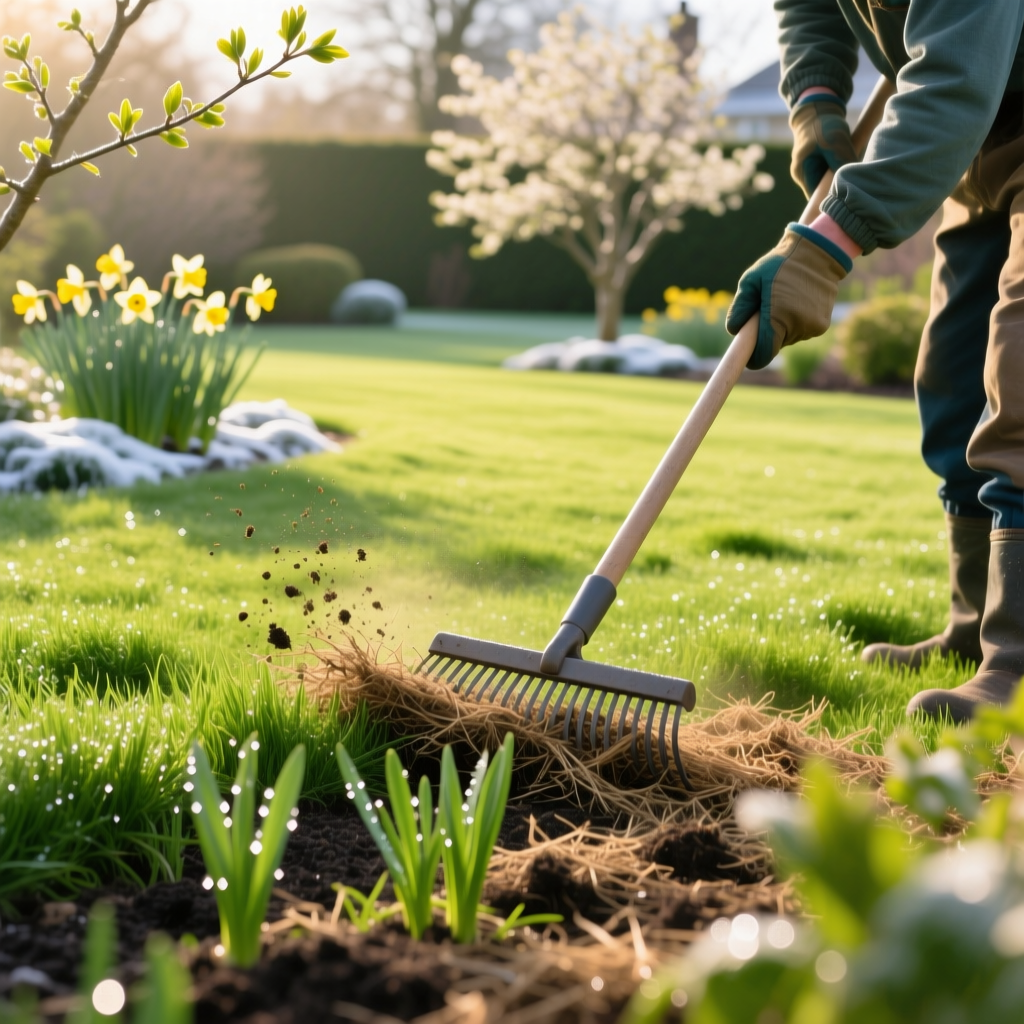
Before you even think about firing up the mower, you need to assess the winter damage. Heavy winter rains and foot traffic on wet soil lead to severe compaction. Start by giving your lawn a vigorous raking to remove dead grass, winter debris, and emerging moss. If moss is a persistent issue, apply an iron-based moss killer (such as ferrous sulfate) early in the month. Iron sulfate will turn the moss black within hours, making it easy to rake out. For a deep dive into eradicating this common issue, read our complete guide to moss control in lawns.
April: Aeration & Early Fertilization
Once the soil has dried out enough that it no longer sticks to your shoes, it is time to aerate. Core aeration is critical in the PNW to alleviate the compaction caused by winter rains. Rent a gas-powered core aerator or hire a professional to pull thousands of soil plugs from your lawn. This allows oxygen, water, and nutrients to reach the root zone. Follow up aeration with a high-quality, slow-release spring fertilizer. Look for a blend rich in nitrogen to fuel spring growth, but avoid heavy applications that could cause rapid, weak growth susceptible to late-spring fungal diseases.
May: First Mows & Weed Prevention
By May, your grass should be growing vigorously. Begin mowing when the turf reaches about 3.5 inches, cutting it down to 3 inches. Never remove more than one-third of the grass blade at a single time. May is also the time to spot-treat broadleaf weeds like dandelions and buttercup, which thrive in the moist PNW spring. Use a selective, post-emergent herbicide that is safe for your specific grass type, or opt for manual removal if the infestation is light.
Summer Lawn Care (June to August): Maintenance & Hydration
While the rest of the country is battling summer thunderstorms and humidity, the Pacific Northwest enters a Mediterranean-style dry season. From late June through August, rainfall is virtually non-existent. Your lawn’s survival depends entirely on your irrigation strategy and mowing habits. Cool-season grasses naturally want to go dormant during this hot, dry period, but with proper care, you can maintain a lush, green carpet.
June: Adjusting Mowing Heights & Irrigation
As the rains stop and the sun intensifies, raise your mower deck. Set your cutting height to 3.5 or even 4 inches. Taller grass shades the soil, drastically reducing water evaporation and keeping the root zone cool. It also prevents weed seeds, like crabgrass, from receiving the sunlight they need to germinate. Begin your summer watering schedule, aiming for 1 to 1.5 inches of water per week. For more detailed irrigation strategies, consult our lawn watering guide.
July: Deep Watering & Stress Management
July is typically the hottest and driest month in the PNW. The key to summer watering is deep, infrequent irrigation. Water your lawn deeply two to three times a week rather than giving it a light sprinkle every day. Deep watering encourages roots to grow downward in search of moisture, creating a more drought-resistant turf. Avoid fertilizing during the peak heat of July; pushing growth during high temperatures stresses the plant and increases the risk of fungal outbreaks like brown patch.
August: Grub Control & Preparing for Fall
While European crane fly (leatherjacket) damage is most visible in the spring, late summer is when the adult flies lay their eggs in your turf. If you have a history of crane fly or grub damage, apply a preventative grub control product in August. As the month draws to a close, you can begin to slowly lower your mowing height back down to 3 inches in preparation for the upcoming fall growing season.
Fall Lawn Care (September to November): The Most Critical Season
Ask any PNW turf expert, and they will tell you that fall is the most important season for lawn care. The air temperatures are cooling, but the soil is still warm from the summer sun. Combined with the return of the autumn rains, these conditions create the absolute perfect environment for seed germination, root development, and nutrient storage. What you do in the fall dictates how your lawn will look the following spring.
September: Overseeding & Heavy Fertilization
Early to mid-September is the prime window for overseeding. The warm soil and returning moisture mean you won't have to water the seed as obsessively as you would in the spring. Spread a high-quality mix of Perennial Ryegrass and Fine Fescue (for shaded areas under Douglas Firs and Cedars) over your existing turf. Immediately after seeding, apply a starter fertilizer to give the new seedlings the phosphorus they need for rapid root establishment. Learn the exact step-by-step process in our overseeding guide.
October: Core Aeration & Leaf Management
If you missed aeration in the spring, October is your second chance. Fall aeration paired with overseeding yields incredible results, as the seed falls directly into the aeration holes, ensuring perfect seed-to-soil contact. As the trees begin to drop their leaves, it is crucial to keep the lawn clear. A thick layer of wet autumn leaves will smother the grass, block sunlight, and invite snow mold. Use a mulching mower to chop light leaf litter into the soil, but rake and remove heavy accumulations.
November: Winterizer Fertilizer & Final Mow
Before the ground freezes and the heavy winter rains set in, apply a winterizer fertilizer. Look for a product high in potassium, which acts like antifreeze for your grass, strengthening the cell walls and improving cold tolerance. Check out our recommendations in the best fertilizers for lawns guide. Give your lawn one final mow, dropping the height down to about 2.5 inches. Leaving the grass too long over the winter invites rodents and fungal diseases, while cutting it too short exposes the crown to freezing temperatures.
Winter Lawn Care (December to February): Protection & Planning
During the winter months, your cool-season grass is largely dormant or growing at a microscopic rate. The primary goal during this season is protection. The PNW winter is defined by freezing temperatures, ice, and relentless precipitation.
Minimizing Traffic & Preventing Compaction
Walking on a frozen or heavily saturated lawn can cause severe damage to the grass crowns and exacerbate soil compaction. Keep foot traffic, pet traffic, and vehicle parking off the turf as much as possible. If ice forms on the lawn, do not attempt to chip it away; let it melt naturally to avoid tearing the grass blades.
Equipment Maintenance & Planning
Use the downtime to prepare for the spring. Drain the gas from your mower, aerator, and trimmers, or add a fuel stabilizer. Sharpen your mower blades—a dull blade tears the grass, leaving it vulnerable to disease and moisture loss. Review your lawn care journal, note which areas struggled with moss or shade, and order your spring seeds and fertilizers so you are ready to act the moment the soil thaws.
Essential Tools & Products for PNW Lawns
Having the right equipment makes executing this schedule significantly easier. Here are the must-have tools for Pacific Northwest homeowners:
- Core Aerator: Skip the spike aerators and shoe attachments. You need a machine that physically removes soil plugs to combat heavy clay and winter compaction.
- Broadcast Spreader: A high-quality rotary spreader ensures even distribution of fertilizer and seed, preventing the striping effect common with cheap drop spreaders.
- Soil Thermometer: Grass seed germination and fertilizer uptake are dictated by soil temperature, not air temperature. A simple probe thermometer takes the guesswork out of spring and fall timing.
- Iron-Based Moss Killer: Chemical moss killers containing ferrous sulfate are highly effective in the PNW and have the added benefit of greening up your grass without pushing excessive top growth.
- Heavy-Duty Leaf Rake & Tarp: Managing wet, heavy PNW leaves requires a sturdy rake and a large tarp for easy removal to prevent lawn smothering.
Frequently Asked Questions
What is the best grass seed for the Pacific Northwest?
The best grass seed for the PNW depends on your specific yard conditions, but a mix of cool-season grasses is universally recommended. Perennial Ryegrass is excellent for high-traffic areas due to its rapid germination and wear tolerance. Fine Fescues (like Creeping Red Fescue and Chewings Fescue) are the undisputed champions for the deep, dry shade found under native conifers. Kentucky Bluegrass offers a beautiful, dark green color and spreads via rhizomes to fill in bare spots, though it requires more sun and water. Avoid warm-season grasses like Bermuda or Zoysia, as they will fail to survive the freezing, wet winters.
How do I get rid of moss in my PNW lawn?
Moss is a symptom of underlying environmental issues, not just a weed. It thrives in compacted soil, poor drainage, heavy shade, and acidic conditions—all hallmarks of the Pacific Northwest. To eliminate it, first apply an iron-based moss control product to kill the existing moss, then rake it out aggressively. Next, address the root causes: aerate the soil to improve drainage, prune lower tree branches to allow more sunlight, and test your soil pH. If your soil is highly acidic (common in the PNW), apply pelletized lime in the fall or spring to raise the pH to a level where grass can outcompete the moss.
When should I stop watering my lawn in the fall?
You should gradually reduce your watering as the autumn rains begin to consistently saturate the soil, usually around late September or early October. However, do not shut off your irrigation system completely until the grass has stopped growing and entered winter dormancy. If the PNW experiences an unseasonably dry and warm October (often called an 'Indian Summer'), you may need to supplement with occasional deep watering to ensure your fall-applied fertilizer dissolves and reaches the root zone. Once the heavy, continuous rains set in and soil temperatures drop below 45°F, you can safely winterize your sprinkler system.
Why is my lawn turning brown in the summer?
If your lawn turns brown in July or August, it is likely entering summer dormancy. Cool-season grasses have a natural survival mechanism where they shut down top growth and turn brown to conserve moisture and protect the crown during periods of high heat and drought. If you are not irrigating, this is completely normal and your grass will green up again once the fall rains return. If you prefer a green lawn all summer, you must provide 1 to 1.5 inches of water per week. Alternatively, you can practice 'dormant watering,' which involves applying just half an inch of water every two to three weeks—enough to keep the crowns alive without wasting water to maintain a green color.
How often should I aerate my Pacific Northwest lawn?
Due to the heavy winter rains and the prevalence of clay-rich soils in the region, Pacific Northwest lawns benefit greatly from annual aeration. For most residential lawns, aerating once a year—either in the early spring (April) or early fall (September)—is sufficient to relieve compaction and maintain healthy root growth. If your lawn experiences heavy foot traffic from children or pets, or if you have an exceptionally thick layer of thatch, you may benefit from aerating twice a year, once in the spring and once in the fall. Always ensure the soil is moist, but not muddy, when performing core aeration for the best results.