Lawn Care
Lawn Care Schedule for Zone 7: Your Complete Seasonal Guide
David ParkPublished
Lawn Care Schedule for Zone 7: Your Complete Seasonal Guide
If you live in USDA Hardiness Zone 7, you enjoy a unique climate that spans a wide swath of the United States — from parts of Virginia, North Carolina, & Tennessee through Oklahoma, Texas, & into the Pacific Northwest. Zone 7 features hot summers, moderately cold winters, & a long growing season that gives your lawn plenty of opportunity to thrive. However, that same climate variability means your lawn care routine needs to be carefully timed to match the seasons.
Zone 7 lawns typically feature cool-season grasses like tall fescue, Kentucky bluegrass, & perennial ryegrass in the northern & eastern portions of the zone, while warm-season grasses such as bermudagrass & zoysiagrass dominate in the southern & western areas. Some homeowners even maintain blended lawns that combine characteristics of both. Understanding which grass type grows in your yard is the first step toward building an effective lawn care schedule.
This comprehensive guide walks you through every season with actionable steps, product recommendations, & timing tips so your lawn stays healthy, green, & resilient all year long. Whether you are a new homeowner or a seasoned gardener, this Zone 7 lawn care calendar will become your go-to reference.
Understanding Zone 7 & Your Grass Type
Before diving into the seasonal schedule, it is essential to understand the climate characteristics of Zone 7 & how they affect your lawn. Zone 7 experiences minimum winter temperatures between 0°F & 10°F, with summer highs frequently reaching 90°F or above. The growing season typically runs from early April through late October, giving you roughly 200 frost-free days to work with.
Cool-Season Grasses in Zone 7
In the transition zone areas of Zone 7, cool-season grasses are the most common choice. These grasses grow most vigorously during the cooler temperatures of spring & fall. Popular options include:
- Tall Fescue — Drought-tolerant, deep-rooted, & adaptable to a variety of soil types. Tall fescue is arguably the most popular choice for Zone 7 lawns due to its heat tolerance relative to other cool-season grasses.
- Kentucky Bluegrass — Known for its rich color & dense growth habit, Kentucky bluegrass spreads via rhizomes to create a lush carpet. It requires more water & care than tall fescue but rewards you with a premium lawn.
- Perennial Ryegrass — Fast-germinating & often used in mixtures with bluegrass or fescue. It provides quick cover & excellent wear tolerance.
For a deeper look at selecting the right grass, check out our complete guide to cool-season grasses.
Warm-Season Grasses in Zone 7
In the warmer portions of Zone 7, warm-season grasses thrive. These grasses peak during the heat of summer & go dormant (turning brown) after the first hard frost in fall. Common choices include:
- Bermudagrass — Extremely heat- & drought-tolerant with rapid growth during summer. It requires frequent mowing but recovers quickly from damage.
- Zoysiagrass — Slower to establish but forms a dense, weed-resistant turf. Zoysiagrass has excellent heat tolerance & requires less fertilizer than bermudagrass.
Learn more about these options in our warm-season grass guide.
Once you know your grass type, you can tailor the schedule below to match its specific growth patterns & needs.
Spring Lawn Care in Zone 7 (March – May)
Spring is a season of renewal for your lawn. As soil temperatures climb above 50°F, grass begins to break dormancy & push new growth. Your spring lawn care tasks focus on cleaning up winter damage, encouraging strong root development, & getting ahead of weeds before they take hold.
Early Spring (March)
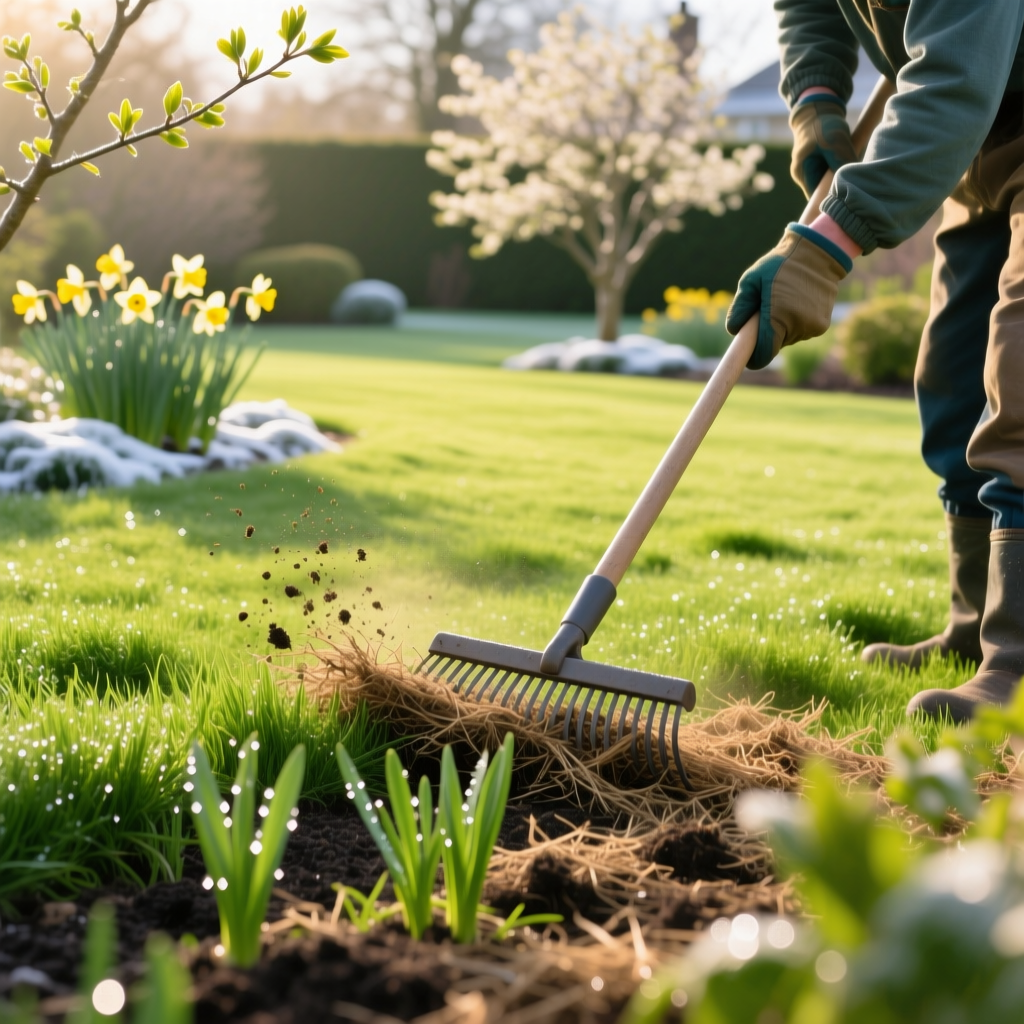
- Rake & clean up: Remove leaves, twigs, & any debris that accumulated over winter. Use a flexible leaf rake or a power rake to gently remove thatch buildup. A thin layer of thatch (less than half an inch) is beneficial, but anything thicker can block water & nutrients from reaching the soil.
- Test your soil: A soil test is one of the most overlooked yet valuable steps in lawn care. Send a sample to your local cooperative extension service or use an at-home soil test kit. The results will tell you your soil pH, nutrient levels, & whether you need to apply lime to raise pH or sulfur to lower it. Aim for a pH between 6.0 & 7.0 for most grass types.
- Apply pre-emergent herbicide: Timing is critical. Apply a pre-emergent herbicide when soil temperatures consistently reach 55°F — typically mid-March in Zone 7. This creates a chemical barrier in the top layer of soil that prevents crabgrass & other summer annual weeds from germinating. Products containing prodiamine or dithiopyr are excellent choices. One popular option is Dimension (dithiopyr), which provides both pre-emergent & early post-emergent control.
- Sharpen your mower blades: Dull blades tear grass instead of cutting it cleanly, leading to ragged tips that turn brown & invite disease. Sharpen blades at least once per season — or twice if you mow frequently.
Mid to Late Spring (April – May)
- Begin mowing: Start mowing when your grass reaches about one-third higher than its recommended height. For cool-season grasses, that means mowing when the grass hits roughly 3.5 to 4 inches, cutting it down to 2.5 to 3 inches. For warm-season grasses like bermudagrass, begin mowing at about 2 inches, cutting to 1 to 1.5 inches. Always follow the one-third rule: never remove more than one-third of the grass blade in a single mowing.
- Fertilize lightly: Cool-season grasses benefit from a light application of nitrogen-rich fertilizer in late April or early May. Use a slow-release granular fertilizer with an N-P-K ratio like 20-5-10. Apply at a rate of about 0.5 to 1 pound of nitrogen per 1,000 square feet. Warm-season grasses should not be fertilized until they have fully greened up, usually in May. For more details, see our lawn fertilization guide.
- Treat broadleaf weeds: Dandelions, clover, & chickweed are common spring invaders. Spot-treat with a selective broadleaf herbicide containing 2,4-D, dicamba, or quinclorac. Apply on a calm, dry day when temperatures are between 60°F & 85°F for best results.
- Overseed bare patches (cool-season grasses): Early spring is a secondary window for overseeding cool-season lawns. Fall is ideal, but if you have thin or bare spots, spring overseeding can help. Use a seed blend matched to your existing grass type. Keep the seeded area consistently moist until seedlings are established. Be aware that pre-emergent herbicide can prevent grass seed from germinating, so plan accordingly.
- Edge beds & walkways: Crisp edging gives your lawn a manicured appearance & prevents grass from creeping into garden beds. Use a half-moon edger or a powered edger for clean lines.
Recommended Spring Tools & Products
| Task | Recommended Tool/Product |
|---|---|
| Pre-emergent herbicide | Dimension (dithiopyr) or Scotts Halts |
| Soil testing | MySoil Professional Soil Test Kit |
| Fertilizer | Lesco Professional Starter Fertilizer 18-24-12 |
| Broadleaf weed control | SpeedZone Broadleaf Herbicide |
| Mower blade maintenance | Oregon Lawn Mower Blade Sharpener |
Summer Lawn Care in Zone 7 (June – August)
Summer in Zone 7 brings heat, humidity, & occasional drought — all of which put significant stress on your lawn. Cool-season grasses slow their growth & may go semi-dormant during peak heat, while warm-season grasses hit their stride. Your summer lawn care strategy should focus on keeping grass alive & healthy through the toughest months of the year.
Mowing Adjustments
Raise your mowing height during summer to help shade the soil, conserve moisture, & reduce heat stress on the root zone. For cool-season grasses, set your mower deck to 3 to 4 inches. For warm-season grasses, maintain a height of 1.5 to 2.5 inches depending on the species. Taller grass also shades out weed seeds, reducing the need for herbicides.
Mow in the early morning or late afternoon to minimize stress on the grass. Avoid mowing during the heat of the day when the grass is already under heat stress.
Watering Wisely
Your lawn needs approximately 1 to 1.5 inches of water per week during the growing season, including rainfall. During hot, dry spells in July & August, supplemental irrigation becomes critical. Follow these best practices:
- Water deeply & infrequently: Apply water in long sessions that soak the soil to a depth of 6 to 8 inches. This encourages deep root growth & makes your lawn more drought-resistant. Shallow, frequent watering promotes shallow roots & disease.
- Water in the early morning: The best time to irrigate is between 4 AM & 8 AM. This minimizes evaporation & allows grass blades to dry before nightfall, reducing fungal disease risk.
- Use a rain gauge: Place a rain gauge or empty tuna can in your yard to measure how much water your sprinkler delivers. Most standard oscillating sprinklers output about 0.5 to 0.75 inches per hour.
For a detailed breakdown of irrigation strategies, read our lawn watering guide.
Summer Fertilization
Cool-season grasses should not be heavily fertilized during summer. High nitrogen levels push tender new growth that is vulnerable to heat & drought stress. If your lawn looks pale, a light application of iron (such as chelated iron or iron sulfate) can green up the grass without stimulating excessive growth.
Warm-season grasses, on the other hand, are in their peak growing season during summer. Apply a balanced, slow-release fertilizer in June & again in early August. A product with an N-P-K ratio of 16-4-8 or 15-0-15 works well. Apply at a rate of 0.5 to 1 pound of nitrogen per 1,000 square feet per application.
Pest & Disease Management
Summer heat & humidity create ideal conditions for lawn diseases & insect pests. Watch for these common Zone 7 summer problems:
- Brown patch fungus: This disease creates circular, brown patches ranging from a few inches to several feet in diameter. It thrives in warm, humid conditions with nighttime temperatures above 68°F. Prevent it by avoiding evening watering & excessive nitrogen. If it appears, treat with a fungicide containing azoxystrobin or propiconazole.
- Grubs: The larvae of Japanese beetles & other scarab beetles feed on grassroots from midsummer through fall. Signs include irregular brown patches & turf that pulls up easily like carpet. Apply a preventive grub control product containing chlorantraniliprole (such as Scotts GrubEx) in June or early July. For active infestations, use a curative product containing trichlorfon (Dylox).
- Chinch bugs: More common in warm-season lawns, chinch bugs suck sap from grass blades, causing yellowing & browning. Part the grass at the border between healthy & damaged turf to spot these tiny black-and-white insects. Treat with bifenthrin or a natural alternative like diatomaceous earth.
Learn more about identifying & treating common lawn pests in our lawn pest control guide.
Recommended Summer Products
| Task | Recommended Product |
|---|---|
| Grub prevention | Scotts GrubEx (chlorantraniliprole) |
| Fungicide for brown patch | BioAdvanced Fungus Control for Lawns |
| Iron supplement | LawnStar Chelated Liquid Iron |
| Summer fertilizer (warm-season) | Lesco 15-0-15 with 0.2% Iron |
Fall Lawn Care in Zone 7 (September – November)
Fall is arguably the most important season for Zone 7 lawn care. For cool-season grasses, fall brings a second flush of vigorous growth as temperatures cool. For warm-season grasses, fall is the time to prepare for winter dormancy. The tasks you complete in autumn set the stage for how your lawn will perform the following spring.
Core Aeration (September)
Core aeration is one of the most impactful things you can do for your lawn. Over time, soil becomes compacted from foot traffic, mowing, & rainfall. Compacted soil restricts the movement of air, water, & nutrients to grassroots. A core aerator removes small plugs of soil (typically 2 to 3 inches deep & spaced 2 to 4 inches apart), relieving compaction & creating channels for roots to expand.
For cool-season lawns in Zone 7, the best time to aerate is early to mid-September. The grass is actively growing & will recover quickly, filling in the holes within a few weeks. For warm-season lawns, aerate in late spring or early summer when the grass is in peak growth.
You can rent a core aerator from most home improvement stores for about $80 to $100 per day, or hire a professional lawn care service. Walk the aerator over the lawn in two perpendicular passes for thorough coverage.
Overseeding (September – October)
Overseeding is the process of spreading grass seed over an existing lawn to fill in thin areas, improve density, & introduce newer, more disease-resistant grass varieties. For cool-season lawns in Zone 7, the ideal overseeding window is mid-September through mid-October.
Follow these steps for successful overseeding:
- Mow low: Cut the existing grass shorter than usual (about 2 inches) & bag the clippings so seed can reach the soil surface.
- Aerate first: Aeration holes provide perfect seed-to-soil contact. If you cannot aerate, at least rake the lawn vigorously to loosen the soil surface.
- Spread seed: Use a broadcast spreader to apply seed at the recommended rate for your grass type. Tall fescue typically requires 5 to 6 pounds of seed per 1,000 square feet for overseeding; Kentucky bluegrass requires about 1 to 2 pounds per 1,000 square feet.
- Apply starter fertilizer: A starter fertilizer high in phosphorus (such as 18-24-12) promotes strong root development in new seedlings.
- Water consistently: Keep the seeded area moist with light, frequent waterings (2 to 3 times per day) for the first two weeks. Gradually reduce frequency as seedlings establish.
- Avoid mowing: Wait until the new grass reaches about 3 inches tall before the first mow.
For warm-season lawns, overseeding is typically done with perennial ryegrass in October to provide a green lawn through the winter months while the bermudagrass or zoysiagrass is dormant. This practice, called winter overseeding, is popular in the southern portions of Zone 7.
See our complete overseeding guide for step-by-step instructions & seed recommendations.
Fall Fertilization
Fall fertilization is the single most important feeding your cool-season lawn will receive all year. Apply a high-nitrogen fertilizer in two stages:
- Early fall (September): Apply a balanced fertilizer (such as 20-10-10) at a rate of 1 pound of nitrogen per 1,000 square feet. This application supports recovery from summer stress & fuels the overseeding process.
- Late fall (late October to early November): Apply a winterizer fertilizer (such as 24-0-10 or 32-0-10) about two to three weeks before the ground freezes. This application does not promote top growth; instead, it feeds the root system & stores nutrients that the grass will use to green up quickly in spring.
For warm-season lawns, stop fertilizing by mid-August. Late-season nitrogen can stimulate tender growth that will be killed by the first frost, leading to winterkill damage.
Leaf Removal & Cleanup
Fallen leaves smother grass, block sunlight, & trap moisture against the turf — creating ideal conditions for snow mold & other fungal diseases. Remove leaves promptly as they accumulate throughout October & November. You can:
- Mulch leaves with your mower: If the leaf layer is thin, simply mow over them with a mulching blade. Finely chopped leaves decompose quickly & add organic matter to the soil.
- Rake or blow leaves: For heavy leaf cover, use a leaf blower or a rake to remove leaves. Compost them or use them as mulch in garden beds.
Recommended Fall Tools & Products
| Task | Recommended Tool/Product |
|---|---|
| Core aeration | Yard Butler Lawn Coring Aerator or rental machine |
| Overseeding | Jonathan Green Black Beauty Ultra Grass Seed |
| Starter fertilizer | Lesco Starter Fertilizer 18-24-12 |
| Winterizer fertilizer | Scotts Turf Builder WinterGuard 32-0-10 |
| Leaf management | Husqvarna Leaf Blower or mulching mower blades |
Winter Lawn Care in Zone 7 (December – February)
Winter may seem like an off-season for lawn care, but there are still important tasks to protect your turf & prepare for the spring ahead. Cool-season grasses remain semi-active during mild Zone 7 winters, while warm-season grasses are fully dormant & brown.
Minimize Traffic on Dormant Grass
Walking or driving on frozen or soggy grass can damage the crown of the plant & compact the soil. Establish a path through your yard to avoid repeatedly walking on the same areas. If you have warm-season grass that is dormant, avoid heavy traffic entirely to prevent winterkill.
Manage Winter Weeds
Winter annual weeds like henbit, chickweed, & annual bluegrass (poa annua) can invade cool-season lawns during winter. On mild days when temperatures are above 40°F, you can spot-treat these weeds with a broadleaf herbicide. For small infestations, hand-pulling is effective & avoids chemical use.
Maintain Your Equipment
Winter is the perfect time to service your lawn care equipment:
- Change the oil & air filter on your mower.
- Sharpen or replace mower blades so you are ready for spring.
- Clean & calibrate your spreader & sprayer to ensure even application when the season starts.
- Inventory your supplies — check expiration dates on herbicides & fertilizers, & order what you need for spring.
Plan for Spring
Review the past year's lawn care results. Did certain areas struggle with weeds, disease, or thinning? Make notes & adjust your plan accordingly. Order grass seed, fertilizer, & herbicides now so you are ready to act as soon as conditions allow. If you are considering hiring a professional lawn care service, winter is a great time to get quotes & lock in a contract before the spring rush.
For tips on choosing the right mower for your lawn, read our lawn mower buying guide.
Zone 7 Lawn Care Calendar at a Glance
| Month | Cool-Season Grass Tasks | Warm-Season Grass Tasks |
|---|---|---|
| March | Rake, soil test, apply pre-emergent | Rake, soil test, apply pre-emergent |
| April | Begin mowing, spot-treat weeds, overseed bare spots | Wait for green-up, mow low to remove dormant tips |
| May | Fertilize lightly, continue weed control | Fertilize, begin regular mowing, aerate if needed |
| June | Raise mowing height, apply grub preventer | Fertilize, monitor for pests |
| July | Water deeply, mow high, avoid fertilizing | Water deeply, fertilize lightly, mow regularly |
| August | Water deeply, watch for disease | Last fertilization of the season, watch for disease |
| September | Aerate, overseed, fertilize | Reduce mowing frequency as growth slows |
| October | Continue overseeding, remove leaves, fertilize | Overseed with ryegrass (optional), reduce watering |
| November | Apply winterizer, final mow, clean up leaves | Stop watering, minimize traffic on dormant turf |
| December – February | Minimize traffic, treat winter weeds, maintain equipment | Minimize traffic, maintain equipment, plan for spring |
Frequently Asked Questions About Zone 7 Lawn Care
When should I start mowing my lawn in Zone 7?
Most Zone 7 lawns are ready for their first mow in late March or early April, depending on the weather. Watch for consistent daytime temperatures above 55°F & grass growth that has reached about 3.5 inches for cool-season grasses or 2 inches for warm-season grasses. Never cut more than one-third of the blade height in a single session. If the ground is still soggy from spring rains, wait for it to firm up before mowing to avoid ruts & compaction.
How often should I water my Zone 7 lawn in summer?
During the peak summer months of June through August, plan to water your lawn two to three times per week, delivering a total of 1 to 1.5 inches of water including rainfall. Water deeply each time rather than lightly every day. Deep watering encourages roots to grow deeper into the soil, making your lawn more resilient during drought. Use a rain gauge to track how much water your lawn receives & adjust your irrigation schedule accordingly. If you notice footprints remaining in the grass (a sign of wilting), your lawn needs water immediately.
Is it better to aerate in spring or fall in Zone 7?
For cool-season grasses like tall fescue & Kentucky bluegrass, fall is the best time to aerate in Zone 7. September through early October is ideal because the grass is actively growing & will recover quickly from the aeration process. Spring aeration is possible but risks bringing weed seeds to the surface & coincides with the heaviest weed pressure of the year. For warm-season grasses like bermudagrass & zoysiagrass, aerate in late spring or early summer (May through June) when the grass is entering its peak growth period.
What is the best grass seed for Zone 7?
The best grass seed for your Zone 7 lawn depends on your specific location, sun exposure, soil type, & how you use your yard. For most Zone 7 homeowners with cool-season lawns, a tall fescue blend is the top choice due to its heat tolerance, drought resistance, & adaptability. Look for varieties labeled as "turf-type" or "dwarf" tall fescue. If you want a finer texture & richer color, a Kentucky bluegrass & tall fescue mix (80/20 or 70/30 ratio) provides an excellent balance. For warm-season lawns in the southern part of Zone 7, bermudagrass seed or zoysiagrass plugs are the most practical options. Visit our best grass types for Zone 7 page for detailed recommendations.
How do I get rid of crabgrass in my Zone 7 lawn?
The most effective strategy against crabgrass is prevention through pre-emergent herbicide applied in early spring before soil temperatures reach 55°F. Once crabgrass has germinated & is visible in your lawn (usually by late May or June), pre-emergent will no longer work. At that point, you need a post-emergent crabgrass killer containing quinclorac (such as Drive XLR8 or Ortho Weed B Gon Plus Crabgrass Control). Apply post-emergent herbicide to young crabgrass plants (before they develop more than three tillers) for best results. Pulling small patches by hand is also effective. Long-term, the best defense against crabgrass is a thick, healthy lawn that leaves no room for weeds to establish. For more strategies, see our crabgrass control guide.
Final Thoughts on Your Zone 7 Lawn Care Schedule
Maintaining a beautiful lawn in Zone 7 is entirely achievable when you follow a consistent, seasonally-appropriate schedule. The key takeaways are:
- Spring is about cleanup, pre-emergent weed control, & light fertilization.
- Summer demands smart watering, higher mowing heights, & vigilance against pests & disease.
- Fall is the most critical season — aerate, overseed, & fertilize to build a strong foundation for the following year.
- Winter is for rest, equipment maintenance, & planning ahead.
By following this Zone 7 lawn care schedule & adjusting based on your specific grass type & local conditions, you will enjoy a thick, green, weed-free lawn that is the envy of the neighborhood. Remember that lawn care is a marathon, not a sprint — consistency & patience are your greatest tools. Bookmark this guide & refer back to it each season as you work toward the lawn of your dreams.