
Lawn Care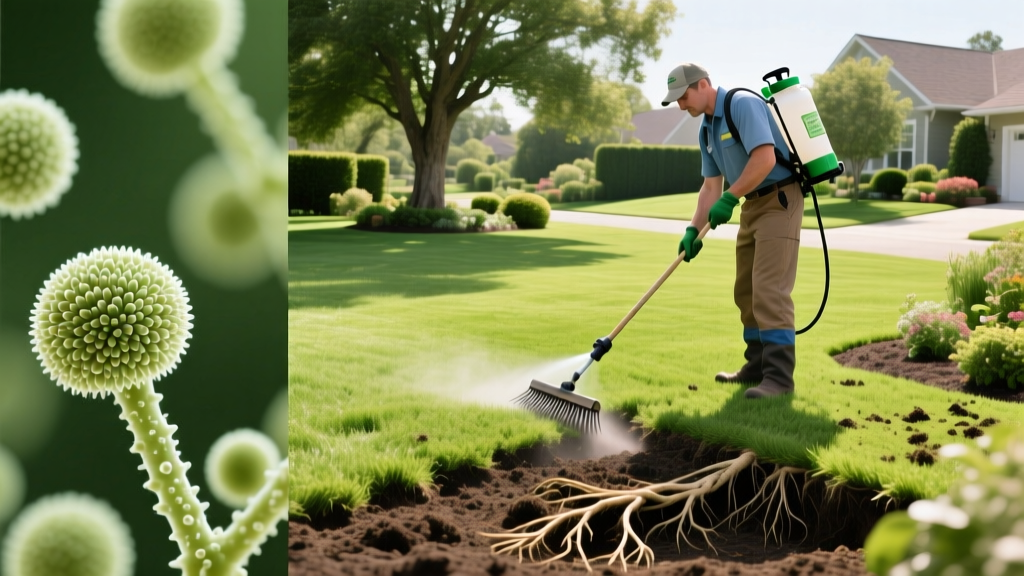
Step-by-Step Lawn Mould Treatment and Prevention Protocol
Lawns afflicted by fungal pathogens or slime moulds require immediate, targeted intervention to prevent permanent turf loss. The term 'lawn mould' encompasses several distinct biological threats, ranging from destructive true fungi like snow mould (Microdochium nivale) and dollar spot (Sclerotinia homoeocarpa) to harmless but unsightly slime moulds (Physarum species). Misidentifying the strain or applying the wrong chemical class will waste time, money, and potentially accelerate fungicide resistance.
This protocol outlines a precise, four-phase maintenance procedure for diagnosing, treating, and rehabilitating turf compromised by lawn mould. The procedures below integrate current 2026 agronomic standards, including Fungicide Resistance Action Committee (FRAC) rotation guidelines and precise cultural measurements.
Phase 1: Diagnosing the Specific Lawn Mould Strain
Before applying any chemical or biological treatment, you must accurately identify the pathogen. True fungi destroy turf tissue and require fungicides, whereas slime moulds merely use grass blades as structural support to fruit and can be managed mechanically. Consult the Royal Horticultural Society (RHS) or local extension diagnostic labs if visual identification is ambiguous.
| Pathogen / Mould Type | Visual Symptoms | Peak Environmental Triggers | Primary Turf Targets |
|---|---|---|---|
| Snow Mould (Pink/Gray) | Circular patches (3-12 inches) of matted, crusty grass with pink or gray mycelium webbing at the margins. | Prolonged snow cover or cold, wet autumn/spring conditions (32°F–50°F). | Kentucky Bluegrass, Fescues, Ryegrass. |
| Dollar Spot | Small, silver-dollar-sized tan patches that coalesce; hourglass-shaped lesions on individual blades with cobweb-like mycelium in morning dew. | Warm days (75°F–85°F), cool nights, high humidity, and low soil nitrogen. | Bermudagrass, Zoysia, Fescues, Bentgrass. |
| Slime Mould | Gray, black, or yellowish powdery/crusty spore masses coating the surface of grass blades; easily rubs off between fingers. | Warm, excessively wet periods following heavy rainfall or over-irrigation. | All turf types (non-parasitic). |
Phase 2: Immediate Cultural Interventions
Chemical treatments will fail if the microclimate supporting the lawn mould is not corrected. Execute these cultural steps within 24 hours of diagnosis to halt pathogen spread.
- Thatch Reduction: Measure the thatch layer using a soil probe or trowel. If the thatch exceeds 0.5 inches, perform core aeration and dethatching immediately. Thick thatch retains moisture at the soil surface, creating an ideal incubator for fungal spores.
- Irrigation Recalibration: Shift all automated irrigation cycles to operate strictly between 4:00 AM and 6:00 AM. Watering in the evening extends the 'leaf wetness duration' (LWD) past the critical 10-hour threshold, which triggers spore germination for most lawn mould species. Apply 1 to 1.5 inches of water per week, divided into two deep soakings rather than daily light sprinklings.
- Mower Blade Sanitation: Fungal spores cling to mower decks and blades. Wash the undercarriage with a 10% bleach solution or a commercial quaternary ammonium disinfectant after mowing infected zones. Always mow the healthy sections of the lawn first, and the infected sections last.
- Slime Mould Mechanical Removal: If the diagnosis confirms harmless slime mould, skip fungicides. Simply mow the lawn and bag the clippings, or use a strong jet of water from a garden hose to blast the spore masses off the blades.
Phase 3: Chemical and Biological Treatment Options
For true fungal lawn mould (snow mould, dollar spot, brown patch), targeted fungicide application is necessary. According to the University of Minnesota Extension, timing and active ingredient rotation are critical for efficacy and environmental safety.
Always check the Fungicide Resistance Action Committee (FRAC) codes on product labels. Never apply two consecutive treatments from the same FRAC group, as this rapidly breeds resistant pathogen strains.
| Active Ingredient | FRAC Code | Example Product | Application Rate (per 1,000 sq ft) | Est. Cost (per 5,000 sq ft) |
|---|---|---|---|---|
| Propiconazole | Group 3 (DMI) | Bayer Advanced Disease Control | 0.5 – 1.0 fl oz | $15 – $25 |
| Azoxystrobin | Group 11 (QoI) | Heritage SC / Syngenta | 0.2 – 0.4 fl oz | $45 – $65 |
| Chlorothalonil | Group M5 (Contact) | Daconil Landscape | 1.0 – 2.0 fl oz | $20 – $35 |
⚠️ CRITICAL WARNING: Fungicide Resistance
Systemic fungicides (Groups 3 and 11) are highly effective but prone to resistance. If your first application utilizes a Group 3 DMI (like Propiconazole), your follow-up application 14–21 days later must utilize a different mode of action, such as a Group 11 QoI (Azoxystrobin) or a multi-site contact fungicide (Group M5, Chlorothalonil).
Application Protocol
- Equipment: Use a pump-action backpack sprayer (e.g., Chapin 20096) calibrated to deliver 1.5 to 2.0 gallons of water per 1,000 square feet to ensure adequate leaf coverage.
- Timing: Apply during early morning when dew is present, allowing the active ingredient to penetrate the leaf tissue as the dew dries.
- Watering In: Systemic fungicides (Propiconazole, Azoxystrobin) do not strictly need to be watered in for foliar diseases like dollar spot, but a light watering (0.1 inches) can help move the product into the crown for basal rot issues.
Phase 4: Long-Term Soil and Turf Rehabilitation
Once the active lawn mould outbreak is suppressed, the turf canopy and soil biology must be rehabilitated to prevent recurrence.
- Nitrogen Management: Dollar spot and red thread heavily target nitrogen-deficient turf. Apply a slow-release, methylene-urea based nitrogen fertilizer at a rate of 0.5 to 0.75 lbs of actual nitrogen per 1,000 square feet. Avoid fast-release synthetic urea during peak summer stress, as lush, rapid growth is highly susceptible to fungal invasion.
- Soil pH Correction: Test the soil pH. Most turfgrasses thrive between 6.0 and 6.8. If the pH drops below 5.5, fungal pathogens gain a competitive advantage over beneficial soil microbes. Apply pelletized calcitic lime at the rate of 25–50 lbs per 1,000 square feet to buffer the soil acidity.
- Reseeding with Resistant Cultivars: If the lawn mould caused extensive necrotic dieback, overseed the bare patches with National Turfgrass Evaluation Program (NTEP) rated cultivars. For cool-season lawns, look for tall fescue varieties with high genetic resistance to brown patch and dollar spot (e.g., 'Titan Ultra' or 'Rhambler').
FAQ: Common Lawn Mould Maintenance Questions
Is lawn mould dangerous to pets or children?
Most common turfgrass fungi (like snow mould or dollar spot) are not toxic to humans or pets. However, walking through heavily infected, spore-laden grass can trigger respiratory allergies or contact dermatitis in sensitive individuals. Keep pets and children off treated lawns until the fungicide spray has completely dried (typically 2–4 hours).
Will applying more fertilizer kill the mould?
No. While adequate nitrogen helps turf outgrow minor dollar spot infections, excessive nitrogen application—especially quick-release sources—causes rapid, weak cellular growth that is highly vulnerable to aggressive pathogens like Pythium blight and brown patch. Stick to the recommended 0.5 lbs of slow-release nitrogen per 1,000 sq ft.
How do I prevent snow mould before winter?
Prevention must occur in late autumn. Mow the lawn down to 2.0 inches before the first snowfall to prevent tall grass from matting down. Avoid applying high-nitrogen fertilizers within six weeks of the first expected freeze, and apply a preventative fungicide (like Iprodione) in late November if your region historically suffers from prolonged snow cover.

