
Lawn Care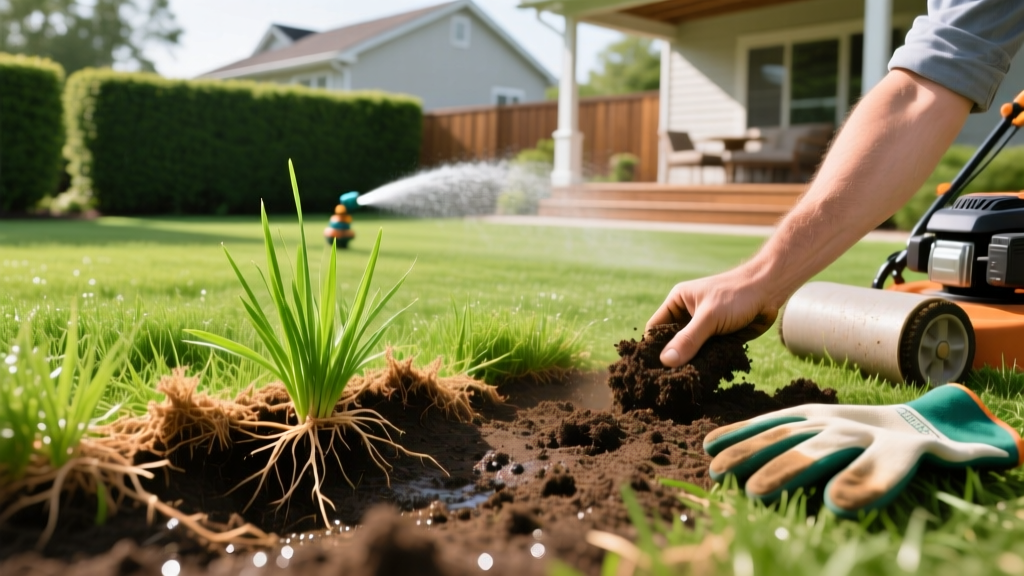
Step-by-Step Recovery After Your Lawn Mowed Too Short
When a lawn mowed too short—a condition agronomists refer to as 'scalping'—the turf loses its primary photosynthetic leaf area, exposing the vulnerable crown and bare soil to extreme heat, moisture loss, and weed invasion. Whether a landscaping crew set the deck too low or an uneven yard caused the mower to drop into a divot, immediate intervention is required to prevent permanent turf death.
This guide outlines the exact step-by-step recovery procedures to rescue a scalped lawn, utilizing precise hydration metrics, targeted nitrogen applications, and mechanical mower recalibration.
Assessing the Damage: Is the Grass Crown Intact?
Before applying water or fertilizer, you must determine if the grass crown (the growing point located at the base of the shoot) is still alive. If the crown is desiccated, the grass will not recover, and overseeding or sodding will be necessary.
The Tug Test
Gently pull upward on a cluster of brown grass blades. If the grass pulls out easily with no resistance and the roots are dry or missing, the plant is dead. If you feel firm resistance and the roots remain anchored in the soil, the crown is likely still viable, even if the visible blades are entirely brown.
The Crown Color Check
Use a trowel to dig up a small 2x2 inch plug of the scalped turf. Examine the base of the plant where the roots meet the shoots. A healthy, surviving crown will appear white, pale yellow, or light green. If the crown is dark brown, mushy, or completely dry and brittle, the plant has suffered fatal desiccation.
Immediate Triage Protocol (Hours 0-48)
If the crowns are alive, execute this 48-hour triage plan to stabilize the turf. According to turfgrass researchers at the University of Minnesota Extension, stressed turf requires immediate moisture replacement without suffocating the roots.
- Syringe, Do Not Soak: Apply exactly 0.15 to 0.25 inches of water. The goal is to rehydrate the exposed crown and topsoil without creating anaerobic, waterlogged conditions that invite Pythium blight. Run your sprinklers for 10-15 minutes during the coolest part of the day (early morning).
- Halt All Foot Traffic: Scalped grass crowns are highly susceptible to mechanical crushing. Keep pets, children, and heavy equipment off the lawn for at least 7 days.
- Suspend Herbicide Applications: Do not apply post-emergent weed killers (like 2,4-D or Quinclorac). The turf lacks the leaf surface area required to metabolize the chemicals, and systemic herbicides will shock the already stressed root system, often resulting in total lawn failure.
The 14-Day Nutritional Recovery Matrix
Once the lawn is hydrated, it needs energy to push out new tillers (shoots). However, dumping high-nitrogen synthetic fertilizers on a scalped lawn will burn the exposed roots. Use the following matrix to feed the recovering turf safely.
| Day | Fertilizer Type | Product Example | Application Rate (per 1,000 sq ft) | Purpose |
|---|---|---|---|---|
| Day 3 | Slow-Release Organic | Milorganite (6-4-0) | 32 lbs (yields ~1.9 lbs N) | Provides gentle, burn-proof nitrogen and iron to stimulate root growth without forcing rapid, weak top-growth. |
| Day 10 | Fast-Release Synthetic | Scotts Turf Builder (32-0-4) | 2.9 lbs (yields ~0.9 lbs N) | Once new green shoots appear, a quick nitrogen spike fuels rapid leaf canopy expansion to shade the soil. |
| Day 14 | Humic Acid / Kelp | Simple Lawn Solutions Liquid Aerating Soil Loosener | Follow label (usually 3 oz per 1k sq ft) | Reduces soil compaction caused by heavy triage watering and improves nutrient uptake at the root zone. |
Recalibrating Mower Deck Heights by Grass Type
To ensure your lawn mowed correctly in the future, you must recalibrate your mower deck. Never trust the numbers stamped on the mower's height adjustment lever; they are notoriously inaccurate due to blade wear and tire pressure variations.
Calibration Procedure: Park the mower on a flat concrete driveway. Disconnect the spark plug wire for safety. Use a tape measure to measure the distance from the lowest point of the blade edge to the concrete. Adjust the deck so the front of the mower is 1/8th to 1/4th of an inch lower than the rear. This 'rake' prevents the blade from cutting the grass a second time on the back of the deck, which causes severe shredding and disease entry points.
The NC State Turfgrass Program recommends the following target cutting heights for optimal health and drought resistance:
- Tall Fescue: 2.5 to 3.5 inches (Crucial for deep root development and shading out crabgrass).
- Kentucky Bluegrass: 2.0 to 3.0 inches.
- Bermudagrass (Common): 1.5 to 2.0 inches.
- Zoysiagrass: 1.0 to 2.0 inches (Requires a reel mower for heights below 1 inch).
- Centipedegrass: 1.0 to 1.5 inches (Highly sensitive to scalping; never cut below 1 inch).
Critical Warning on the 1/3rd Rule: Never remove more than 1/3rd of the grass blade in a single mowing. If your target height is 3 inches, you must mow when the grass reaches 4.5 inches. Cutting a 6-inch tall fescue lawn straight down to 3 inches will cause 'etiolation shock,' where the sudden exposure of the lower, unhardened stem to direct UV radiation results in severe sunburn and white, dead patches.
Managing Weeds in a Scalped Lawn
When a lawn mowed too short exposes the soil to direct sunlight, dormant weed seeds (particularly crabgrass, spurge, and nutsedge) receive the thermal and light signals required to germinate.
Because you cannot use post-emergent herbicides on stressed grass, your best defense is mechanical removal and rapid canopy closure. Hand-pull visible weeds while the soil is moist. Once the turf canopy closes and shades the soil again (usually around Day 21 of the recovery protocol), weed germination rates will drop by over 80%. If the scalping occurred in early spring, you may apply a pre-emergent like Prodiamine, but only after the grass has shown visible signs of new green growth, as pre-emergents can inhibit the rooting of new turf tillers.
FAQ: Lawn Mowed Recovery
Will grass grow back if it is cut too short?
Yes, provided the crown (the white/pale base of the plant) is not physically destroyed or dried out. Warm-season grasses like Bermuda and Zoysia recover from scalping much faster than cool-season grasses like Kentucky Bluegrass due to their aggressive lateral rhizome and stolon growth habits.
Should I leave grass clippings on a scalped lawn?
No. While mulching clippings is standard practice, a scalped lawn has exposed soil. Thick clippings can mat against the bare dirt, trapping excess moisture against the crown and promoting fungal diseases like brown patch or dollar spot. Bag the clippings until the new canopy reaches at least 2 inches.
Can I overseed a scalped lawn immediately?
If the crown is dead and the grass is gone, you must overseed or lay sod. However, do not overseed a lawn that is merely dormant or stressed from scalping but still alive. The existing, recovering root system will outcompete the new seed for water and nutrients, resulting in poor germination and wasted seed.

