
Lawn Care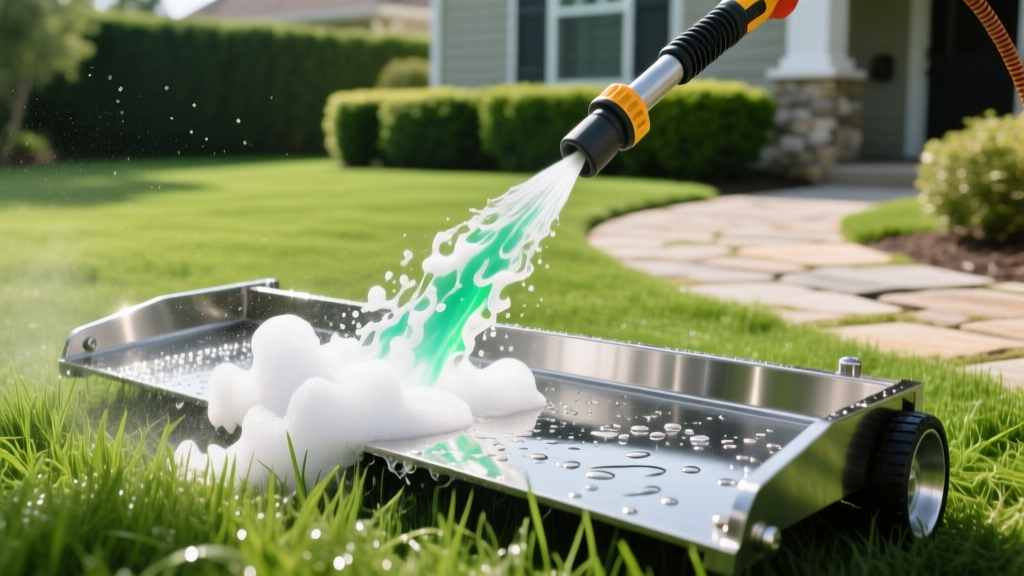
Lawn Mower Deck Cleaner Guide: Top Commercial Sprays and DIY Methods
The Hidden Cost of Mower Deck Buildup
Grass clippings mixed with morning dew and ambient humidity create a highly acidic, concrete-like paste that adheres to the underside of your mower deck. Over a single mowing season, this buildup can add 15 to 30 pounds of dead weight to a commercial zero-turn rig. This extra mass forces the engine to work harder, increasing fuel consumption by up to 12% and accelerating spindle bearing wear. More critically, trapped moisture against the steel or aluminum deck initiates galvanic corrosion, eventually compromising the structural integrity of the deck and leading to costly replacements that easily exceed $400.
Selecting the right lawn mower deck cleaner is not just about aesthetics; it is a critical mechanical maintenance task. The wrong chemical can strip OEM powder coatings, while the wrong physical scraping tool can gouge the metal, creating micro-fissures where rust takes hold. This guide breaks down the most effective commercial cleaners, exact scraping protocols, and long-term preventative coatings to keep your deck operating at peak aerodynamic efficiency.
Top Commercial Lawn Mower Deck Cleaners Compared
Not all degreasers are formulated to break down the specific cellulose and sap bonds found in compacted turf. Below is a comparison of the top-performing lawn mower deck cleaners currently on the market, evaluated on dwell time, coating safety, and cost-effectiveness.
| Product | Active Chemistry | Avg Price | Dwell Time | Best Application |
|---|---|---|---|---|
| MoDeck Original | Alkaline surfactant blend | $16.99 / 32oz | 10-15 mins | Heavy, dried-on clumping; safe on powder coats |
| WD-40 Specialist Heavy Duty Degreaser | Solvent-based emulsifier | $8.50 / 24oz | 5-8 mins | Greasy decks with mixed oil and grass sap |
| Simple Green Oxy Solve | Hydrogen peroxide / Citrus | $12.00 / 32oz | 15-20 mins | Eco-friendly option for aluminum decks |
Expert Insight: Avoid using standard household bleach or undiluted muriatic acid. While these will dissolve grass, they will rapidly oxidize bare steel spindles and destroy the rubber seals on your blade bearings. According to maintenance guidelines from the University of Minnesota Extension, preserving the factory protective coatings on mower components is paramount to extending the equipment's lifespan.
The 5-Step Deck Cleaning and Scraping Protocol
Chemical application is only half the battle. The physical removal of the sludge requires specific tools to avoid damaging the deck's finish. Follow this exact protocol for safe and thorough cleaning.
- Isolate the Ignition System: Disconnect the spark plug wire (or remove the battery terminal on electric/stand-on models). Never rely solely on the PTO switch or ignition key when working beneath a deck.
- Elevate and Secure: Use a hydraulic mower lift or heavy-duty ramps. Do not use standard automotive jack stands on narrow mower frames, as the center of gravity on zero-turns is exceptionally high and prone to tipping.
- Apply and Dwell: Spray your chosen lawn mower deck cleaner generously, focusing on the spindle housings and the discharge chute baffle. Allow the product to dwell for the manufacturer's recommended time (usually 10-15 minutes). Do not let the foam dry completely; mist it with water if necessary.
- Scrape with Plastic, Not Metal: Use a 3-inch rigid plastic putty knife. Metal scrapers will instantly chip the OEM powder coat, exposing bare steel to moisture. Hold the scraper at a 45-degree angle and push in long, overlapping strokes.
- Low-Pressure Rinse: Rinse the deck using a standard garden hose with a spray nozzle. Use a brass wire brush to gently clean the threads on the spindle shafts before reinstalling the blades.
⚠️ Critical Warning: Avoid Pressure Washers on Spindles
Never aim a high-pressure washer (anything over 1,500 PSI) directly at the blade spindles or deck wheels. The high-velocity water will bypass the lip seals, forcing moisture and grit into the bearing races. This causes premature bearing failure, resulting in a high-pitched squeal during operation and requiring a $40-$85 spindle rebuild per corner. The Outdoor Power Equipment Institute (OPEI) strongly advises against using high-pressure washers on sensitive mechanical seals.
Preventative Deck Coatings: Stop Buildup Before It Starts
Once the deck is stripped down to bare, clean metal or intact powder coat, applying a hydrophobic barrier is the most effective way to reduce future maintenance time. These coatings alter the surface tension of the deck, causing wet grass to slide off rather than stick.
Lanolin-Based Sprays (e.g., Fluid Film NAS)
Fluid Film NAS (Non-Aerosol Solvent) is a lanolin-based, non-drying coating originally designed for marine and agricultural use. When sprayed lightly on the underside of a clean, dry deck, it creates a self-healing, creeping barrier that repels water and neutralizes the acidic pH of grass sap. Because it never fully cures to a hard shell, it does not trap moisture against the steel like traditional enamel paints do. Apply a light mist every 40-50 operating hours. Expect to pay around $18 for a 32oz trigger bottle.
Ceramic and PTFE Dry Sprays
For homeowners who mow exclusively in dry conditions and want to avoid the dust-attracting nature of wet lanolin, PTFE (Teflon) or silicon dioxide (SiO2) ceramic sprays are ideal. Products like CRC Dry PTFE Lube ($9/can) flash off quickly, leaving a microscopic, ultra-slick dry film. These are particularly effective on the curved baffles inside the deck where airflow is highest, ensuring clippings are efficiently evacuated into the collection bag or mulching chamber.
Troubleshooting Common Deck Maintenance Failures
Issue: Spindle Squeal Immediately After Washing
Cause: Water intrusion past the bearing seal, often exacerbated by using a pressure washer or washing the mower while the spindles are still hot from recent use (thermal contraction pulls water inward).
Fix: Remove the blade and spindle pulley. Pack the upper and lower bearings with a high-temperature, water-resistant synthetic grease (such as Mobil 1 Synthetic Grease). If the bearings feel gritty when spun by hand, the races are pitted and the entire spindle assembly must be replaced.
Issue: Powder Coat Peeling After Chemical Application
Cause: Using a highly caustic, high-pH alkaline cleaner (like concentrated oven cleaner or un-diluted industrial degreasers) that attacks the chemical bond of the epoxy-based powder coat.
Fix: Strip the remaining loose paint using a chemical paint stripper or media blasting. Repaint the bare steel with a high-build, rust-inhibitive epoxy primer followed by a polyurethane topcoat. Alternatively, apply a thick layer of Fluid Film to halt further corrosion if a full repaint is not immediately feasible.
Issue: Grass Clumping in the Discharge Chute Despite Cleaning
Cause: The deck is clean, but the blade tip speed is insufficient to generate the necessary vacuum lift. This is often due to a glazed or slipping deck belt, or using low-lift mulching blades when side-discharging.
Fix: Check the deck belt for glazing and measure it against the manufacturer's stretch tolerance (usually replace if it stretches more than 1/2 inch past spec). Ensure you are using high-lift blades for bagging or side-discharging to maximize the aerodynamic vacuum inside the deck chamber.

