
Lawn Care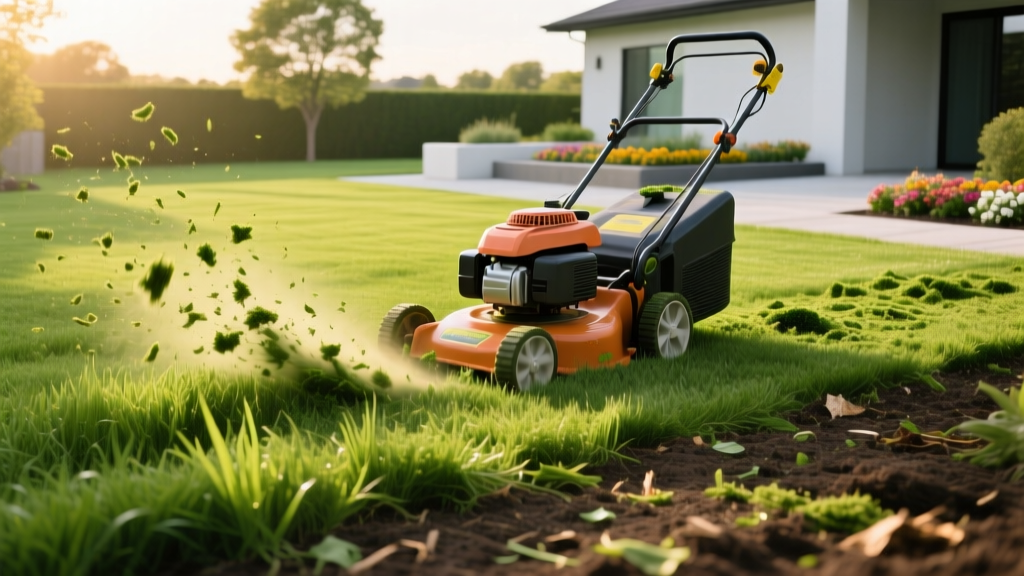
Lawn Mower Mulcher Setup: The Ultimate Free Soil Amendment Strategy
The Science of Grasscycling: Clippings as a Primary Soil Amendment
Leaving grass clippings on the turf—commonly known as grasscycling—is not merely a time-saving convenience; it is a fundamental soil amendment strategy. When processed correctly by a dedicated lawn mower mulcher, clippings decompose rapidly, returning critical macronutrients and organic matter directly to the soil profile. According to Penn State Extension, returning clippings can supply up to 25% of your lawn's annual nitrogen requirements, effectively acting as a slow-release, free fertilizer.
Nutrient Profile of Mulched Grass Clippings
- Nitrogen (N): ~4% (Promotes dense, green vegetative growth)
- Phosphorus (P): ~1% (Supports root development and energy transfer)
- Potassium (K): ~2% (Enhances drought tolerance and disease resistance)
- Carbon-to-Nitrogen (C:N) Ratio: 15:1 to 20:1 (Ideal for rapid microbial breakdown without tying up soil nitrogen, unlike high-carbon amendments such as straw or wood chips which sit at 80:1).
The primary misconception preventing homeowners from utilizing a lawn mower mulcher is the fear of thatch accumulation. Thatch is a tightly bound layer of dead and living roots, stolons, and rhizomes that contain high levels of lignin. Grass clippings are 80% to 85% water and contain very little lignin. When cut into fine particles, they fall to the soil surface and are consumed by earthworms and soil bacteria within 48 to 72 hours during peak growing temperatures (70°F to 85°F).
Mulching Blade Physics: Standard vs. Gator vs. High-Lift
A true lawn mower mulcher relies on specialized blade geometry and deck aerodynamics to keep clippings suspended in a vortex beneath the mower deck. Standard straight blades slice the grass once and immediately discharge it. Mulching blades feature extended cutting edges, increased curvature, and often serrated "teeth" that create lift and repeatedly chop the clippings until they are small enough to fall through the turf canopy.
| Blade Type | Design Characteristics | Best Use Case | Average Cost (2026) |
|---|---|---|---|
| Standard Mulching | Curved edges, no teeth. Moderate lift. | Frequent mowing (every 4-5 days) on dry turf. | $15 - $22 |
| Gator/Serrated (e.g., Oregon G3) | Aggressive teeth on trailing edge. High vortex lift. | Thick turf, slightly damp grass, or extended mowing intervals. | $24 - $35 |
| High-Lift (Non-Mulching) | Large angled wings on the back edge. Maximum airflow. | Side-discharge or bagging heavy, wet clippings. Poor for mulching. | $18 - $25 |
For optimal soil amendment results, upgrade to a serrated mulching blade like the Oregon Gator G3 or the MaxPower 331740B. The serrated teeth create micro-turbulence that forces the grass clipping to circulate under the deck, resulting in a second and third cut. This reduces clipping length from 2 inches down to 0.25 inches, exponentially increasing the surface area for soil microbes to attack and decompose the organic matter.
The 1/3 Protocol: Step-by-Step Mulching Execution
The physical breakdown of clippings relies entirely on the size of the particle and its ability to reach the soil surface. If clippings rest on top of the grass canopy, they block sunlight and smother the turf. Follow this strict protocol to ensure clippings act as an amendment rather than a smothering blanket.
- Calculate the Target Height: Identify your grass type. Cool-season grasses (Tall Fescue, Kentucky Bluegrass) require a 3.0 to 3.5-inch cutting height. Warm-season grasses (Bermuda, Zoysia) require 1.5 to 2.5 inches.
- Apply the 1/3 Rule: Never remove more than one-third of the total leaf blade in a single pass. If your Tall Fescue target is 3 inches, you must mow when the grass reaches 4.5 inches. This leaves exactly 1.5 inches of clipping, which a quality lawn mower mulcher can easily pulverize.
- Manage Overgrowth with Double-Passing: If rain delays your mowing schedule and the grass reaches 6 inches, do not chop it down to 3 inches in one pass. The volume of clippings will overwhelm the mower deck, causing clumping. Set your deck to 4.5 inches for the first pass, then lower it to 3 inches and mow again in a perpendicular direction.
- Monitor Deck Moisture: Mulch only when the grass is dry. Wet clippings stick to the underside of the mower deck, destroying the aerodynamic vortex and dropping heavy, anaerobic clods onto the lawn that will kill the grass beneath them.
Troubleshooting Mulching Failures and Soil Impacts
When a lawn mower mulcher fails to process clippings correctly, the resulting debris can alter soil pH locally, create anaerobic pockets, and invite fungal pathogens. Use this diagnostic matrix to correct common operational failures.
| Symptom on Turf | Root Cause | Corrective Action |
|---|---|---|
| Heavy, wet clumps smothering grass | Mowing damp grass or removing >1/3 blade height. | Wait for turf to dry. Rake out existing clumps to prevent crown rot. Raise deck height. |
| Streaks of uncut or half-cut grass | Dull mulching blade or mowing too fast for deck vortex. | Sharpen or replace the blade. Reduce ground speed by 20% to allow circulation time. |
| Uneven clipping distribution (windrowing) | Deck buildup or incorrect blade installation (upside down). | Scrape the underside of the deck. Ensure the blade's cutting edge faces the deck, not the ground. |
When to Abandon Mulching: Disease and Weed Management
While returning organic matter to the soil is generally beneficial, there are specific biological scenarios where utilizing a lawn mower mulcher becomes detrimental to turf health. The UMass Amherst Turf Program advises modifying mowing practices when specific pathogens or weed life cycles are active.
Active Fungal Pathogens
If your lawn is actively suffering from foliar diseases such as Brown Patch (Rhizoctonia solania), Dollar Spot, or Pythium Blight, you must switch from mulching to bagging or side-discharging. Mulching actively infected leaves chops the fungal mycelium and spores into microscopic pieces, distributing them evenly across the entire lawn and drastically accelerating the infection rate. Bagging the clippings removes the inoculum from the property until the fungicide treatment or environmental shift resolves the outbreak.
Heavy Weed Seed Dispersal
During the peak seeding phases of invasive annual weeds like Crabgrass, Goosegrass, or Poa Annua, mulching will chop the seed heads and drop them directly into the soil canopy, effectively planting a new crop of weeds for the following season. If your pre-emergent herbicide barrier has failed and weeds are producing viable seeds, attach the collection bag to your mower. The Environmental Protection Agency (EPA) recommends hot-composting these specific clippings (reaching 140°F internally) to destroy weed seed viability before using the compost as a soil amendment elsewhere in the garden.
By treating your lawn mower mulcher as a precision soil amendment tool rather than a mere convenience feature, you build a resilient, biologically active soil food web that reduces synthetic fertilizer dependency and fortifies your turf against environmental stress.

