
Lawn Care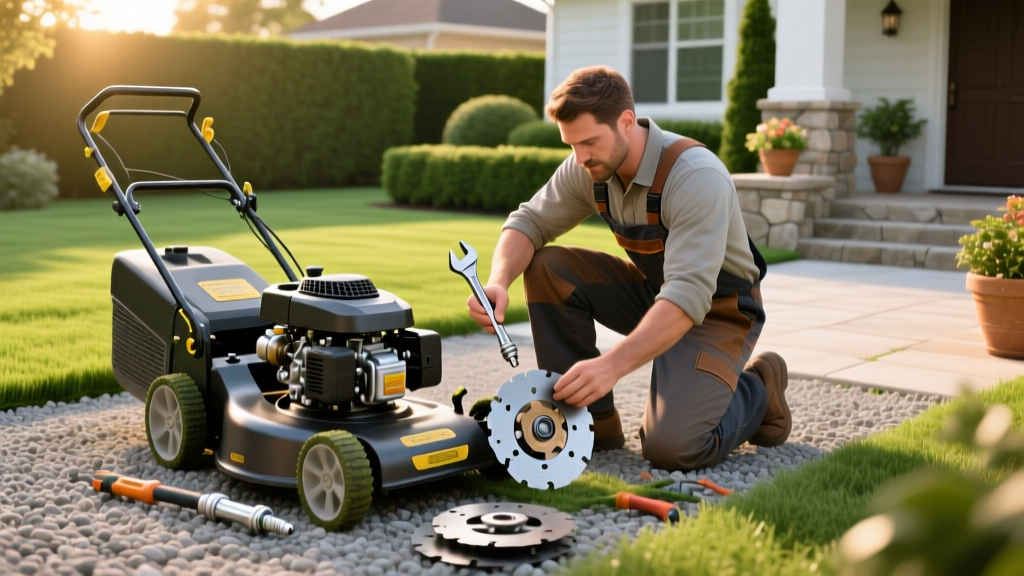
Lawn Mower Repair Cost Guide 2026: Parts, Labor & DIY Savings
The Real Cost of Lawn Mower Repairs in 2026
The national average lawn mower repair cost in 2026 ranges from $135 to $380 for standard walk-behind models, but this baseline figure is deceptive without understanding the underlying powertrain differences. As small engine technology shifts toward brushless electric motors and advanced fuel injection, the nature of mower failures has changed. Carburetor gumming remains the primary culprit for gas models, while battery management system (BMS) faults dominate the cordless sector.
According to reliability data tracked by Consumer Reports, gas-powered mowers still require more frequent mechanical interventions, but electric mowers carry a higher per-repair cost when internal electronic components fail. Understanding the exact breakdown of parts, labor, and diagnostic fees is critical before you drop off your equipment at a local dealership.
Gas vs. Electric: Repair Cost Comparison Matrix
The table below outlines the expected financial impact of the most common failure points across different mower categories. These estimates include both parts and standard shop labor rates.
| Mower Type | Common Failure Point | Average Parts Cost | Average Labor Cost | Total Estimated Cost |
|---|---|---|---|---|
| Gas Walk-Behind | Carburetor Replacement | $35 - $65 | $85 - $110 | $120 - $175 |
| Gas Walk-Behind | Spindle Assembly | $45 - $90 | $125 - $165 | $170 - $255 |
| Cordless Electric | Li-Ion Battery Pack | $180 - $320 | $0 (DIY Swap) | $180 - $320 |
| Cordless Electric | Brushless Motor / Controller | $150 - $280 | $110 - $150 | $260 - $430 |
| Riding / Zero-Turn | Hydrostatic Transmission | $450 - $900 | $250 - $400 | $700 - $1,300 |
Diagnostic Breakdown: Symptom, Cause, and Fix Pricing
Accurately diagnosing the issue before visiting a repair shop prevents unnecessary upsells. Here is a deep dive into the three most frequent mower failures and their exact repair economics.
1. Engine Surging or Failing to Start (Gas Models)
The Cause: Modern E10 and E15 ethanol-blended fuels are highly hygroscopic, meaning they absorb moisture from the air. When a mower sits for more than 30 days without a stabilizer like STA-BIL, phase separation occurs. The water-ethanol mixture sinks to the bottom of the tank and corrodes the internal brass jets of the carburetor.
The Fix: While ultrasonic cleaning can sometimes salvage a gummed carburetor, replacing it with a new OEM unit is often faster and more reliable. For a standard Briggs & Stratton 725EXi engine, a replacement carburetor costs around $45. Briggs & Stratton support resources provide detailed teardown diagrams for DIYers. If you hire a professional, expect to pay for one hour of bench time, bringing the total lawn mower repair cost for this specific issue to roughly $145.
2. Deck Vibration and Uneven Cutting
The Cause: A bent blade is the obvious suspect, but if the blade is straight and the deck still vibrates violently, the spindle assembly bearings have failed. Water intrusion past the top seal washes out the internal grease, causing the bearing races to pit and seize.
The Fix: Spindle replacement requires dropping the entire mower deck and using a specialized puller tool to remove the pulley. Because this is labor-intensive, shops typically charge 1.5 hours of labor. You can save significantly on parts by sourcing high-quality aftermarket spindles from brands like Oregon or Stens, which often outlast OEM plastic-housed units by utilizing cast-iron or heavy-gauge stamped steel housings.
3. Sudden Power Loss Under Load (Cordless Electric)
The Cause: If your cordless mower (such as the EGO Power+ LM2135) runs fine in dry grass but instantly shuts off when hitting thick, damp patches, the issue is rarely the motor itself. It is usually a voltage sag triggering the Battery Management System (BMS) thermal protection, or a failing Hall effect sensor inside the brushless motor controller.
The Fix: BMS failures cannot be safely repaired at the component level due to lithium-ion fire risks. You must replace the entire battery pack ($220-$290). If the battery tests fine on a multimeter under load, the motor controller board must be replaced, which requires proprietary dealer diagnostics and usually totals over $300.
⚠️ SAFETY WARNING: Never attempt to open a sealed lithium-ion mower battery pack to replace individual 18650 or 21700 cells. Improper spot-welding or lack of cell balancing will lead to thermal runaway and catastrophic fire. Always replace the pack as a single OEM unit.
Labor Rates: What Small Engine Repair Shops Charge
The Outdoor Power Equipment Institute (OPEI) has repeatedly highlighted the severe shortage of certified small engine technicians. This labor deficit has driven up shop rates significantly over the last few years. In 2026, you can expect the following pricing structures:
- Independent Repair Shops: $85 to $115 per hour. These shops are often faster and more willing to work on older, out-of-warranty equipment.
- Authorized Dealerships: $125 to $175 per hour. Dealerships charge a premium but have direct access to proprietary diagnostic software (especially for advanced zero-turns and commercial electric models) and OEM warranty channels.
- Minimum Bench Fee: Almost all shops charge a $50 to $85 minimum diagnostic fee just to put the mower on the bench. This fee is usually waived if you proceed with the repair.
The Repair vs. Replace Decision Framework
Knowing when to abandon a repair is just as important as knowing the cost. Use this 3-step framework to make a financially sound decision:
- Apply the 50% Rule: If the quoted lawn mower repair cost exceeds 50% of the price of a brand-new equivalent model, replace the mower. For example, if a new Toro Recycler 22 costs $450, do not spend $250 to replace a blown engine block on a 6-year-old chassis.
- Inspect the Chassis and Deck: A $150 repair is worth it if the mower deck is solid and the wheels are intact. However, if the stamped steel deck is rusting through from the inside out, or the plastic chassis is cracked near the handle mounts, the machine is at the end of its structural life. Throw good money after bad, and you will face another failure next season.
- Consider Commercial vs. Residential Duty: If you are running a landscaping business, repairing a $4,000 commercial Exmark zero-turn for $1,200 makes perfect sense due to the heavy-duty welded deck and serviceable hydraulics. For a residential homeowner with a $300 big-box-store mower, a $180 transmission repair is almost never justified.
Sourcing OEM vs. Aftermarket Parts
One of the most effective ways to lower your lawn mower repair cost is knowing which parts to buy from the dealer and which to source from third-party manufacturers.
When to strictly use OEM (Original Equipment Manufacturer):
- Internal engine gaskets and piston rings (tolerances are exact).
- Electronic controller boards and proprietary wiring harnesses.
- Drive belts on complex self-propel systems (aftermarket belts often stretch or slip under heavy deck loads).
When to use Aftermarket (Oregon, Stens, Rotary, Gator):
- Mower Blades: Aftermarket high-lift or mulching blades often use thicker, more durable steel than OEM equivalents and cost 30% to 50% less.
- Spindles and Idler Pulleys: Heavy-duty aftermarket spindles frequently feature upgraded, greaseable bearings that outlast the sealed OEM units.
- Air Filters and Fuel Lines: Standard consumables that meet or exceed factory specifications at a fraction of the dealer markup.
Pro-Tip for Spring Startup: Over 75% of all spring carburetor repairs can be avoided by either draining the fuel tank completely and running the engine dry, or adding a marine-grade ethanol stabilizer (like Star Tron Enzyme) before winter storage. This single 5-minute task saves the average homeowner $140 in annual repair costs.

