
Lawn Care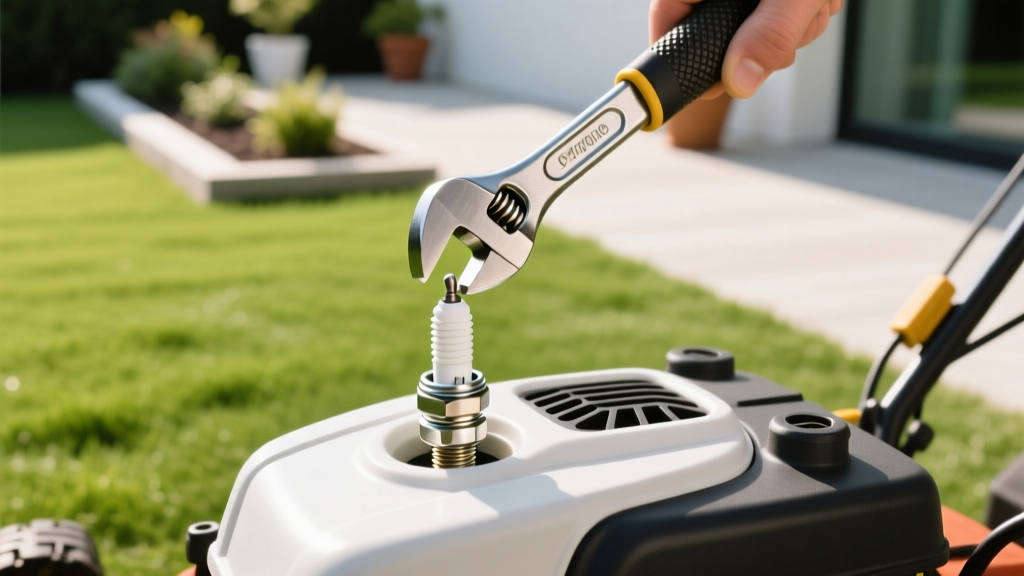
Choosing the Right Spark Plug Wrench for Lawn Mower Maintenance
The Anatomy of a Lawn Mower Spark Plug Wrench
Replacing a spark plug on a small engine seems trivial until you encounter a recessed plug tube, a shrouded cylinder head, or a stripped ceramic insulator. Standard automotive spark plug sockets often fail on lawn mower engines due to wall thickness and depth constraints. A dedicated spark plug wrench for lawn mower maintenance must navigate tight cooling fin clearances while protecting the fragile porcelain insulator from lateral snapping forces.
Warning: The Wall Thickness Trap
Standard 13/16-inch automotive sockets have an outer diameter of roughly 1.15 inches. Many Honda GCV160 and GCV190 engines feature spark plug tubes with an internal clearance of only 1.05 inches. Forcing a standard socket into this space will wedge against the cylinder head, preventing the ratchet from turning and potentially cracking the engine block casting. You must use thin-wall small-engine specific sockets.
Exact Sizing Guide by Engine Manufacturer
Walk-behind and riding mowers utilize a narrow range of metric and SAE thread sizes. Matching your wrench to the specific engine manufacturer is the first step in avoiding rounded hex nuts on the plug itself.
| Engine Brand | Common Models | Hex Size (Wrench) | Thread Diameter |
|---|---|---|---|
| Briggs & Stratton | Quantum, Intek, Vanguard | 13/16' (21mm) | 14mm |
| Honda | GCV160, GCV190, GXV390 | 13/16' (21mm) | 14mm |
| Kohler | Courage, Command, 7000 Series | 13/16' (21mm) | 14mm |
| Kawasaki | FS, FR, FX Series | 5/8' (16mm) | 12mm |
| Tecumseh (Legacy) | Snow King, OHH, OV | 13/16' (21mm) | 14mm |
As the NGK Spark Plugs technical documentation outlines, using an improperly sized wrench on a 14mm thread plug can lead to hex deformation, making future removal nearly impossible without an extractor tool.
Magnetic vs. Rubber Insert: The Retention Debate
Spark plug sockets require an internal retention mechanism to hold the plug securely during extraction and installation. Dropping a plug into a deep cylinder head shroud can alter the electrode gap or, worse, leave the plug wedged inside the tube.
The Rubber Insert Socket
These budget-friendly sockets (typically $6 to $10) use a ribbed rubber grommet inside the socket to grip the ceramic insulator. While adequate for occasional use, the rubber degrades when exposed to engine oil, heat, and ozone. Once the rubber tears, the socket becomes a standard deep well socket, leaving you fishing for a dropped plug with a piece of hose or a magnetic pickup tool.
The Magnetic Socket (Recommended)
Premium magnetic sockets ($14 to $28) feature a rare-earth neodymium magnet ring at the base of the socket interior. This magnet grips the steel shell of the spark plug directly, bypassing the fragile ceramic entirely. For professional landscapers or homeowners maintaining multiple riding mowers, a magnetic socket like the Tekton 4225 13/16-Inch Magnetic Spark Plug Socket is the definitive choice for 2026 equipment fleets.
Top Wrench Configurations for Tight Clearances
Beyond the socket itself, the drive mechanism dictates your success on engines with heavy debris shrouds or low-profile hood clearances on riding tractors.
1. The Swivel (Universal Joint) Socket
Engines like the Honda GCV190 feature a spark plug tube recessed at a slight angle, surrounded by the carburetor and air filter housing. A fixed socket combined with a standard extension often cannot clear the carburetor bowl. A swivel spark plug socket integrates a universal joint directly above the hex drive, allowing up to a 15-degree articulation angle. The Gearwrench 80546 Swivel Spark Plug Socket Set (approx. $25) includes both 5/8-inch and 13/16-inch swivel heads, covering 95% of residential mower engines.
2. The Offset Thin-Wall Wrench
For older mowers or specific commercial zero-turn engines where a ratchet simply cannot fit over the top of the plug, a dedicated offset wrench is required. The Craftsman 9-43570 13/16-inch Spark Plug Wrench features a thin-stamped steel profile with an offset handle, allowing you to turn the plug using an open-end wrench or your fingers on the cross-bar. This tool costs under $10 and is a mandatory addition to any mobile mower repair kit.
Step-by-Step Replacement Protocol
Using the correct spark plug wrench for your lawn mower is only half the battle. Proper installation technique prevents catastrophic engine failure. According to Briggs & Stratton maintenance guidelines, improper installation is a leading cause of stripped cylinder heads.
- Blow Out the Recess: Before breaking the plug loose, use compressed air or a leaf blower to clear grass clippings and grit from the spark plug tube. Dropping debris into the combustion chamber will score the cylinder wall.
- Break and Extract: Attach your magnetic swivel socket and ratchet. Apply steady counter-clockwise force. If the plug resists, apply a single drop of penetrating oil to the base threads and wait 10 minutes. Do not use excessive force, or the hex will round.
- Gap the New Plug: Even if the plug box says 'pre-gapped,' verify it. Most mower engines require a 0.030-inch (0.76mm) gap. Use a wire-style feeler gauge, not a blade gauge, for accurate measurement on ground electrodes.
- Hand-Thread First: NEVER use a ratchet to start the threads. Place the plug in the magnetic socket, lower it into the tube, and use your fingers on the extension bar to thread it into the aluminum head. If it binds immediately, you are cross-threading. Back it out and restart.
- Final Torque: Once finger-tight, use a torque wrench set to 18-21.6 lb-ft (for 14mm threads in aluminum). If you lack a torque wrench, use the turn-method: tighten an additional 1/2 to 2/3 of a turn past finger-tight to crush the gasket washer properly.
Common Failure Modes and Edge Cases
- Ceramic Insulator Cracking: Caused by using a socket with a damaged rubber insert that applies uneven lateral pressure to the porcelain. Always switch to a magnetic socket if your rubber insert shows signs of tearing.
- Seized Plugs in Aluminum Heads: Galvanic corrosion between the steel plug shell and aluminum cylinder head can weld the threads together. If a plug snaps during extraction, you must use a specialized spiral extractor or drill out the threads and install a Heli-Coil 5334-14 thread insert kit ($22) to restore the 14x1.25mm threads.
- Over-Tightening: Crushing the spark plug gasket too far alters the thermal rating of the plug and can stretch the threads in the aluminum head, leading to compression loss. Adhere strictly to the 18-21.6 lb-ft specification.
Investing in a high-quality, thin-wall magnetic spark plug wrench tailored to your mower's specific engine brand transforms a frustrating, knuckle-busting chore into a precise, three-minute maintenance task. Verify your engine's hex size, purchase a swivel configuration for recessed tubes, and always hand-thread to protect your cylinder head.

