
Lawn Care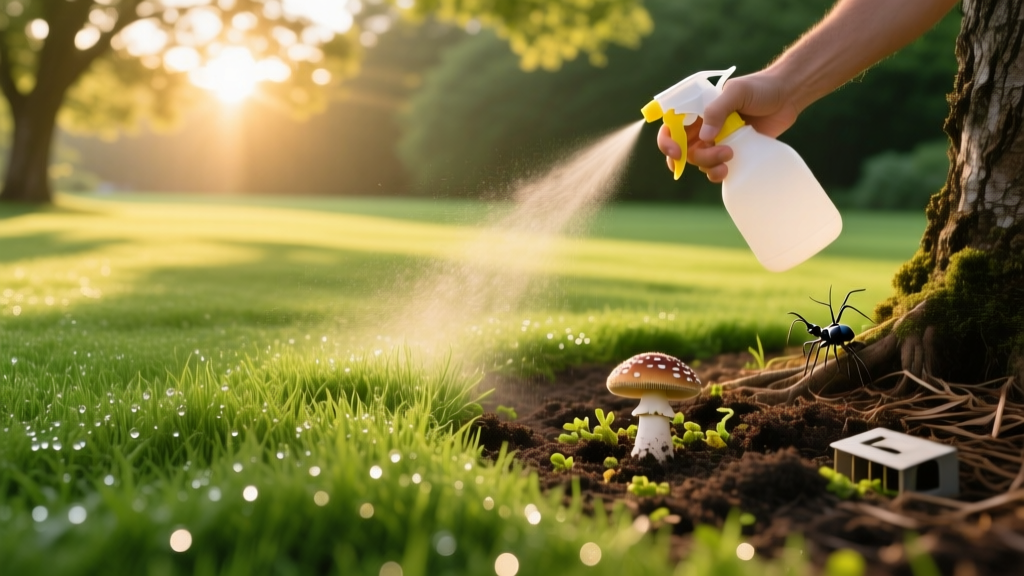
Lawn Mushroom Killer Playbook: Sprays vs. Soil Fixes
The Hard Truth About Chemical Lawn Mushroom Killers
Searching for a chemical lawn mushroom killer usually leads to a frustrating dead end because the EPA does not register fungicides specifically for eliminating saprophytic (wood-decaying) lawn mushrooms. Mushrooms are merely the temporary reproductive fruiting bodies of a much larger, underground fungal network called mycelium. Spraying a contact fungicide on a mushroom cap only kills that specific fruit; it does zero damage to the underlying mycelium feeding on organic matter in your soil.
According to turfgrass pathology guidelines from the University of Minnesota Extension, most lawn mushrooms are actually beneficial decomposers breaking down thatch, buried lumber, or dead tree roots. However, when they become a nuisance or pose a risk to pets, homeowners need a strategic playbook rather than a magic spray.
Expert Insight: If a product claims to be a dedicated "mushroom killer" for home lawns, it is likely an unregistered, off-label pesticide or a misleading marketing gimmick. True fungal suppression requires targeting the soil environment or using broad-spectrum turf fungicides off-label for disease control.
When Chemical Fungicides Are Justified
While you cannot buy a product labeled strictly as a "mushroom killer," systemic turf fungicides can suppress mycelial growth in severe cases, particularly when dealing with destructive fungal formations like fairy rings or disease-inducing pathogens. The two most effective active ingredients for home lawn fungal suppression are:
- Azoxystrobin (e.g., Scotts DiseaseEx): A strobilurin fungicide that inhibits fungal respiration. It costs approximately $25 to $30 for a 5,000 sq. ft. bag and provides up to 4 weeks of systemic protection.
- Propiconazole (e.g., BioAdvanced Fungus Control): A triazole fungicide that disrupts ergosterol synthesis in fungal cell walls. Priced around $20 to $25 for 5,000 sq. ft., it is highly effective when rotated with Azoxystrobin to prevent fungal resistance.
Note: These products are labeled for turf diseases (like brown patch or dollar spot). Using them solely to kill random lawn mushrooms is an expensive misuse of chemicals and harms beneficial soil biology.
The Cultural Playbook: Starving the Mycelium
The most permanent lawn mushroom killer is environmental deprivation. Mycelium requires three things to thrive and produce mushrooms: excess moisture, high organic matter (food), and poor air circulation. By altering these variables, you force the fungus into dormancy.
⚠️ The Thatch Threshold Rule: Fungi feed heavily on undecomposed organic matter. If your lawn's thatch layer exceeds 0.5 inches, it acts as a sponge, holding moisture and providing an endless food source for mycelium. Rent a power dethatcher or use a manual thatch rake to bring this layer below 0.25 inches.
Step-by-Step Environmental Modification
- Shift Watering Schedules: Stop watering in the evening. Switch to deep, infrequent watering (1 inch per week) applied strictly between 4:00 AM and 8:00 AM. This allows the topsoil to dry out during the day, depriving surface mycelium of the humidity needed to fruit.
- Core Aeration: Rent a core aerator to pull 3-inch soil plugs. This breaks up compacted soil, improves drainage, and increases oxygen flow to the root zone, which favors grass roots over anaerobic fungal networks.
- Accelerate Decomposition: Apply 0.5 to 1.0 lbs of actual nitrogen per 1,000 square feet using a fast-release fertilizer like ammonium sulfate. Nitrogen feeds the bacteria that decompose wood and thatch faster than fungi, effectively outcompeting the mycelium for its food source.
- Remove Buried Wood: If mushrooms are concentrated in a specific 3-foot radius, dig down 6 to 12 inches. You will likely find decaying tree roots, buried construction debris, or old stumps. Excavating this material removes the food source entirely.
DIY and Natural Sprays: Collapsing the Fruiting Bodies
If you need an immediate aesthetic fix before a backyard event and want to collapse existing mushroom caps without harming your grass, household surfactants and pH alterants work as temporary contact killers.
1. The Dish Soap Cell-Wall Collapse
Mushrooms lack the protective waxy cuticle found on plant leaves. Their cell walls are highly susceptible to surfactants. Mix 2 to 3 tablespoons of liquid dish soap (like Dawn) into 1 gallon of water. Spray this directly onto the mushroom caps. The soap breaks the surface tension and disrupts the fungal cell membranes, causing the mushrooms to shrivel and collapse within 12 to 24 hours. This does not kill the underground mycelium, but it eliminates the visible hazard.
2. Baking Soda pH Shock
Most lawn mushrooms prefer slightly acidic to neutral soil environments (pH 6.0 to 7.0). Dissolve 2 tablespoons of baking soda (sodium bicarbonate) in 1 gallon of water and apply it to the base of the mushrooms. This creates a localized, temporary spike in soil alkalinity that inhibits local mycelial fruiting. Avoid over-applying, as excessive sodium buildup can cause grass blade burn.
3. The Vinegar Risk (Not Recommended)
While horticultural vinegar (20% acetic acid) will instantly kill mushroom caps, it is a non-selective contact herbicide. It will scorch and kill your turfgrass upon contact, leaving dead brown patches that are worse than the original mushroom problem. Stick to soap or baking soda for targeted spot treatments.
Comparison Matrix: Chemical vs. DIY vs. Cultural Controls
| Control Method | Target | Cost per 1,000 sq ft | Longevity | Grass Safety |
|---|---|---|---|---|
| Systemic Fungicide (Azoxystrobin) | Mycelium / Diseases | $5.00 - $6.00 | 3-4 Weeks | High (when used as directed) |
| Dish Soap Spray (2 tbsp/gal) | Fruiting Bodies Only | < $0.10 | 24-48 Hours | High |
| Baking Soda Solution | Fruiting Bodies / Local pH | < $0.15 | 1 Week | Moderate (risk of sodium burn) |
| Core Aeration + Dethatching | Soil Environment / Thatch | $15.00 - $25.00 (Rental) | Permanent / Seasonal | High (promotes turf health) |
| Nitrogen Acceleration | Organic Matter / Food Source | $2.00 - $4.00 | Permanent (once decomposed) | High |
Managing Fairy Rings: The Tough Exception
Fairy rings are the one scenario where a passive approach fails. Caused by aggressive basidiomycete fungi, fairy rings manifest as expanding circles of dark green grass, dead grass, or dense mushroom clusters. According to turfgrass experts at Texas A&M AgriLife Extension, fairy rings create hydrophobic (water-repellent) soil conditions that starve the grass roots inside the ring.
The Surfactant and Deep-Water Protocol
To break a fairy ring, you must penetrate the hydrophobic mycelial mat. Standard watering will just run off the surface. 1. Apply a Soil Surfactant: Use a professional-grade wetting agent like Aqueduct or a heavy application of liquid dish soap (5 oz per 1,000 sq ft) over the ring. This breaks the water tension. 2. Deep Core Aeration: Punch holes directly through the ring and 2 feet beyond its visible edge. 3. Syringe Watering: Water the area deeply immediately after surfactant application to force moisture and the surfactant down into the mycelial mat, disrupting its structure and allowing grass roots to re-establish.
Frequently Asked Questions
Are lawn mushrooms toxic to dogs?
While the vast majority of saprophytic lawn mushrooms (like puffballs or standard agarics) are non-toxic, it is impossible for a layman to distinguish them from deadly lookalikes like Amanita species (Destroying Angels) or Galerina marginata (Deadly Skullcaps). If you have dogs that forage or eat items off the turf, physical removal by raking or using the soap-spray collapse method is a mandatory safety protocol.
Will applying lime kill lawn mushrooms?
No. Applying agricultural lime raises soil pH, which is sometimes recommended to combat moss or certain fungal diseases like dollar spot. However, many common lawn mushrooms thrive in alkaline conditions. Blindly applying lime without a soil test will not kill the mycelium and may lock up essential micronutrients like iron, leading to chlorotic (yellow) grass.
Why do mushrooms only appear after heavy rain?
The mycelium is always present in the soil, silently decomposing organic matter. It only expends the energy to push fruiting bodies (mushrooms) above the surface when soil moisture and humidity reach a critical threshold, ensuring the spores have a damp environment to disperse. This is why shifting to early-morning, deep watering is the most effective long-term deterrent.
Stop treating the fruit and start managing the soil environment. By combining targeted surfactant sprays for immediate aesthetic relief with aggressive thatch management and moisture control, you can permanently reclaim your turf from fungal takeovers without relying on non-existent chemical silver bullets.

