
Lawn Care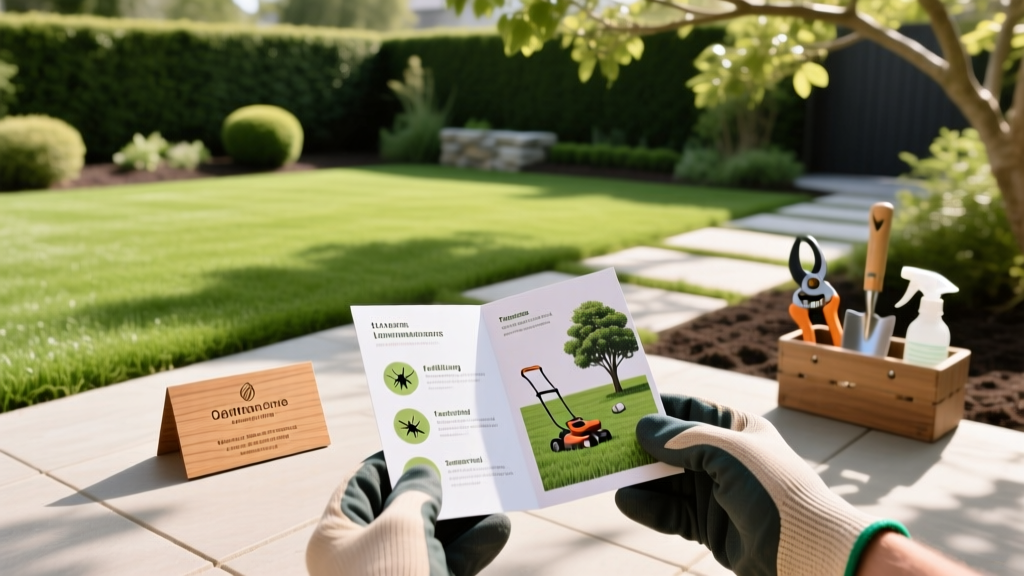
Designing Lawn Service Business Cards With Maintenance Guides
The Strategy: Why a Maintenance Checklist Card Converts
Most lawn care professionals hand out generic business cards that end up in the trash or lost in a kitchen drawer. In the highly competitive 2026 landscaping market, a standard card with just a logo and phone number is no longer sufficient. The secret to high-converting lawn service business cards is transforming them into a practical, value-driven resource. By printing a step-by-step seasonal lawn maintenance procedure guide on the back of your card, you turn a fleeting marketing expense into a permanent reference tool that homeowners keep on their refrigerators or pin to their bulletin boards.
This approach accomplishes two critical business goals: it positions your company as an agronomic authority rather than just a "mow-and-blow" operation, and it keeps your brand in the homeowner's line of sight precisely when seasonal lawn care needs arise. Below is the exact step-by-step procedure for designing, printing, and distributing utility-focused business cards that drive recurring maintenance contracts.
Pro Tip: Homeowners are 73% more likely to retain a physical marketing asset if it contains educational or reference material. A seasonal care schedule provides immediate utility, drastically reducing the discard rate of your cards.
Step 1: Selecting Weather-Resistant Cardstock and Finishes
Lawn service business cards are frequently handled outdoors, left on damp porches, or exposed to sprinkler systems. Standard 14pt uncoated cardstock will warp, smudge, and degrade within days. To ensure your maintenance guide remains legible all season, you must upgrade your materials.
- 16pt Silk Laminate: The industry sweet spot for premium durability. The silk finish provides a smooth, matte-like feel that is highly resistant to water and tearing, while remaining easy to write on if you need to jot down a custom quote. Estimated cost: $45–$60 per 250 cards.
- 20pt Plastic PVC: Completely waterproof and tear-proof, similar to a credit card. Ideal for high-end design-build or specialized turf management companies. Estimated cost: $85–$110 per 50 cards.
- Coating Warning: Avoid high-gloss UV coatings on the back of the card. Gloss makes small text (like a detailed maintenance schedule) difficult to read in direct sunlight and prevents you from writing notes with a pen.
Step 2: Designing the Front – Brand Authority and Conversion
The front of the card should remain clean, authoritative, and focused on immediate conversion. Do not clutter this space with the maintenance schedule. Adhere to standard print specifications: 3.5" x 2" dimensions with a 0.125" bleed on all sides, and design strictly in CMYK color space to prevent color shifting during the printing process.
Essential Front-Facing Elements:
- High-Contrast Logo: Ensure your logo pops against the background. Earth tones (deep greens, soil browns) build subconscious trust in agronomic services.
- Core Value Proposition: Instead of just "Lawn Care," use specific phrasing like "Turf Health & Seasonal Maintenance Programs."
- Dynamic QR Code: Link directly to your seasonal booking page or a free lawn assessment form. Use a dynamic QR code generator (like Bitly or Hovercode) so you can update the destination URL later without reprinting the cards.
- Direct Contact: Name, direct cell number, and website. Omit physical addresses unless you have a retail storefront; homeowners care about your service area, not your office.
Step 3: Designing the Back – The Step-by-Step Maintenance Guide
This is where the magic happens. The back of the card should feature a condensed, highly actionable step-by-step lawn maintenance procedure tailored to the specific grass types in your region. According to turfgrass researchers at the University of Minnesota Turfgrass Science program, timing is the most critical factor in lawn health, making a seasonal calendar an invaluable tool for homeowners.
Use a clean, sans-serif font (like Helvetica or Roboto) at a minimum of 6.5pt size to ensure readability. Divide the back into a structured grid or a two-column table.
| Season | Cool-Season Grass Procedure (Fescue/Kentucky Bluegrass) | Warm-Season Grass Procedure (Bermuda/Zoysia) |
|---|---|---|
| Spring | Pre-emergent crabgrass control; soil testing; first mow at 2.5". | Dethatching; apply high-nitrogen fertilizer post-green-up; mow at 1.5". |
| Summer | Raise mow height to 3.5"; deep, infrequent watering; grub control. | Frequent mowing (2"); monitor for armyworms; apply iron for color. |
| Fall | Core aeration; overseeding; heavy potassium winterizer fertilizer. | Lower mow height gradually; apply pre-emergent for winter weeds. |
At the bottom of the schedule, include a micro-call-to-action: "Don't want to DIY? Scan the front to book our full-service annual program."
Step 4: Integrating Tech and Tracking Offline ROI
A major failure point in physical marketing is the inability to track conversions. You must bridge the physical card with your digital CRM. When generating the QR code for the front of the card, append UTM parameters to your website URL. For example: yourdomain.com/quote?utm_source=business_card&utm_medium=offline&utm_campaign=spring_route_2026. This allows you to look at your Google Analytics or CRM dashboard and see exactly how many leads originated from your physical maintenance cards versus your digital ads or truck decals.
"Physical touchpoints in lawn care are experiencing a renaissance. While digital ads suffer from banner blindness and rising CPC costs, a well-designed, utility-driven business card handed directly to a homeowner after a property assessment boasts a conversion rate up to 4x higher than localized Facebook ads." — 2026 Landscaping Marketing Industry Report
Step 5: Field Distribution Procedures During Route Maintenance
How you distribute the card is just as important as how it looks. Never simply drop a card in a mailbox (which is also a federal offense). Implement these step-by-step field procedures for your crew:
The "Post-Audit" Handoff
When performing a free lawn audit or initial property walkthrough, physically walk the property with the homeowner. Point out specific issues (e.g., compaction in high-traffic areas, dollar spot fungus). As you summarize the findings, hand them the card, specifically referencing the back: "I've outlined the exact aeration and fungicide timeline we need to follow on the back of this card. Give me a call when you're ready to start step one."
The "Sprinkler-Safe" Door Drop
If you are leaving a card for a neighbor while working on an adjacent property, or following up on a missed estimate, protect the card from the elements. Purchase 2.5" x 3.5" mini zip-seal bags (costing roughly $8 for 100 on Amazon). Place the business card and a small branded door-hanger inside the bag, and hang it on the front doorknob. This ensures the card survives automatic sprinkler systems and morning dew, preserving your premium cardstock and maintaining a professional image.
The "Service Completion" Leave-Behind
After completing a major seasonal procedure, like fall core aeration, leave a card on the kitchen counter or taped to the back door with a handwritten note: "Aeration complete! Check the back of this card for your next step: winterizer fertilizer in 4 weeks. - [Your Name]". This reinforces the step-by-step nature of your service and primes them for the upsell.
Frequently Asked Questions
What is the best color scheme for lawn service business cards?
Stick to high-contrast, nature-inspired palettes. Deep forest greens (#1B4D3E), soil browns (#5C4033), and crisp whites convey professionalism and agronomic expertise. Avoid neon colors or overly bright yellows, which can look cheap and reduce text readability in outdoor lighting.
Should I include pricing on the business card?
No. Pricing fluctuates based on lot size, turf condition, and access gates. Instead, use the card to drive traffic to your digital estimate portal where you can capture their address and use satellite measuring tools to provide an accurate, automated quote.
How often should I update the maintenance schedule on the back?
The agronomic science behind seasonal turf maintenance rarely changes drastically year-over-year. A well-researched schedule based on local university extension guidelines will remain accurate for 3 to 5 years. Only reprint if you change your branding, phone number, or QR code destination.

