
Lawn Care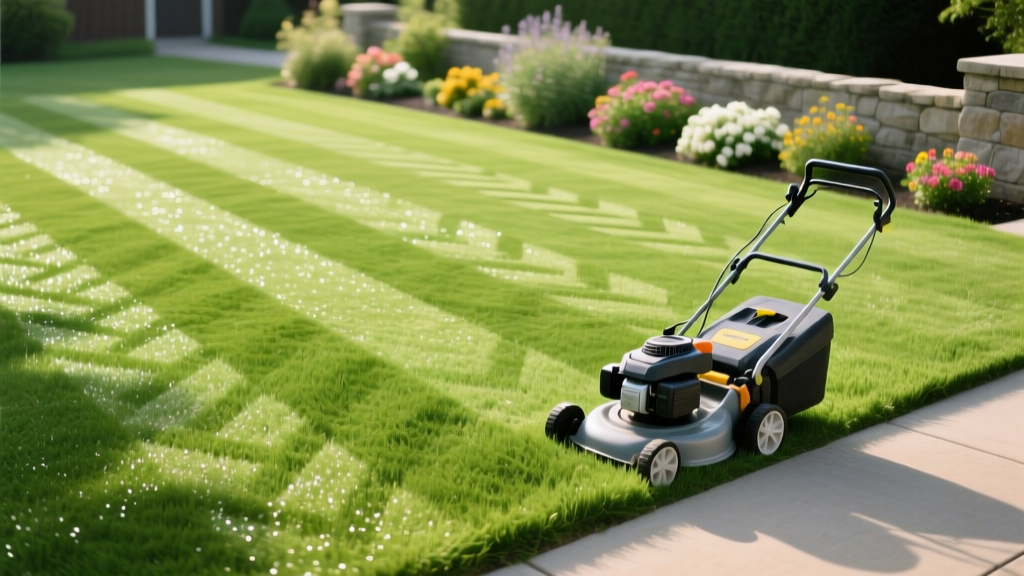
Lawn Stripping Guide: Step-by-Step Mowing Patterns for Perfect Stripes
The Physics of Lawn Stripping: Bending, Not Cutting
A common misconception among homeowners is that lawn stripping is achieved by cutting the grass at different heights. In reality, the alternating light and dark bands are an optical illusion created by bending the grass blades in opposite directions. When you mow away from your focal point, the grass bends away from you, exposing the waxy, light-reflecting underside of the leaf blade (creating a light stripe). When you mow toward your focal point, the grass bends toward you, and you see the top of the blade and the shadow it casts (creating a dark stripe). According to turfgrass researchers at the University of Minnesota Extension, the structural integrity and hydration of the grass cell walls dictate how well the blade will hold this bent position after the mower passes.
Myth vs. Fact: Stripes do not indicate uneven cutting. If your mower deck is properly leveled, the cutting height remains identical across all stripes. The visual contrast is purely a result of light refraction off the leaf cuticle.
Grass Type Compatibility Matrix
Not all turfgrass is created equal when it comes to striping. Cool-season grasses possess wider, more succulent blades that bend easily and hold their shape. Warm-season grasses are highly rigid and tend to spring back upright immediately after the roller passes. Below is a compatibility matrix for the most common residential turfgrasses:
| Grass Species | Season Type | Striping Ability | Optimal Cut Height for Stripes |
|---|---|---|---|
| Kentucky Bluegrass | Cool | Excellent | 2.5 - 3.5 inches |
| Tall Fescue | Cool | Very Good | 3.0 - 4.0 inches |
| Perennial Ryegrass | Cool | Excellent | 2.0 - 3.0 inches |
| Bermudagrass | Warm | Poor to Fair | 1.0 - 2.0 inches |
| Zoysiagrass | Warm | Fair | 1.5 - 2.5 inches |
Essential Equipment & Roller Configurations
To achieve professional-grade lawn stripping, your mower must be equipped with a rear roller or a striping kit. The roller's primary job is to physically press the newly cut grass blades down into the soil. As of 2026, homeowners have three primary equipment routes:
- OEM Rear Rollers: Many premium residential mowers (like the John Deere X300 series or Toro TimeCutter with factory roller attachments) come with integrated heavy-duty steel rollers. These provide the deepest, most consistent stripes due to their 40+ lb weight distribution.
- Aftermarket Striping Kits: The Toro Stripe Kit (Part #137-3450, typically $55 to $75) or the Big League Chop striping kits utilize a flexible rubber flap or a lightweight weighted roller that attaches to the rear of the mower deck. These are ideal for zero-turn mowers where traditional steel rollers cannot be mounted.
- DIY PVC Sand Rollers: For budget-conscious homeowners, a 3-inch or 4-inch diameter PVC pipe filled with dry play sand and capped on both ends, mounted via zip-ties or U-bolts to the rear axle, provides roughly 15 to 20 lbs of downward pressure. Bob Vila's DIY landscaping guides frequently recommend this as a highly effective, low-cost alternative to commercial kits.
The Step-by-Step Lawn Stripping Procedure
Executing perfect stripes requires precision, a fixed focal point, and strict adherence to overlap measurements. Follow this exact sequence for your next mow.
Step 1: The Perimeter Pass
Begin by mowing two complete passes around the entire perimeter of your lawn. This creates a clean, uniform border and provides a turning zone at the end of each stripe so you do not have to execute sharp, turf-tearing turns inside your primary striping area.
Step 2: Establish a Focal Point
Never look down at the mower deck while striping; this guarantees wavy lines. Pick a fixed focal point in the distance—a tree trunk, a specific fence post, or the corner of your house. Keep the center of your mower hood aligned with that focal point for the entire length of the pass.
Step 3: The 3-Inch Overlap Rule
As you begin your return pass, overlap the previous mowing line by exactly 2 to 3 inches. If you overlap too little, you will leave a thin, un-mowed 'ridge' of grass between stripes that ruins the visual effect. If you overlap too much, you will double-cut the grass, causing unnecessary stress and fading the stripe contrast.
Step 4: The Teardrop Turn
When you reach the end of a stripe, do not perform a zero-radius U-turn. This will scalp the turf and tear the grass crowns. Instead, execute a 'Teardrop' or 'Y-Turn': drive straight past the perimeter line, lift the mower deck, turn the steering wheel smoothly to the right, reverse slightly while turning left to align with your next 3-inch overlap, lower the deck, and engage the blades before moving forward.
Advanced Pattern Execution
Once you have mastered basic parallel stripes, you can manipulate your mowing sequence to create complex geometric patterns. According to turf management experts at Scotts Miracle-Gro, altering the bend direction of the grass is the key to multi-dimensional patterns.
Pro-Tip for Double-Mowing Patterns: When creating checkerboards or diagonals, you will be passing over the same grass twice. Ensure your mower blades are razor-sharp. Dull blades will shred the grass tips on the second pass, resulting in a gray, diseased-looking lawn within 48 hours.
The Checkerboard Pattern
- Mow the entire lawn in parallel North-South stripes.
- Without changing the mower's cutting height, mow the entire lawn again in East-West stripes.
- Where the 'dark' North-South stripe intersects with the 'dark' East-West stripe, the grass is bent twice, creating the deepest, darkest squares. The intersections of two 'light' passes create the brightest squares.
The Diagonal Diamond
Mow your first set of stripes at a 45-degree angle to your property line, using a corner of your house as the focal point. For the second pass, mow at a 45-degree angle in the opposite direction. This creates a striking diamond lattice effect that visually expands the size of smaller yards.
Troubleshooting Common Striping Failures
| Symptom | Root Cause | Corrective Action |
|---|---|---|
| Stripes fade within 24 hours | Grass is too dry or cut too short | Raise deck to 3.5 inches; irrigate deeply 24 hours before mowing to increase cell turgor pressure. |
| Wavy, uneven lines | Looking down at the deck; uneven terrain | Lock eyes on a distant focal point; consider lawn leveling with topdressing sand for severe undulations. |
| Brown, torn grass at stripe ends | Pivoting on the turf with the deck engaged | Always disengage blades and lift the deck before executing the teardrop turn. |
| Faint, low-contrast stripes | Roller weight is insufficient | Add 15 lbs of weight to your DIY PVC roller or upgrade to a heavy-duty steel rear roller attachment. |
Mastering lawn stripping is a blend of optical physics, turfgrass biology, and disciplined mowing habits. By selecting the right roller weight, maintaining an optimal cutting height of at least 3 inches, and strictly adhering to the teardrop turn technique, you can transform a standard residential yard into a meticulously manicured landscape that rivals professional sports turf.

