
Lawn Care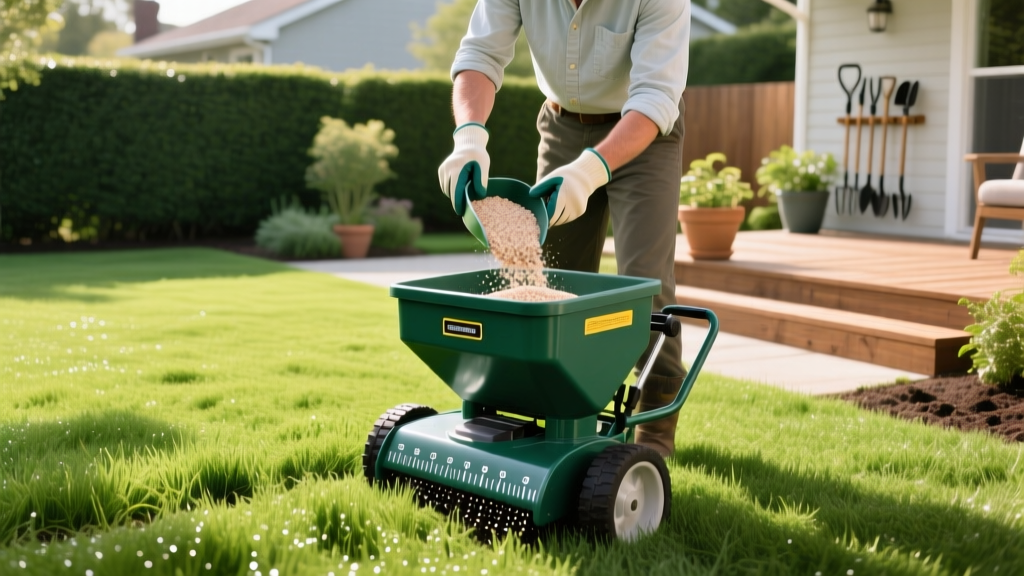
Layman Feed and Lawn Nutrition: A Beginner’s Fertilizer Guide
The Reality of Lawn Nutrition: Stripping Away the Jargon
Walk into any garden center, and you will be confronted with a wall of brightly colored bags promising emerald-green turf, weed destruction, and crabgrass prevention. For the average homeowner, navigating this aisle is overwhelming. This layman feed and lawn nutrition guide cuts through the marketing noise to explain exactly what your grass needs, how to read a fertilizer label, and how to apply it without burning your yard or polluting local waterways.
Grass does not care about brand names; it cares about elemental chemistry and soil biology. To build a resilient lawn, you must understand the difference between feeding the plant and feeding the soil. In 2026, with fertilizer prices stabilizing but environmental regulations tightening, precision application is no longer just for golf course superintendents—it is a necessity for residential lawns.
Decoding the NPK Ratio: The Core of Lawn Feed
Every bag of lawn fertilizer displays three numbers, known as the NPK ratio. This represents the percentage by weight of Nitrogen (N), Phosphorus (P), and Potassium (K). Understanding these three macronutrients is the foundation of any successful layman feed and lawn strategy.
The NPK Cheat Sheet
- Nitrogen (N): The engine of leaf growth and chlorophyll production. It dictates the color and density of your turf.
- Phosphorus (P): Essential for early root development and seedling establishment. Mature lawns rarely need supplemental phosphorus.
- Potassium (K): The stress manager. It thickens cell walls, improving drought tolerance, disease resistance, and winter hardiness.
If you buy a 12.5 lb bag of fertilizer labeled 32-0-10, it contains 32% Nitrogen (4 lbs), 0% Phosphorus, and 10% Potassium (1.25 lbs). The remaining 58% consists of secondary nutrients and inert carrier materials that help distribute the granules evenly. You might wonder why Phosphorus is zero. As of 2026, over 20 U.S. states strictly prohibit phosphorus in turf fertilizers to prevent nutrient pollution and toxic algal blooms in waterways, unless a soil test proves a deficiency or you are establishing a brand-new lawn from seed.
Synthetic vs. Organic Lawn Feed: A Cost and Performance Matrix
The debate between synthetic (salt-based) and organic (carbon-based) fertilizers is a cornerstone of modern lawn care. Synthetics provide immediate results but require frequent applications and carry a high risk of fertilizer burn if over-applied. Organics feed the soil microbiome, releasing nutrients slowly as microbes break them down, but they are more expensive upfront and rely on warm soil temperatures to activate.
| Fertilizer Type | Example Product | NPK Ratio | Cost per 1,000 sq ft | Release Speed | Burn Risk |
|---|---|---|---|---|---|
| Organic Slow-Release | Milorganite | 6-4-0 | $10.00 | 8-10 Weeks | Very Low |
| Synthetic Quick-Release | Scotts Turf Builder | 32-0-10 | $2.80 | 2-4 Weeks | Moderate |
| Synthetic Slow-Release | Lesco Professional | 24-0-11 | $4.50 | 6-8 Weeks | Low |
Pro Tip: For the best of both worlds, many turf managers use a hybrid approach. Apply a synthetic slow-release fertilizer in early spring for immediate green-up, then switch to an organic feed like Milorganite in the heat of summer to build soil carbon without risking chemical burn on stressed grass.
Soil Testing: The Missing Step in Most Lawn Care
Applying fertilizer without a soil test is like prescribing medication without a diagnosis. If your soil pH is below 5.5 (highly acidic) or above 7.5 (alkaline), the grass roots chemically lock out nutrients, meaning the expensive feed you just applied is completely wasted. According to the UMass Soil and Plant Nutrient Testing Laboratory, a standard residential soil test costs between $15 and $25 and provides exact lime and sulfur amendment recommendations.
How to Pull a Proper Soil Core Sample
- Use the right tool: Use a soil probe or a clean garden trowel. Avoid using tools that have recently held chemical weed killers.
- Target the root zone: Extract soil from exactly 3 to 6 inches deep. Surface debris and thatch do not represent the root environment.
- Composite the samples: Take 10 to 15 subsamples from different areas of your lawn. Mix them thoroughly in a clean plastic bucket.
- Dry and ship: Let the mixed soil air-dry on a newspaper (never in a microwave or oven). Place 1.5 cups of the dry soil into the testing lab's provided ziplock bag.
Warning: Never apply pelletized lime based on a neighbor's recommendation or a generic hardware store chart. Soil buffering capacity varies wildly by region. Applying 50 lbs of lime per 1,000 sq ft to a lawn that only requires 20 lbs can induce severe iron chlorosis, turning your grass pale yellow for the entire season.
Seasonal Feeding Calendar: Timing is Everything
The timing of your layman feed and lawn applications must align with the biological growth cycles of your specific turfgrass species. Feeding warm-season grasses in the fall or cool-season grasses in the peak of summer are two of the most common mistakes homeowners make.
Cool-Season Grasses (Kentucky Bluegrass, Tall Fescue, Perennial Ryegrass)
Cool-season grasses thrive in temperatures between 60°F and 75°F. Their primary root growth occurs in the autumn.
- Early Spring (April): Light application (0.5 lbs Nitrogen per 1,000 sq ft) to support spring green-up. Avoid heavy nitrogen, which forces top growth at the expense of deep roots before summer drought.
- Late Spring (May): Skip fertilization if you applied a pre-emergent crabgrass preventer that already contains fertilizer.
- Early Fall (September): The most critical feeding of the year. Apply 1.0 lbs Nitrogen per 1,000 sq ft. This fuels root expansion and carbohydrate storage for winter survival.
- Late Fall (November): Apply a winterizer fertilizer (high potassium, e.g., 32-0-10) just before the ground freezes to promote early spring green-up.
Warm-Season Grasses (Bermuda, Zoysia, Centipede, St. Augustine)
Warm-season grasses peak when temperatures are between 80°F and 95°F and go dormant when soil temperatures drop below 55°F.
- Mid-Spring (May): Wait until the grass is 100% green and actively growing. Apply 1.0 lbs Nitrogen per 1,000 sq ft.
- Summer (June - August): Feed every 6 to 8 weeks with a slow-release nitrogen source. Centipede grass requires significantly less nitrogen (max 1.0 lbs per year total) compared to Bermuda (up to 4.0 lbs per year).
- Fall (September+): Stop all nitrogen applications 6 to 8 weeks before the first expected frost. Pushing late-season growth leaves the grass highly susceptible to winterkill and Large Patch fungus.
Calculating Application Rates and Spreader Calibration
Fertilizer bags list the total coverage area, but they do not tell you the exact rate of Nitrogen you are putting down. Here is the professional formula to calculate your exact application rate:
The Math: (100 ÷ First Number on Bag) × Desired Nitrogen Rate = Pounds of product needed per 1,000 sq ft.
Example: You have a bag of 24-0-11 and want to apply 0.8 lbs of Nitrogen per 1,000 sq ft.
(100 ÷ 24) = 4.16
4.16 × 0.8 = 3.32 lbs of product per 1,000 sq ft.
Once you know the weight required, calibrate your rotary spreader. A common failure mode is "striping," where the lawn shows alternating dark and light green bands. This happens when homeowners fail to overlap their spreader passes. Always overlap your wheel tracks by exactly 30% (roughly one-third of the spreader's width) on each pass to ensure uniform distribution.
Troubleshooting Common Fertilizer Mishaps
Even with careful planning, things can go wrong. Use this decision tree to diagnose and fix common lawn feed issues:
- Symptom: Grass tips are scorched brown 24 hours after application.
Cause: Fertilizer burn from synthetic granules sitting on wet leaf blades.
Fix: Immediately irrigate the lawn with 1 inch of water to wash the salts off the blades and into the soil. - Symptom: Lawn turns pale yellow, but leaf veins remain green.
Cause: Iron chlorosis, often triggered by high soil pH or excessive phosphorus locking out micronutrients.
Fix: Apply a liquid chelated iron spray (Fe-EDDHA for high pH soils) for a quick cosmetic fix, and apply elemental sulfur to lower soil pH long-term. - Symptom: Rapid, lush green growth followed by sudden gray, water-soaked lesions.
Cause: Pythium blight or Brown Patch fungus, exacerbated by heavy nitrogen and high humidity.
Fix: Halt all nitrogen applications immediately. Apply a systemic fungicide containing Azoxystrobin or Propiconazole, and water only in the early morning.
Frequently Asked Questions
Can I use leftover garden fertilizer (like 10-10-10) on my lawn?
While 10-10-10 will technically green up your grass, it is highly inefficient for turf. Lawns require heavy nitrogen and minimal phosphorus. Applying 10-10-10 to get enough nitrogen means you are overdosing the soil with phosphorus, which binds to the soil and prevents the uptake of essential micronutrients like zinc and iron.
Should I water before or after applying granular lawn feed?
For standard granular fertilizers, apply to dry grass and water immediately afterward with about 0.25 inches of water. This activates the prills, washing them off the grass blades to prevent burn, and pushes the nutrients into the topsoil where the roots can access them. The only exception is weed-and-feed products containing broadleaf herbicides, which require the granules to stick to the wet leaves of the weeds for 24 to 48 hours.

