
Lawn Care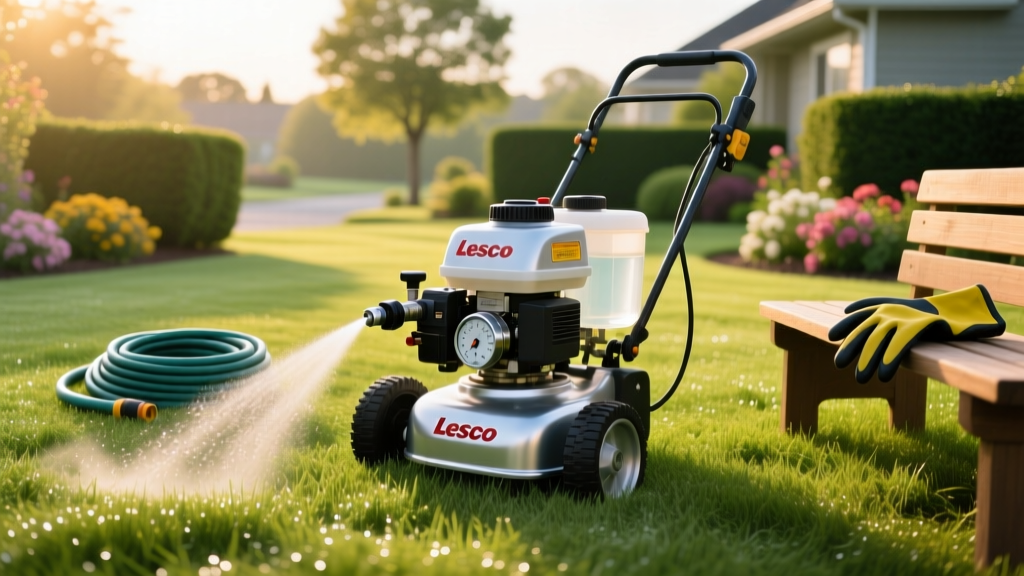
The Ultimate Lesco Sprayer Calibration & Maintenance Guide
Why Proper LESCO Sprayer Calibration Dictates Lawn Health
Applying liquid fertilizers, pre-emergents, and broadleaf herbicides requires surgical precision. An uncalibrated sprayer does not just waste expensive chemicals; it actively damages turf. Over-applying 2,4-D or triclopyr by even 15% can cause severe phytotoxicity in desirable cool-season grasses like Kentucky bluegrass, while under-applying leaves invasive weeds like ground ivy untouched. According to the Environmental Protection Agency (EPA), precise calibration is a foundational requirement for both environmental safety and legal compliance when handling restricted-use pesticides.
DATA HIGHLIGHT: Industry audits reveal that poorly maintained backpack sprayers deviate from their target application rate by an average of 22%. This translates to roughly $45 to $80 in wasted chemical costs per acre for professional lawn care operators, alongside increased risk of turf burn.
Choosing the Right LESCO Sprayer for Your Property Size
LESCO manufactures several sprayer configurations, each engineered for specific operational demands. Selecting the wrong chassis leads to premature fatigue, chemical degradation, or inadequate coverage. Below is a technical comparison of the primary LESCO models available for the 2026 season.
| Model | Tank Material | Ideal Use Case | Est. Price Range |
|---|---|---|---|
| LESCO 4-Gallon Backpack | High-Density Polyethylene | Residential lawns under 15,000 sq ft; standard herbicides. | $130 - $150 |
| LESCO Stainless Steel Backpack | 304-Grade Stainless Steel | Commercial routes; highly corrosive chemicals (e.g., iron-based herbicides). | $350 - $400 |
| LESCO 25-Gallon Cart Sprayer | Polyethylene / Steel Frame | Large estates, sports fields; reduces operator back strain. | $600 - $650 |
Expert Selection Tip: If you frequently apply chelated iron products (like FeHEDTA for broadleaf control) or strong surfactants, bypass the poly tanks. These chemicals can degrade standard polyethylene over time and leave micro-residues. The 304-grade stainless steel model is a mandatory investment for chemical longevity and cross-contamination prevention.
The 1/128th Acre Calibration Protocol
The most accurate method for calibrating a LESCO backpack sprayer is the 1/128th acre method. Because there are 128 fluid ounces in a gallon, the number of ounces you spray over 1/128th of an acre directly equals your Gallons Per Acre (GPA) output. Follow this exact procedure to ensure compliance with EPA pesticide worker safety standards.
Step 1: Measure Your Calibration Course
One acre equals 43,560 square feet. Therefore, 1/128th of an acre is exactly 340.3 square feet. If you are using a standard flat-fan nozzle (such as the TeeJet 8002VS) that produces an 18-inch (1.5 feet) swath width, divide 340.3 by 1.5. You must mark out a straight calibration course that is exactly 227 feet long.
Step 2: Establish Your Walking Speed and Pressure
Fill the LESCO sprayer with clean water. Pump the handle until the pressure gauge reads your target PSI (typically 30 to 40 PSI for flat-fan nozzles). Walk the 227-foot course at your normal, comfortable working pace while spraying. Maintain a consistent wand height of exactly 18 to 24 inches above the ground.
Step 3: Catch and Measure the Output
Refill the sprayer to a marked fill line. Walk the 227-foot course again at the exact same speed, spraying into a clean, graduated measuring cylinder instead of the lawn. Record the volume of water caught in fluid ounces.
CALCULATION EXAMPLE: If you catch 28 ounces of water during the 227-foot walk, your sprayer is calibrated to output 28 Gallons Per Acre (GPA). If the herbicide label requires 2 GPA of product per 1,000 sq ft, you will need to mix (28 / 1000) * 2 = 0.056 gallons (approx. 7.1 fluid ounces) of chemical into your 4-gallon LESCO tank.
Troubleshooting Common LESCO Sprayer Failures
Even premium LESCO rigs experience mechanical degradation. Identifying the root cause of pressure and flow anomalies prevents misapplication. Use this diagnostic matrix to resolve hardware issues.
| Symptom | Probable Cause | Technical Fix |
|---|---|---|
| Wand drips continuously after shutoff | Worn check valve diaphragm or degraded O-ring in the wand handle. | Replace the internal Viton check valve assembly. Do not use standard Buna-N rubber, which swells when exposed to solvents. |
| Streaky or uneven fan pattern | Particulate clogging the nozzle screen, or the brass/poly tip is worn asymmetrically. | Remove the screen and clean with a soft-bristle toothbrush and water. Never use wire brushes. If the pattern remains skewed, replace the TeeJet tip. |
| Pump loses prime or feels spongy | Dry cylinder O-rings, cracked internal pickup tube, or loose pump housing bolts. | Disassemble the pump cylinder, lubricate all O-rings with 100% silicone grease (never petroleum jelly), and inspect the pickup tube for micro-fractures. |
Seasonal Maintenance and Winterization Protocol
Storing a LESCO sprayer with residual chemicals or plain water guarantees internal seal failure by spring. Herbicide residues crystallize and pit the brass components, while freezing water expands and cracks the polyethylene tank or the PVC wand. Execute this winterization protocol before the first freeze.
- Triple Rinse: Fill the tank 1/4 full with clean water, agitate vigorously, and spray through the wand. Repeat three times.
- Neutralize: If you applied hormonal herbicides (like 2,4-D or dicamba), fill the tank with water and add 1 ounce of household ammonia per gallon. Let it sit for 24 hours to neutralize the chemical residues, then spray it out. This prevents cross-contamination that could kill sensitive ornamentals next season.
- Lubricate Seals: Add 1 teaspoon of silicone-based pump lubricant directly into the tank with a half-gallon of water. Pump and spray this mixture to coat the internal pump cylinder and wand seals.
- Antifreeze Flush: For ultimate freeze protection, draw non-toxic RV antifreeze (propylene glycol) through the pickup tube and spray it until the pink fluid exits the nozzle. This displaces all remaining water from the wand and check valve.
WARNING: Never use automotive ethylene glycol antifreeze in your sprayer. It is highly toxic to pets and wildlife. Furthermore, never store the sprayer pressurized. Always depressurize the tank and leave the lid slightly loose during off-season storage to allow the polyethylene to breathe and prevent vacuum-lock on the pickup tube.
Frequently Asked Questions
How often should I replace the nozzle tips on my LESCO sprayer?
Brass tips wear out after approximately 50 to 100 acres of use, losing their precise fan angle. Hardened stainless steel or ceramic tips (like the TeeJet XR series) can last up to 500 acres. Check your spray pattern on a concrete driveway every 10 applications; if the edges of the fan look ragged or the center is heavier than the edges, replace the tip immediately.
Can I use a LESCO sprayer for both liquid fertilizer and herbicide?
Technically yes, but it is highly discouraged due to the risk of cross-contamination. Residual herbicides trapped in the pump seals or wand hose can severely damage turf when you later apply liquid nitrogen. Professional operators maintain dedicated rigs: one strictly for fertilizers and iron, and another strictly for broadleaf and grassy weed control.

