
Lawn Care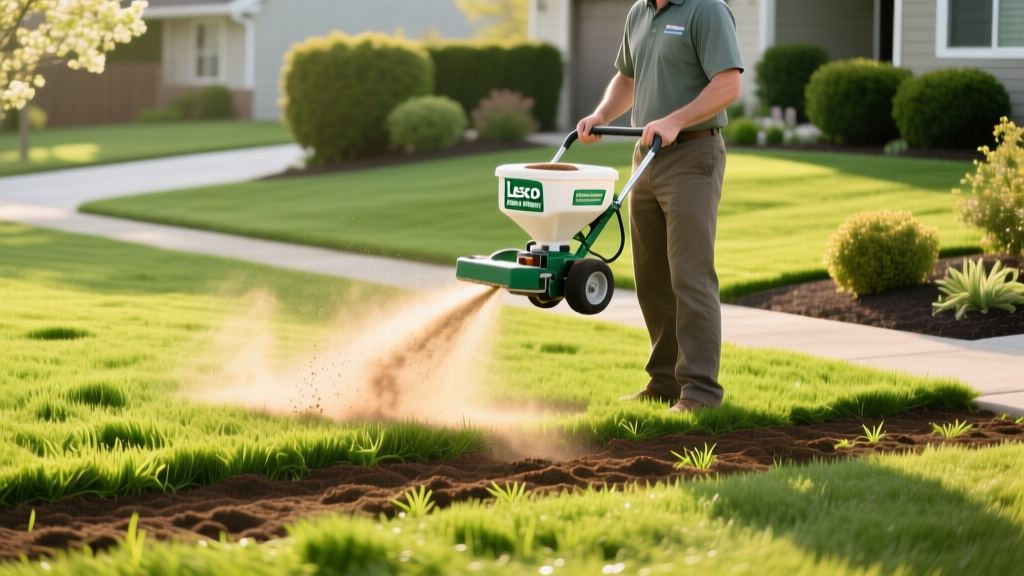
Lesco Starter Fertilizer Application Guide for New Seed and Sod
The Critical Role of Starter Fertilizer in Lawn Establishment
Establishing a new lawn from seed or sod requires a radically different nutritional approach than maintaining an existing turf. While mature lawns thrive on high-nitrogen diets to fuel blade growth, new seedlings and unrooted sod demand immediate access to phosphorus. Phosphorus is the primary driver of ATP (adenosine triphosphate) energy transfer and early root system development. Without it, germination stalls, and sod fails to knit into the underlying soil profile before environmental stress sets in.
Lesco starter fertilizers are industry standards among landscaping professionals because they deliver precise, fast-release nutrient ratios specifically engineered for this narrow establishment window. However, applying the wrong formulation or miscalculating the spreader rate can result in seedling burn, wasted capital, or severe weed competition. This guide details the exact formulations, application mathematics, and timing protocols required to use Lesco starter fertilizers effectively in 2026.
Decoding the Lesco Starter Lineup: 18-24-12 vs. 19-26-6
SiteOne (the primary distributor of Lesco products) manufactures two distinct starter fertilizers that dominate the professional market. Choosing between them depends entirely on your weed pressure and grass type.
| Product Formulation | N-P-K Ratio | Bag Size & Coverage | 2026 Est. Price | Best Use Case |
|---|---|---|---|---|
| Lesco Starter Fertilizer | 18-24-12 | 50 lbs / 15,000 sq ft | $65 - $75 | Standard seeding, sod installation, low weed pressure areas. |
| Lesco Starter with Mesotrione | 19-26-6 | 50 lbs / 15,000 sq ft | $95 - $115 | Seeding in high-crabgrass environments, spring/summer renovations. |
The Mesotrione Advantage (19-26-6)
The inclusion of Mesotrione (the active ingredient in Tenacity) in the 19-26-6 formulation is a massive agronomic advantage. Standard pre-emergent herbicides like prodiamine or dithiopyr prevent crabgrass by inhibiting root division, but they will also kill your new grass seed. Mesotrione is an HPPD inhibitor that blocks photosynthesis in target weeds (like crabgrass and Poa annua) but is completely safe for germinating Kentucky bluegrass, tall fescue, and perennial ryegrass. If you are seeding in late spring or early fall when soil temperatures still favor crabgrass germination, the 19-26-6 formulation is mandatory.
The Phosphorus Dilemma: Soil Testing and Legal Restrictions
Before spreading any high-phosphorus product, you must understand the regulatory and environmental context. Because excess phosphorus runs off into waterways and causes toxic algal blooms, many states and municipalities have banned the sale and application of phosphorus-containing fertilizers on established lawns.
According to UMass Extension, exemptions to these bans are strictly limited to two scenarios: establishing a new lawn (seed or sod) or correcting a verified phosphorus deficiency proven by a recent soil test. Applying Lesco 18-24-12 to a five-year-old lawn just to "give it a boost" is not only environmentally damaging but illegal in many jurisdictions. Always reserve starter fertilizers exclusively for the first 30 to 60 days of new turf establishment.
Exact Application Rates and Spreader Calibration
Guessing your spreader setting is the most common cause of fertilizer burn on delicate new seedlings. The target application rate for both the 18-24-12 and 19-26-6 formulations is roughly 3.2 to 3.3 lbs of product per 1,000 square feet. This delivers approximately 0.6 lbs of actual Nitrogen and 0.8 lbs of actual Phosphorus per 1,000 square feet, which aligns perfectly with university recommendations for new turf.
Calibration Math for Lesco Rotary Spreaders
While the back of the bag may suggest a setting (often around 13 or 14 on a Lesco professional rotary spreader), humidity, granule age, and spreader wear can alter the flow rate. Use this calibration method to guarantee accuracy:
- Measure a 1,000 sq ft test area on your driveway or a tarp (e.g., 20 ft x 50 ft).
- Fill your spreader with exactly 5 lbs of Lesco starter fertilizer.
- Set the micrometer to the recommended starting point (e.g., 13).
- Walk the test area at your normal, steady seeding pace (usually 2.5 to 3 mph).
- Weigh the remaining fertilizer. If you have exactly 1.8 lbs left, you applied 3.2 lbs per 1,000 sq ft. If you have more left, increase the setting by one notch; if less, decrease it.
CRITICAL WARNING: Fine Fescue Sensitivity
If your seed mix contains high percentages of Fine Fescue (Creeping Red, Chewings, or Hard Fescue), exercise extreme caution with the 19-26-6 Mesotrione formulation. While safe for Bluegrass and Tall Fescue, Mesotrione can cause temporary photobleaching (whitening) and stunting in Fine Fescues at high application rates. Stick to the standard 18-24-12 formulation if Fine Fescue makes up more than 20% of your seed mix.
If your seed mix contains high percentages of Fine Fescue (Creeping Red, Chewings, or Hard Fescue), exercise extreme caution with the 19-26-6 Mesotrione formulation. While safe for Bluegrass and Tall Fescue, Mesotrione can cause temporary photobleaching (whitening) and stunting in Fine Fescues at high application rates. Stick to the standard 18-24-12 formulation if Fine Fescue makes up more than 20% of your seed mix.
Step-by-Step Application Timeline for Seed and Sod
Nutrient timing is just as critical as the formulation. Follow this sequence to maximize root establishment without overwhelming the young plants.
Phase 1: Day Zero (Seeding or Laying Sod)
Apply the Lesco starter fertilizer immediately after spreading your seed and raking it in, or immediately after laying your sod pallets. Water the lawn lightly but frequently (3 to 4 times a day for 5-10 minutes) to activate the granules and dissolve the nutrients into the top inch of the soil profile where the radicle (first root) will emerge.
Phase 2: Days 14 to 21 (The First Mow)
As noted by Penn State Extension, new seedlings should be mowed when they reach 3 to 4 inches in height, cutting no more than one-third of the blade. At this stage, the initial phosphorus surge from the Lesco starter has done its job establishing the root anchor. Do not apply more starter fertilizer.
Phase 3: Day 30 to 45 (The Transition Feed)
Once the lawn has been mowed twice and the root system is firmly anchored, transition away from starter fertilizer. Switch to a high-nitrogen, low-phosphorus maintenance fertilizer (such as a 24-0-11 or 32-0-10) to begin fueling lateral blade growth and turf density. The establishment window is officially closed.
Troubleshooting Common Application Failures
- Mesotrione Bleaching: If you used the 19-26-6 formulation and notice your new grass or existing Poa annua turning stark white within 5 to 7 days, do not panic. This is the HPPD inhibition mechanism working. The weeds will die, and the desirable turf will green back up within 14 days as it metabolizes the chemical.
- Granule Washout: Applying starter fertilizer right before a heavy rainstorm on sloped, unestablished soil will result in the granules washing into storm drains. Always apply when the forecast calls for light, consistent irrigation or gentle rain, not torrential downpours.
- Seedling Burn: If the tips of your new grass seedlings turn yellow or brown within 48 hours of application, you likely overlapped your spreader passes, delivering a double dose of soluble salts. Increase your watering frequency immediately to leach the excess salts below the root zone.
Frequently Asked Questions
Can I use Lesco Starter Fertilizer on an established lawn in the spring?
No. Established lawns already have deep root systems capable of scavenging existing soil phosphorus. Applying high-phosphorus starter fertilizers to mature turf contributes to water pollution and violates environmental regulations in many regions. Use a standard high-nitrogen spring fertilizer instead.
How long does the Mesotrione in the 19-26-6 formulation last?
When applied at the starter fertilizer rate (3.3 lbs/1,000 sq ft), the pre-emergent weed control provided by Mesotrione lasts approximately 21 to 28 days. If your grass seed takes longer than a month to fully establish (like Kentucky Bluegrass), you may need a secondary, careful application of a seed-safe herbicide if a second flush of weeds emerges.
Should I use a liquid or granular starter fertilizer?
While liquid starters offer immediate nutrient availability, granular formulations like Lesco provide a more consistent, longer-lasting nutrient release over the critical 30-day germination window. Granular is also significantly more cost-effective and easier to apply evenly across large residential or commercial properties using a rotary spreader.

