
Lawn Care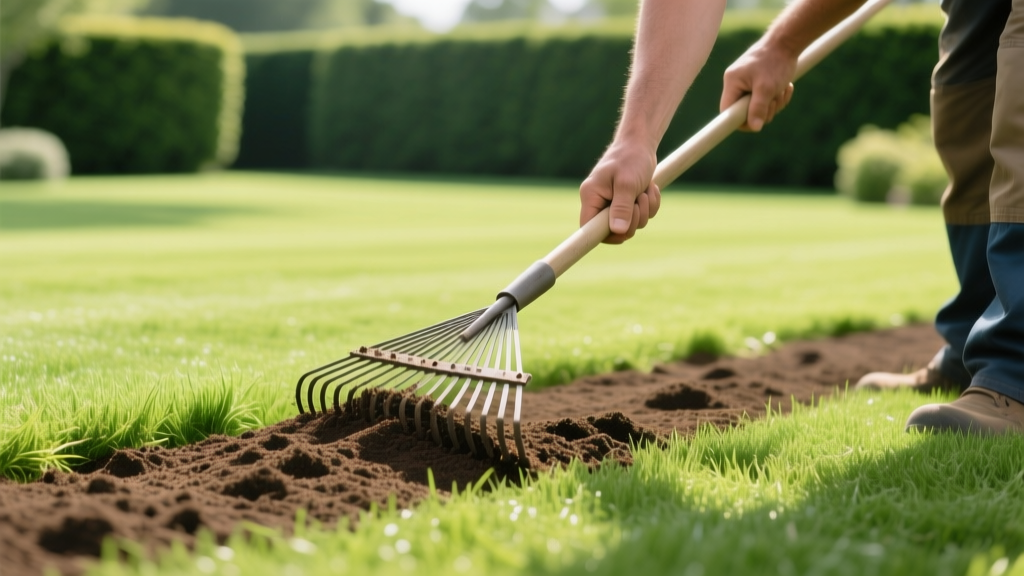
Leveling Grass: Step-by-Step Lawn Topdressing Guide
Assessing Your Lawn's Unevenness: The 1-Inch Rule
Uneven terrain causes mower scalping, poor surface drainage, and tripping hazards. Before purchasing materials, you must quantify the severity of the undulations. Leveling grass via topdressing is an agronomic process designed for minor to moderate surface irregularities. It is not a substitute for heavy machinery regrading.
Use a 6-foot aluminum straight edge or a taut mason line stretched between two landscape stakes to measure the depth of your dips. The Penn State Turfgrass Program emphasizes that turfgrass crowns require sunlight and gas exchange; burying them under more than half an inch of material at one time will suffocate the stand.
| Dip Depth | Primary Cause | Required Solution | Estimated Cost (per 1,000 sq ft) |
|---|---|---|---|
| Less than 0.5 inches | Earthworm castings, minor settling | Single-pass topdressing | $45 - $65 |
| 0.5 to 1.5 inches | Tree root growth, soil erosion | Multi-season topdressing (max 0.5" per year) | $90 - $130 (over 2 years) |
| Greater than 1.5 inches | Poor initial grading, buried debris | Sod cutting, sub-base filling, and sod replacement | $150 - $300+ |
Material Formulations: Sand, Soil, or Compost?
The most common failure in leveling grass is selecting the wrong amendment. Play sand is too fine and will compact into a concrete-like layer, restricting root respiration. You must use washed masonry sand (sub-angular particles) or coarse river sand. The ideal topdressing blend depends entirely on your grass species and existing soil profile.
Optimal Topdressing Ratios by Grass Type
- Warm-Season Grasses (Bermuda, Zoysia, Centipede): 70% washed masonry sand / 30% screened topsoil. Warm-season grasses aggressively push through sandy matrices via stolons and rhizomes. The Texas A&M AgriLife Extension recommends heavy sand ratios to improve drainage in the clay-heavy soils where these grasses typically thrive.
- Cool-Season Grasses (Tall Fescue, Kentucky Bluegrass): 50% washed masonry sand / 50% finely screened compost, or 100% premium compost. Cool-season bunchgrasses lack aggressive lateral spread and rely on organic matter for moisture retention during summer stress.
- Transition Zone Blends: 60% sand / 20% topsoil / 20% compost to balance drainage with nutrient retention.
Pro Tip: The Moisture Test
Before mixing your bulk materials, grab a handful of your proposed blend and squeeze it. It should hold its shape briefly but crumble easily when poked. If it forms a hard, muddy ball, your topsoil or compost content is too high or too wet. Let it dry or add more sand.
Before mixing your bulk materials, grab a handful of your proposed blend and squeeze it. It should hold its shape briefly but crumble easily when poked. If it forms a hard, muddy ball, your topsoil or compost content is too high or too wet. Let it dry or add more sand.
Step-by-Step Execution Procedure
Step 1: Mow Low and Dethatch
Lower your mower deck to 1.5 inches for warm-season grasses and 2.5 inches for cool-season grasses. Bag all clippings. If your thatch layer exceeds 0.5 inches, rent a vertical mower (dethatcher) and remove the dead organic matter. Topdressing over thick thatch creates a hydrophobic barrier that prevents water from reaching the root zone.
Step 2: Core Aeration (Highly Recommended)
While not strictly mandatory for leveling, pulling 3-inch soil cores prior to topdressing allows the sand/soil mix to fall directly into the aeration holes. This instantly improves deep-soil drainage and integrates the new material with the native subsoil, a technique heavily utilized by USGA Green Section superintendents for golf course fairways.
Step 3: Mix and Distribute
Mix your materials in a wheelbarrow using a flat-edged shovel. Dump the mixture in small, manageable piles (roughly 1/2 cubic foot each) across the lawn, spacing them about 4 feet apart. Do not dump massive mounds, as moving them will tear the existing turf.
Step 4: The Drag and Level Technique
Use a specialized lawn leveling rake (a 30-inch to 36-inch wide aluminum grate with a flat bottom edge).
- Push the rake forward to move the material into the low spots.
- Pull the rake backward with slight downward pressure to screed the material flat.
- Work in a grid pattern: North-South, then East-West.
- Ensure the grass blades are left at least 10% exposed to the sunlight. Never completely bury the turf canopy.
Step 5: Watering and Settling
Immediately apply 0.5 inches of water using a sprinkler. This washes the fine particles off the grass blades (preventing fungal diseases like brown patch) and settles the material into the soil voids. Do not use a heavy jet stream, which will wash the sand out of the dips and create new unevenness.
Warning: Avoid Smothering the Crown
Applying more than 0.5 inches of topdressing in a single application will block sunlight from reaching the grass crown, leading to chlorosis (yellowing) and eventual turf death. If you have a 1-inch dip, you must apply 0.5 inches in the spring, allow the grass to grow through it for 6 to 8 weeks, and apply the remaining 0.5 inches in the fall.
Applying more than 0.5 inches of topdressing in a single application will block sunlight from reaching the grass crown, leading to chlorosis (yellowing) and eventual turf death. If you have a 1-inch dip, you must apply 0.5 inches in the spring, allow the grass to grow through it for 6 to 8 weeks, and apply the remaining 0.5 inches in the fall.
Troubleshooting Common Leveling Failures
| Symptom | Probable Cause | Corrective Action |
|---|---|---|
| Grass turns yellow and thins out 2 weeks after leveling | Applied layer too thick; crown smothered. | Use a stiff push broom to aggressively sweep the excess material away from the grass blades. Increase mowing frequency. |
| Topdressing material washes away during heavy rain | Used play sand or material lacking organic binders. | Overseed immediately to establish root structure. Next season, topdress with a mix containing at least 20% compost to improve cohesion. |
| Lawn remains bumpy after material settles | Failed to remove earthworm castings or thatch before applying. | Wait for the turf to recover, dethatch heavily, and apply a thin (1/4 inch) corrective layer of pure masonry sand. |
Post-Leveling Maintenance Timeline
Leveling grass is a stress-inducing event. Your post-application care dictates the success of the renovation.
- Days 1-3: Keep foot traffic off the lawn. Water lightly twice a day for 10 minutes to keep the topdressing moist but not saturated.
- Week 1: Resume normal watering schedules (deep and infrequent). Do not mow until the grass has grown at least 1 inch above the new soil line.
- Week 2: Apply a light, fast-release nitrogen fertilizer (e.g., 46-0-0 Urea at a rate of 1 lb nitrogen per 1,000 sq ft) to push the grass canopy through the topdressing matrix.
- Week 4: Resume standard mowing heights. Inspect the lawn for any remaining low spots that may have become visible after the material fully settled.

