
Lawn Care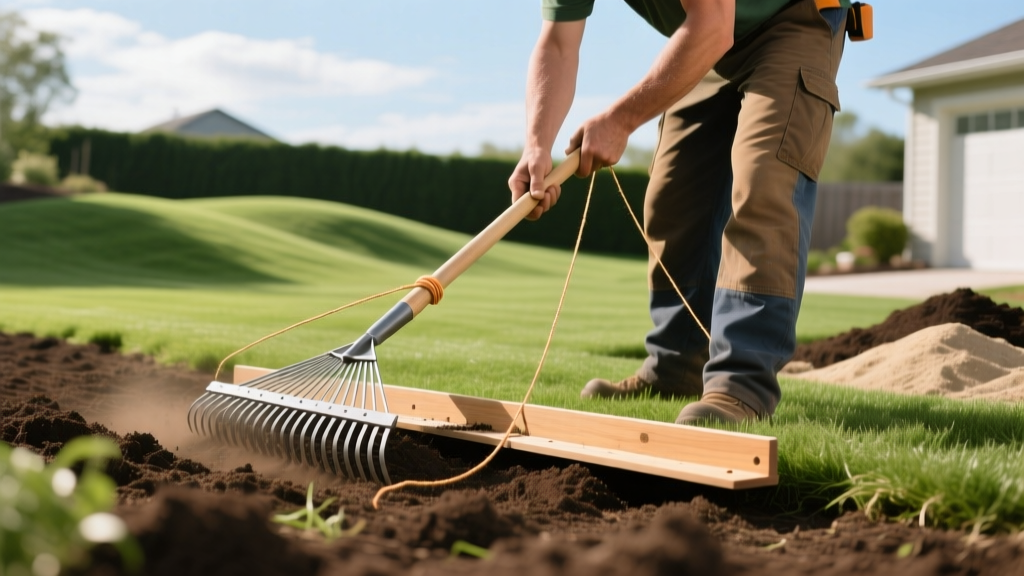
Leveling Soil for Lawn: Step-by-Step Grading Procedure
Diagnosing Your Lawn's Unevenness
Uneven terrain causes mower scalping, water pooling, and root suffocation. Before initiating any leveling soil for lawn procedures, you must accurately diagnose the severity of the grading issue. The correct remediation strategy depends entirely on the depth of the depressions and the overall slope of the yard.
Diagnostic Framework: Measure Before You Move Dirt
- Minor Bumps & Depressions (Under 1 inch): Requires core aeration and topdressing. The existing grass canopy will grow through the new soil layer.
- Moderate Ruts & Sloping Issues (1 to 3 inches): Requires aggressive aeration, heavy topdressing in multiple seasonal passes, or localized sod cutting and filling.
- Severe Grading & Drainage Failures (Over 3 inches): Requires complete sod removal, subgrade rototilling, and laser-guided regrading to establish proper drainage away from structures.
The Science of Topdressing Mixtures
A critical failure point in leveling soil for lawn renovations is using the wrong material. Applying pure topsoil or heavy clay over an existing lawn will smother the turf, create a hydrophobic barrier, and introduce weed seeds. The industry standard for topdressing relies on coarse mason sand combined with finely screened compost.
Mason sand (not play sand, which is too fine and compacts) provides structural rigidity and improves drainage, while the compost provides the microbial activity and nutrients required for turf recovery. According to turfgrass specialists at University of Minnesota Extension, matching the topdressing profile to your native soil prevents the creation of distinct soil horizons that restrict water movement.
Optimal Topdressing Ratios by Native Soil Type
| Native Soil Type | Mason Sand Ratio | Screened Compost Ratio | Primary Benefit |
|---|---|---|---|
| Heavy Clay | 70% | 30% | Fractures clay compaction, increases macroporosity |
| Sandy Loam | 40% | 60% | Boosts water retention and cation exchange capacity |
| Standard Loam | 50% | 50% | Maintains balanced drainage and nutrient holding |
Phase 1: Step-by-Step Topdressing Procedure (Minor to Moderate)
For lawns requiring less than one inch of fill, follow this precise topdressing protocol. Never apply more than 1/2 inch of material in a single pass, as deeper layers will block sunlight and oxygen from reaching the turf crown, leading to rapid necrosis.
- Scalp the Canopy: Mow the lawn at the lowest possible setting for your specific grass type (e.g., 1 inch for Bermudagrass, 1.5 inches for Kentucky Bluegrass). Bag the clippings to expose the soil surface.
- Core Aeration: Run a gas-powered core aerator over the entire area in two perpendicular directions. This relieves compaction and creates 3-inch deep channels for the sand to migrate into, anchoring the leveling material.
- Calculate Material Volume: To apply a 1/4 inch layer over 1,000 square feet, you need exactly 0.77 cubic yards of topdressing mix. Order 10% extra to account for settling.
- Distribute in Windrows: Dump the mixed material in small piles across the lawn. Using a standard push broom or a specialized leveling rake (such as the Levelawn 4.5), drag the material into the depressions.
- Work the Canopy: Aggressively sweep the material down into the grass base. The goal is to fill the low spots while leaving the grass blade tips fully exposed to sunlight.
- Hydraulic Settling: Immediately apply 1/2 inch of irrigation. The water acts as a lubricant, washing the sand deep into the aeration holes and settling the compost around the root zone.
Warning: The Play Sand Trap
Never use bagged play sand from big-box hardware stores for leveling soil for lawn projects. Play sand is mechanically rounded and heavily washed, meaning it lacks the angular edges required to lock together. It will migrate during heavy rains and fail to provide a stable, level base. Always source washed, coarse mason sand from a local landscape supply yard.
Phase 2: Heavy Grading and Re-sloping (Severe Unevenness)
When dealing with deep ruts from construction equipment, severe settling near foundations, or negative grading that pushes water toward the home, topdressing is insufficient. You must execute a cut-and-fill regrading procedure.
The USDA Natural Resources Conservation Service mandates specific grading standards to prevent structural water damage. The golden rule for residential lawn grading is establishing a minimum 2% slope away from the foundation. This translates to a 1/4-inch drop in elevation for every horizontal foot of distance for the first 10 feet outward from the structure.
The Cut-and-Fill Execution Steps
- Sod Harvesting: Rent a walk-behind sod cutter set to a 1.5-inch depth. Cut the turf in the affected zone into 12-inch wide strips and roll them up. Keep the rolls moist and shaded on a tarp.
- Subgrade Manipulation: Use a motorized rototiller to break up the top 4 inches of the exposed subgrade. Add or remove native soil to achieve the required 2% slope, checking your progress with a transit laser level or a 4-foot carpenter's level.
- Compaction & Raking: Lightly compact the regraded soil using a lawn roller filled halfway with water. This prevents future settling. Rake the surface to remove rocks larger than 1 inch in diameter.
- Sod Replacement: Unroll the saved sod tightly against the newly graded base. Use a sharp spade to trim the edges. Water heavily to bond the sod roots to the fresh subgrade.
Project Cost & Time Matrix (5,000 Sq. Ft. Lawn)
Budgeting for leveling soil for lawn renovations requires understanding the stark contrast between DIY material costs and professional labor rates. Below is a realistic 2026 cost breakdown for a standard 5,000 square foot residential property.
| Procedure | DIY Cost Estimate | Professional Cost Estimate | Time Commitment |
|---|---|---|---|
| Topdressing (1/4 inch layer) | $450 - $650 | $1,500 - $2,200 | 1-2 Days (DIY) / 4 Hours (Pro) |
| Cut & Fill Regrading | $900 - $1,400 | $4,000 - $6,500 | 3-5 Days (DIY) / 2 Days (Pro) |
Note: DIY costs include equipment rentals (aerator, sod cutter, laser level) and bulk material delivery. Professional costs include site prep, laser grading, and post-installation cleanup.
Post-Leveling Recovery and Maintenance
The leveling process stresses the turf canopy and root system. According to turf management guidelines from Penn State Extension, aggressive post-leveling care is required to ensure rapid recovery and prevent weed invasion in the disturbed soil.
30-Day Recovery Protocol
- Week 1: Water daily with light applications (1/4 inch) to keep the topdressing moist and encourage downward root migration. Do not mow.
- Week 2: Transition to deep, infrequent watering (1 inch per week). Resume mowing at the highest setting for your grass type to maximize photosynthesis.
- Week 3: Apply a fast-acting liquid nitrogen fertilizer (e.g., 24-0-0) at a rate of 0.5 lbs of nitrogen per 1,000 sq. ft. to fuel aggressive lateral growth through the new soil layer.
- Week 4: Evaluate the grade. If minor depressions remain visible, plan a second, lighter topdressing pass for the following season. Never attempt to fix all unevenness in a single weekend.
Patience and precision dictate the success of any grading project. By respecting the biological limits of the turf canopy and adhering to strict drainage slopes, you will transform a hazardous, bumpy yard into a pristine, level landscape that handles heavy rainfall and provides a perfect surface for years to come.

