
Lawn Care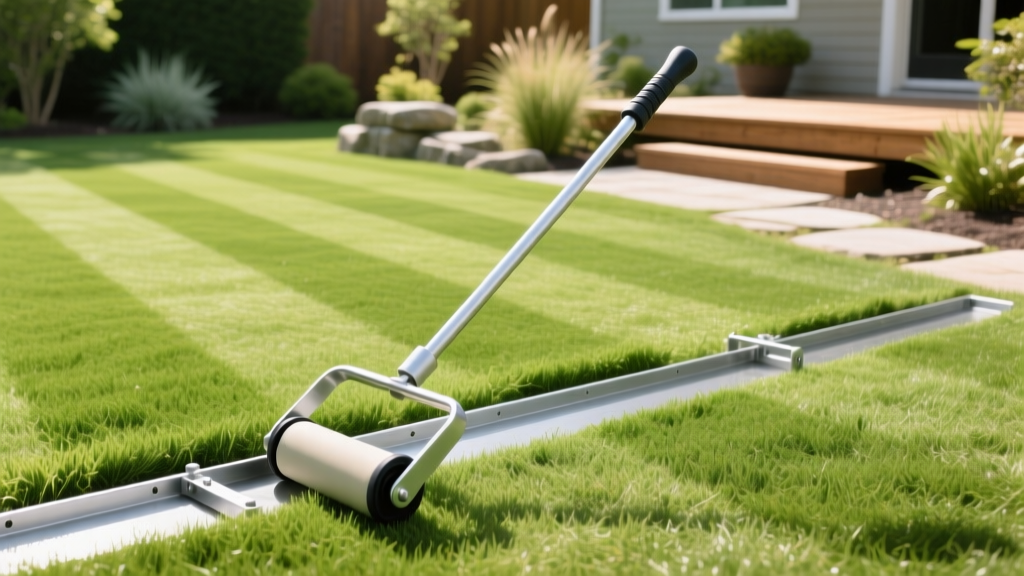
Build a Lightweight DIY Lawn Striper for Organic Turf
The Physics of Striping Chemical-Free Grass
Lawn striping is an optical illusion created by bending grass blades in opposite directions. Blades bent away from the viewer reflect light, appearing lighter, while blades bent toward the viewer absorb light, appearing darker. However, achieving crisp stripes on an organically managed, chemical-free lawn requires a different approach than striping a conventionally maintained turf.
Conventionally managed Kentucky Bluegrass (KBG) is often pumped with synthetic nitrogen, resulting in rapid, soft, and sappy cellular growth that bends easily under heavy steel rollers. Organic turf, fed by slow-release biological amendments like compost and kelp meal, develops denser cell walls and higher structural rigidity. While this makes organic grass more drought-tolerant and disease-resistant, it also means the blades naturally resist bending. Furthermore, dragging a 50-pound steel or water-filled roller across an organic lawn destroys the delicate soil food web. According to the USDA Natural Resources Conservation Service, heavy surface compaction crushes soil aggregates, restricts oxygen flow, and kills the mycorrhizal fungi essential for organic nutrient uptake.
⚠️ The Compaction Threat to Organic Soil: Heavy commercial striping rollers can exert up to 12 PSI (pounds per square inch) on the turf. This compresses the top two inches of soil, creating an anaerobic environment that promotes thatch buildup and suffocates the beneficial nematodes and earthworms you are actively trying to cultivate in a chemical-free system.
Material Selection: Protecting the Soil Food Web
To build a DIY lawn striper that respects organic soil biology, the goal is to maximize the bending force on the grass blade while minimizing the downward ground pressure. A PVC pipe filled with dry sand, paired with a flexible rubber flap, achieves this by distributing a moderate weight over a wider surface area, relying on the flap's drag rather than pure downward crush.
| Striper Type | Avg. Weight | Ground Pressure (PSI) | Impact on Organic Soil Biology |
|---|---|---|---|
| Water-Filled Steel Roller | 40-60 lbs | 8.0 - 12.0 PSI | Severe compaction; destroys fungal hyphae networks. |
| Solid Rubber Roller | 25-35 lbs | 4.5 - 6.0 PSI | Moderate compaction; restricts earthworm movement. |
| DIY PVC + Sand + Flap | 18-22 lbs | 1.5 - 2.5 PSI | Minimal impact; preserves soil aggregates and aeration. |
Step-by-Step: Assembling the 3-Inch PVC and Flap Striper
This design is specifically calibrated for push mowers and light zero-turn mowers commonly used by organic lawn care enthusiasts. It utilizes a drag-flap mechanism to bend the grass gently without crushing the crown.
- Cut the Core: Measure and cut a piece of 3-inch diameter Schedule 40 PVC pipe to 22 inches in length. This width provides enough coverage for most 21-inch push mower decks while allowing clearance for the wheels.
- Cap and Fill: Secure a 3-inch PVC slip cap on one end using PVC primer and cement. Once dry, fill the pipe with dry masonry sand or playground sand. Do not use wet sand, as it will clump and create an unbalanced, wobbling roller. The 22-inch pipe will hold approximately 18 to 20 pounds of dry sand.
- Seal the Core: Glue the second PVC slip cap onto the open end. For added security, drill a single 1/8-inch hole through the side of the pipe and into the cap, then drive a 1-inch galvanized wood screw through the joint to prevent the cap from popping off under torque.
- Prepare the Flap: Cut a piece of 1/4-inch thick heavy-duty rubber matting (horse stall mats or industrial conveyor belt rubber work best) to 24 inches wide by 6 inches long. This thick rubber provides the necessary drag to bend rigid organic fescue and ryegrass blades.
- Mount the Brackets: Attach two 2-inch stainless steel L-brackets to the top center of the PVC pipe using 1/4-inch stainless steel bolts and locknuts. Drill corresponding holes through the top edge of your rubber flap and bolt it to the vertical side of the L-brackets so the flap hangs down behind the pipe.
- Mower Attachment: Secure the striper to the rear of your mower deck using heavy-duty bungee cords or ratchet straps looped through the L-brackets and around the mower's rear axle or handle base. The pipe should rest lightly on the ground, with the rubber flap trailing behind.
Organic Turf Conditioning for Maximum Blade Rigidity
A DIY lawn striper can only bend grass if the grass has the structural integrity to hold the bend. In organic lawn care, we avoid synthetic nitrogen surges that create weak, watery tissue. Instead, we focus on cellular reinforcement using silica and calcium.
Silica is deposited in the epidermal cell walls of grass as phytoliths, acting like microscopic rebar. According to research highlighted by the University of Minnesota Extension, maintaining proper turfgrass nutrition and mowing height is critical for turf resilience. For organic lawns, applying a liquid horsetail extract (Equisetum arvense) or potassium silicate solution significantly increases blade rigidity.
"Turfgrasses grown in biologically active, organically managed soils with adequate silica availability exhibit a 20-30% increase in leaf tensile strength, allowing the blades to snap back slowly after being bent by a striper, rather than immediately springing upright or breaking entirely."
Application Protocol: Apply 2 ounces of liquid horsetail extract per 1,000 square feet, diluted in 1 gallon of water, every 21 days during the active growing season. Pair this with a spring application of gypsum (calcium sulfate) at 10 lbs per 1,000 square feet to provide the calcium necessary for strong cell plate formation without altering your soil's pH.
Mowing Techniques for Organic Blends
Organic lawns typically rely on Tall Fescue, Fine Fescue, or Perennial Ryegrass blends to outcompete weeds naturally. These grasses require a higher mowing height than chemically maintained KBG. The University of Minnesota Extension recommends keeping cool-season grasses between 2.5 and 3.5 inches, but organic practitioners often push this to 4 inches to shade out crabgrass germination.
- The 1.5-Inch Rule: To stripe effectively at a 4-inch cut, your mower blades must be razor-sharp to ensure a clean cut, and the striper flap must be positioned to bend only the top 1.5 to 2 inches of the grass blade. Bending the grass too close to the crown will cause the blade to crease, turn white, and invite fungal pathogens like Dollar Spot.
- Moisture Timing: Organic grass blades are most pliable when they contain surface moisture but are not saturated. Mow and stripe early in the morning when the dew is light, or immediately after a brief, light irrigation cycle. Avoid striping bone-dry organic turf in the heat of the afternoon, as the blades will shatter rather than bend.
Troubleshooting Weak Stripes in Organic Lawns
Symptom: Grass Springs Back Immediately
Cause: The turf has high silica content but lacks the surface moisture required for pliability, or the flap is too light.
Fix: Add a second layer of 1/4-inch rubber to your flap to increase drag weight by 0.5 lbs, and shift your mowing schedule to early morning when ambient humidity is highest.
Symptom: Stripes Fade Within 24 Hours
Cause: Rapid vertical growth pushing the bent tissue upright. This usually happens if you recently applied a fast-acting organic nitrogen source like blood meal.
Fix: Switch to slower-release organic nitrogen sources like alfalfa meal or kelp meal, which promote steady, dense growth rather than rapid vertical surges that erase striping patterns.
Frequently Asked Questions
Will the PVC pipe damage my organic soil microbiology?
No. A 3-inch PVC pipe filled with sand exerts less than 2.5 PSI of ground pressure. This is roughly equivalent to the pressure exerted by the mower's own rear wheels. Because it rolls freely without dragging, it does not shear or compact the soil aggregates where your beneficial microbes reside.
Can I use this DIY lawn striper on warm-season organic grasses like Bermuda or Zoysia?
Yes, but warm-season grasses have much finer, more rigid blades and lower growth habits. You will need to lower the striper's mounting height so the rubber flap applies slightly more downward pressure, and you should mow at a lower height (1.5 to 2 inches) to see distinct striping on warm-season organic turf.
How often should I replace the rubber flap?
In a chemical-free lawn, you aren't exposing the rubber to harsh synthetic herbicides or petroleum-based fertilizers that degrade rubber compounds. A high-quality horse stall mat flap will typically last 3 to 4 seasons of weekly mowing before the bottom edge frays and requires replacement.

