
Lawn Care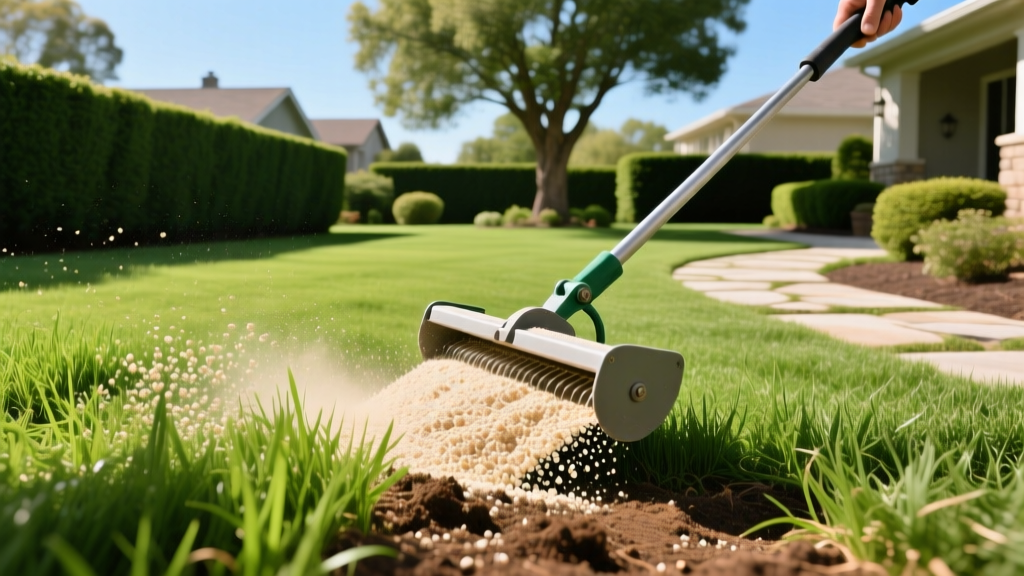
Lime Fertilizer Guide: How to Fix Acidic Lawn Soil Fast
The "Lime Fertilizer" Misnomer: Amendment vs. Nutrient
Homeowners frequently search for "lime fertilizer" when their grass remains yellow and thin despite regular feeding. However, applying lime is fundamentally different from applying traditional fertilizer. While standard fertilizers deliver macronutrients (Nitrogen, Phosphorus, and Potassium) to feed the grass plant directly, lime is a soil amendment. Its primary chemical composition—calcium carbonate (CaCO3) or calcium magnesium carbonate (dolomitic lime)—is used to raise soil pH and neutralize acidity.
If your soil is too acidic (pH below 6.0), the grass roots cannot absorb the NPK nutrients from your regular fertilizer, regardless of how much you apply. By correcting the pH, lime unlocks the nutrients already present in the soil, making it a critical first step in any comprehensive lawn nutrition program.
⚠️ Warning: The Nutrient Lockout Phenomenon
When soil pH drops below 5.5, essential nutrients like phosphorus, potassium, and molybdenum bind to aluminum and iron in the soil, becoming completely insoluble. Applying more NPK fertilizer to highly acidic soil will not green up your lawn; it will only result in nutrient runoff and potential groundwater contamination. You must fix the pH first.
Decoding Your Soil Test: Water pH vs. Buffer pH
You cannot accurately determine how much lime to apply based on a visual inspection or a cheap DIY liquid test kit. You need a laboratory soil test that provides two distinct metrics: Water pH and Buffer pH. According to NC State Extension, understanding the difference between these two numbers is the most common failure point for DIY lawn care.
- Water pH (Active Acidity): This measures the current hydrogen ion concentration in the soil solution. It tells you if your soil is acidic. A target range for most turfgrasses (Bermuda, Zoysia, Fescue, Kentucky Bluegrass) is 6.0 to 7.0.
- Buffer pH (Reserve Acidity): This measures the soil's resistance to pH change, largely dictated by soil texture and organic matter. It tells you how much lime is required to change the Water pH.
A sandy soil and a heavy clay soil might both have a Water pH of 5.5. However, the clay soil has a massive cation exchange capacity (CEC) and holds onto hydrogen ions tightly, requiring significantly more lime to raise the pH to 6.5 than the sandy soil.
Estimated Lime Requirements to Raise pH by 0.5 Units
| Soil Texture | Buffer pH Characteristic | Lime Required (per 1,000 sq ft) |
|---|---|---|
| Sandy Loam | Low reserve acidity | 15 - 25 lbs |
| Loam | Moderate reserve acidity | 30 - 45 lbs |
| Heavy Clay | High reserve acidity | 50 - 80+ lbs |
Note: Never apply more than 50 lbs of lime per 1,000 sq ft in a single application. If your soil test calls for 100 lbs, split the application into two treatments spaced six months apart to avoid shocking the soil biology.
Product Breakdown: Pelletized vs. Pulverized Lime
The physical form of the lime you buy drastically impacts application ease, dust control, and reaction time. Here is a breakdown of the top formulations available on the market.
1. Pelletized Lime (Best for Homeowners)
Pelletized lime consists of finely ground limestone that has been bound into small, uniform granules using a water-soluble binder. Top Pick: Jonathan Green MAG-I-CAL Soil Food (~$35 for 45 lbs, covers 5,000 sq ft). This product uses calcium carbonate to rapidly raise pH and includes humic acids to stimulate microbial activity. Pros: Zero dust, spreads evenly using a standard rotary fertilizer spreader, easy to store. Cons: More expensive per pound; requires adequate rainfall or irrigation to dissolve the binder before the lime can react with the soil.
2. Pulverized / Agricultural Lime (Best for Large Acreage)
This is raw, mechanically crushed limestone powder. Top Pick: Espoma Organic Garden Lime (~$15 for 30 lbs). Pros: Highly cost-effective, begins reacting immediately upon contact with soil moisture. Cons: Extremely dusty, difficult to spread evenly with a rotary spreader (best applied via drop spreader or by hand), easily blown away by wind.
3. Fast-Acting / Polymer-Coated Lime
Top Pick: Sta-Green Fast Acting Lime (~$20 for 30 lbs). These products use encapsulated lime particles designed to break down faster than standard pelletized lime. Pros: Shows pH results in 2-3 weeks rather than 2-3 months. Cons: The "fast-acting" claim is often a marketing exaggeration; particle size matters more than the coating.
Exact Application Protocol & Spreader Settings
Timing and execution are just as critical as the product selection. According to University of Minnesota Turf Science, fall is the optimal time to apply lime, as the freeze-thaw cycles of winter and heavy spring rains help incorporate the calcium into the soil profile.
- Prepare the Lawn: Mow the grass slightly shorter than normal and perform core aeration if possible. Aerating before liming allows the amendment to bypass the thatch layer and make direct contact with the soil.
- Calibrate the Spreader: For standard pelletized lime (like Jonathan Green or Sta-Green) using a Scotts EdgeGuard Mini rotary spreader, set the dial to Setting 'O' or 'P'. Always check the specific bag label, as granule density varies by manufacturer.
- Apply in a Crosshatch Pattern: Apply half the required rate walking North-South, and the other half walking East-West. This eliminates striping and ensures uniform coverage.
- Water Immediately: Apply 0.5 inches of water immediately after spreading. This washes the lime off the grass blades (preventing foliar burn) and begins dissolving the pellet binders so the calcium can enter the soil matrix.
Troubleshooting: Why Your Soil pH Won't Budge
If you applied lime but your follow-up soil test six months later shows no change in pH, one of the following failure modes is to blame:
- Incorrect Mesh Size: The speed at which lime reacts is dictated by its particle size (mesh). 100-mesh lime reacts within weeks, while 20-mesh lime can take over a year. Pulverized and high-quality pelletized limes use 100-mesh base material. Cheap agricultural lime often uses coarse 20-mesh material that simply hasn't dissolved yet.
- Calcitic vs. Dolomitic Mismatch: If your soil test shows low pH and low magnesium, applying standard calcitic lime (calcium only) will create a calcium-magnesium imbalance, flocculating the soil and locking up nutrients. You must use dolomitic lime if your soil test indicates a magnesium deficiency.
- Lack of Moisture Activation: Lime is completely inert in dry soil. If you applied pelletized lime in late summer and experienced a drought without supplemental irrigation, the pellets never dissolved, and the chemical reaction never initiated.
- Over-application of Acidifying Fertilizers: If you are continuously applying high-nitrogen fertilizers like ammonium sulfate or urea, these naturally acidify the soil as they break down. You may be applying lime at the exact same rate your fertilizers are acidifying the soil, resulting in a net-zero pH change.
Correcting acidic soil is not an overnight fix. It requires precise soil testing, selecting the correct physical formulation of lime fertilizer, and allowing time for the chemical neutralization process to occur. By following these exact metrics and application protocols, you will unlock the full potential of your lawn's soil ecosystem.

