
Lawn Care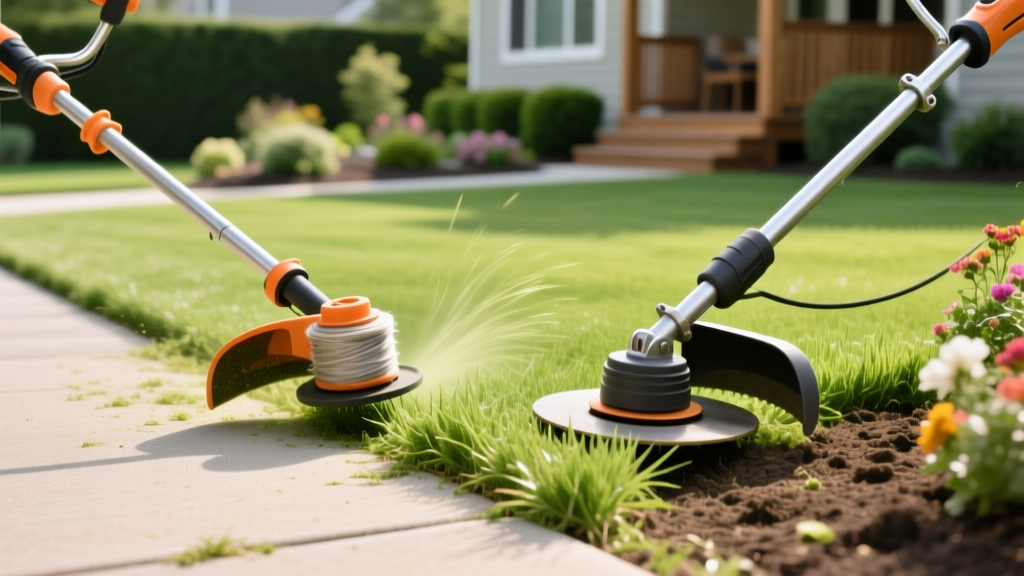
Line Trimmer vs Edger: Key Differences & Selection Guide
The debate over line trimmer vs edger capabilities is one of the most common points of confusion for homeowners investing in lawn care equipment. While both tools address the perimeter of your turf, their mechanical designs, cutting physics, and intended applications are fundamentally different. Understanding these distinctions prevents premature equipment failure, reduces string breakage, and ensures the crisp, professional hardscape borders that define a well-maintained landscape.
The Mechanical Divide: String vs. Steel
A line trimmer (often called a string trimmer or weed whacker) relies on high rotational speed and the centrifugal force of a flexible monofilament line to slice through grass and light weeds. The cutting head typically spins between 5,000 and 7,500 RPM. Because the line is flexible, it yields when it strikes hard surfaces like concrete curbs, brick pavers, or tree trunks, making it ideal for obstacle navigation.
Conversely, a dedicated lawn edger utilizes a rigid steel blade—usually 7 to 9 inches in diameter—mounted on a vertical axis. Edgers operate at lower RPMs but deliver significantly higher torque to slice through dense soil, rhizomes, and creeping turfgrass (like Bermuda or Zoysia) that attempt to invade sidewalks. According to the University of Minnesota Turfgrass Science program, maintaining a physical trench barrier is one of the most effective cultural practices for preventing aggressive warm-season grasses from encroaching on hardscapes.
Quick Rule of Thumb
Line Trimmer: Cuts horizontally or at an angle. Used for clearing tall grass, trimming around obstacles, and maintaining areas a mower cannot reach.
Edger: Cuts vertically. Used exclusively to create or maintain a defined physical trench between the lawn edge and a hard surface (driveway, sidewalk, garden bed).
Deep Dive: Line Trimmer Capabilities & Limitations
Modern battery-powered line trimmers have largely eliminated the reliability issues associated with 2-cycle gas carburetors. The current benchmark for residential and light-commercial use is the EGO Power+ 15" String Trimmer (ST15100T). Powered by a 56V Arc Lithium battery, it pushes a 0.095-inch twisted nylon line at speeds sufficient to cut through thick fescue and damp morning grass without stalling.
Where Trimmers Fail as Edgers
Many manufacturers market "edging attachments" or pivot-head features that allow the trimmer shaft to rotate 90 degrees. While this allows the string to spin vertically, it introduces severe operational flaws:
- Line Deflection: Without a heavy guide wheel to stabilize the tool, the flexible string deflects when it hits compacted soil, resulting in an uneven, jagged trench.
- Rapid Line Consumption: Striking concrete with nylon line spinning at 6,500 RPM shreds the string in minutes, requiring constant spool advancement.
- Gearbox Strain: Trimmer gearboxes are engineered for lateral loads. Forcing them into vertical soil-trenching applications generates excessive heat and strips the internal bevel gears.
The Case for Dedicated Edgers
If your property features linear hardscapes, a dedicated edger is non-negotiable for professional results. The Milwaukee M18 FUEL 8" Edger (2866-20) exemplifies the current generation of high-torque brushless edgers. It features an 8-inch steel blade with a 3-inch adjustable cutting depth and a physical guide wheel that tracks along the concrete edge, ensuring absolute consistency.
Dedicated edgers also feature heavy-duty debris shields and articulated handles, allowing the operator to lean into the cut safely. When maintaining overgrown edges where the turf has crept over the sidewalk by several inches, a steel blade will slice through the root mass cleanly, whereas a nylon line will simply wrap around the rhizomes and stall the motor.
Line Trimmer vs Edger: Specification Matrix
| Feature | Line Trimmer (e.g., EGO ST15100T) | Dedicated Edger (e.g., Milwaukee 2866-20) |
|---|---|---|
| Cutting Mechanism | 0.080" - 0.095" Nylon Monofilament | 7" - 9" Rigid Steel Blade |
| Primary Axis | Horizontal (Parallel to ground) | Vertical (Perpendicular to ground) |
| Speed / Torque | High RPM (6,500+), Low Torque | Lower RPM, High Torque |
| Depth Control | Manual (Operator dependent) | Mechanical (Adjustable wheel/lever) |
| Avg. Price (Tool Only) | $150 - $220 | $180 - $250 |
The "Combo" Compromise: Pivot-Head Trimmers
For small urban lots with minimal linear edging (under 50 linear feet), a combo unit may suffice. Brands like Ryobi and Craftsman offer 2-in-1 trimmers that twist to edge. If you choose this route, you must upgrade the string. Swap the standard 0.065-inch round line for a 0.080-inch twisted or star-shaped line. The aerodynamic profile of twisted line reduces drag and increases cutting mass, providing just enough rigidity to shave soil off a sidewalk edge without snapping instantly. However, expect to replace the spool twice as often when using a pivot-head trimmer for edging tasks.
Maintenance Protocols: Keeping Blades and Lines Sharp
Equipment longevity relies on strict maintenance intervals. Neglecting the drivetrain of either tool will result in catastrophic failure within the first two seasons.
Trimmer Gearbox Maintenance
The gearbox at the base of a line trimmer translates the motor's rotational force 90 degrees to the cutting head. Friction here generates immense heat.
- Locate the grease plug on the side of the metal gearbox housing.
- Every 25 hours of operation, unscrew the plug and inject 5 grams of NLGI #2 lithium-based multi-purpose grease (e.g., Stens or Oregon brand).
- Run the trimmer at half-throttle for 30 seconds to distribute the grease across the bevel gears. Do not overfill, as excess grease will blow past the seals and attract abrasive dirt.
Edger Blade Sharpening and Replacement
A dull edger blade bounces off compacted soil and tears the turf rhizomes, leaving a ragged edge that invites disease. According to OSHA's landscaping safety guidelines, always disconnect the battery or spark plug wire before performing blade maintenance.
- Sharpening: Use a 10-inch mill bastard file. Follow the factory bevel angle (typically 20 to 30 degrees). File in one direction only, using smooth, even strokes. Remove equal amounts of metal from both cutting edges to maintain blade balance; an unbalanced blade vibrating at 3,000 RPM will destroy the motor bearings.
- Replacement Threshold: Once the blade has lost 15% of its original diameter (e.g., an 8-inch blade worn down to 6.8 inches), it can no longer reach the bottom of the trench. Replace it immediately. Replacement blades cost between $15 and $25.
"Attempting to edge a heavily overgrown Bermuda grass lawn with a nylon string trimmer is the fastest way to burn out a brushless motor. The string wraps around the creeping stolons, stalls the head, and forces the electronic controller to dump maximum amperage into the motor windings until the thermal cutoff trips."
Expert Verdict: Do You Need Both?
The decision between a line trimmer vs edger is rarely an "either/or" scenario for serious lawn enthusiasts; it is an "and" scenario. They are complementary tools designed for entirely different vectors of cutting.
Buy ONLY a Line Trimmer if: Your property consists of irregular garden beds, natural boundaries, and zero concrete sidewalks or driveways. A trimmer is all you need to maintain the perimeter around trees, fences, and flower beds.
Buy BOTH if: You have linear hardscapes (driveways, sidewalks, patios) and you desire a professional, manicured aesthetic. Use the edger once a month during peak growing season (May through August) to re-establish the physical trench, and use the line trimmer weekly to cut down the grass that grows up to the edge of that trench.

