
Lawn Care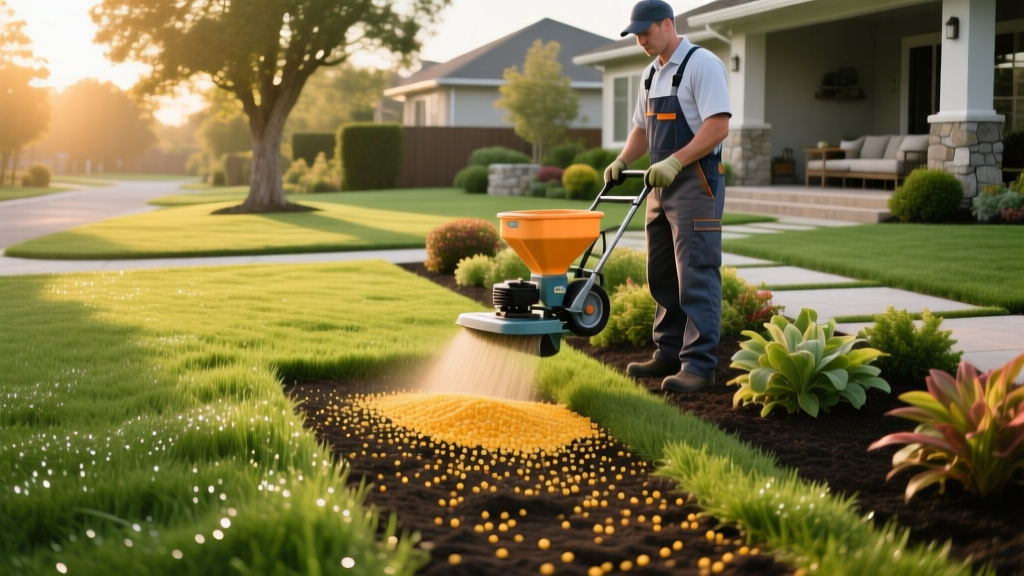
Lowering Soil pH With Sulfur: Exact Rates & Application Guide
Why Alkaline Soil Starves Your Lawn
When your soil pH creeps above 7.2, essential micronutrients like iron, manganese, and zinc become chemically locked in the soil matrix. Your Kentucky Bluegrass or Tall Fescue may be surrounded by nutrients, but the roots cannot absorb them, resulting in severe interveinal chlorosis (yellowing) and thinning turf. While liquid iron provides a temporary cosmetic fix, the only permanent solution is lowering soil pH with sulfur. Elemental sulfur is the most cost-effective, long-lasting, and environmentally stable amendment available for residential lawn care.
Unlike fast-acting synthetic acids, elemental sulfur relies on biological processes. This guide details the exact application rates, microbial requirements, and spreader settings needed to safely transition your lawn from alkaline to the optimal 6.2–6.8 pH range.
The Chemistry: How Elemental Sulfur Works
Elemental sulfur (S) does not lower pH directly. Instead, it acts as a food source for naturally occurring soil bacteria, primarily Thiobacillus thiooxidans. These microbes oxidize the elemental sulfur into sulfuric acid (H2SO4), which then reacts with soil carbonates to neutralize alkalinity.
⚠️ The Temperature Catch: Because this is a biological process, Thiobacillus bacteria are completely dormant in cold soil. If you apply sulfur in November, it will sit inert until the soil warms. Sulfur oxidation requires soil temperatures consistently above 55°F (12°C), adequate soil moisture, and good oxygen flow. Expect a 3 to 6 month timeline for full pH adjustment during the active growing season.
Calculating Exact Sulfur Application Rates
The amount of sulfur required depends entirely on your soil's Cation Exchange Capacity (CEC), which is dictated by soil texture. Clay soils have high buffering capacity and require significantly more sulfur to shift the pH compared to sandy soils. Below are the baseline application rates to lower soil pH by exactly 1.0 unit (e.g., from 7.5 to 6.5).
| Soil Texture | Lbs per 1,000 sq ft | Buffering Capacity | Estimated Timeline |
|---|---|---|---|
| Sandy Loam | 1.0 - 1.5 lbs | Low | 3 - 4 Months |
| Silt Loam | 2.0 - 2.5 lbs | Medium | 4 - 6 Months |
| Heavy Clay | 4.0 - 5.0 lbs | High | 6 - 9 Months |
According to research published by University of Minnesota Extension, attempting to drop the pH by more than 1.0 unit in a single season is counterproductive and risks salinity shock to the turf root zone.
The Golden Rule of Split Applications
Never apply more than 2.5 lbs of elemental sulfur per 1,000 sq ft in a single application. High concentrations of localized sulfuric acid can burn turfgrass crowns and disrupt the soil microbiome. If your soil test indicates you need 5 lbs per 1,000 sq ft to reach your target pH, you must split this into two applications of 2.5 lbs, spaced 8 to 10 weeks apart during the spring and early summer.
Step-by-Step Application Protocol
To maximize the surface area exposure for Thiobacillus bacteria, follow this precise application sequence:
- Core Aerate First: Pull 3-inch deep plugs across the lawn. Sulfur oxidizes into sulfuric acid at the soil surface; aeration creates channels for the acid to migrate down into the root zone where it is needed.
- Select the Right Product: Use a pastille-based product like Tiger 90CR (90% sulfur, 10% bentonite clay). As of 2026, a 40-lb bag of Tiger 90CR averages $38–$45. The bentonite clay absorbs moisture and swells, physically shattering the sulfur pastille into micro-particles, exponentially increasing bacterial contact area.
- Calibrate Your Spreader: For a standard rotary broadcast spreader (e.g., Scotts EdgeGuard Mini), set the dial to Setting 4 for Tiger 90CR pastilles. For a drop spreader, use Setting 6. Always perform a catch-test on a driveway to verify your application rate before hitting the turf.
- Water In Immediately: Apply exactly 0.25 inches of irrigation post-application. This washes the sulfur prills off the grass blades (preventing foliar burn) and pushes them into the soil profile and aeration holes.
Elemental Sulfur vs. Alternative Acidifiers
Homeowners often confuse elemental sulfur with other fast-acting chemical acidifiers. Here is how they compare for long-term turf management:
| Amendment Type | Speed of Action | Cost per 1,000 sq ft | Risks & Drawbacks |
|---|---|---|---|
| Elemental Sulfur | Slow (3-6 mos) | $1.50 - $2.50 | Requires warm soil; slow results. |
| Aluminum Sulfate | Fast (2-3 wks) | $8.00 - $12.00 | High risk of aluminum toxicity to roots; expensive. |
| Ammonium Sulfate | Moderate (1-2 mos) | $3.00 - $4.00 | Adds excess nitrogen; can burn turf in heat. |
Expert Verdict: Avoid Aluminum Sulfate for lawns. While it works instantly by dissolving into acidic aluminum ions, repeated use leads to toxic aluminum accumulation in the subsoil, which stunts root growth and causes severe drought stress. Reserve aluminum sulfate exclusively for isolated ornamental beds (like hydrangeas), never for broad turf areas.
Post-Application Monitoring and Verification
Do not guess your pH levels based on grass color. You must verify the chemical shift using proper testing protocols.
The 90-Day Re-Test Protocol
Wait a minimum of 90 days after your first sulfur application before pulling new soil samples. When testing, ensure your lab uses a 1:1 or 1:2 soil-to-distilled water slurry method. As noted by Michigan State University Extension, testing with saline solutions (like the Mehlich-3 extractant) can yield pH readings that are artificially 0.3 to 0.5 units lower than the actual soil water pH, leading to over-application of sulfur in subsequent seasons.
Common Mistakes to Avoid
- Applying over dormant winter turf: The sulfur will wash away or blow off before soil temperatures reach the 55°F threshold required for microbial oxidation.
- Using prilled agricultural sulfur instead of turf-grade pastilles: Large 5mm agricultural prills take years to break down in a lawn setting. Always buy 90% micronized sulfur/bentonite blends (like Tiger-Sul or Espoma Organic Soil Acidifier).
- Ignoring irrigation water pH: If your municipal or well water has a pH of 8.5 and is high in bicarbonates, it will continuously neutralize your sulfur applications. You may need to install an inline acid injection system for your irrigation or apply sulfur annually as a maintenance buffer.
"Lowering soil pH is not a one-and-done event in alkaline regions; it is an ongoing management practice. In areas with high limestone parent material, the soil will naturally buffer back to a higher pH within 18 to 24 months. Plan for a maintenance application of 1 lb of elemental sulfur per 1,000 sq ft every other spring to maintain the 6.5 sweet spot."
— Adapted from Texas A&M AgriLife Extension soil management guidelines.
Summary Checklist for Spring Application
To successfully lower your soil pH this season, secure a recent laboratory soil test (not a cheap 3-probe DIY meter), purchase a bentonite-blended 90% elemental sulfur product, core aerate the lawn, apply no more than 2.5 lbs per 1,000 sq ft, and water it in immediately. By aligning your application with the natural biological rhythms of your soil microbiome, you will unlock the trapped nutrients your turf needs to thrive.

