
Lawn Care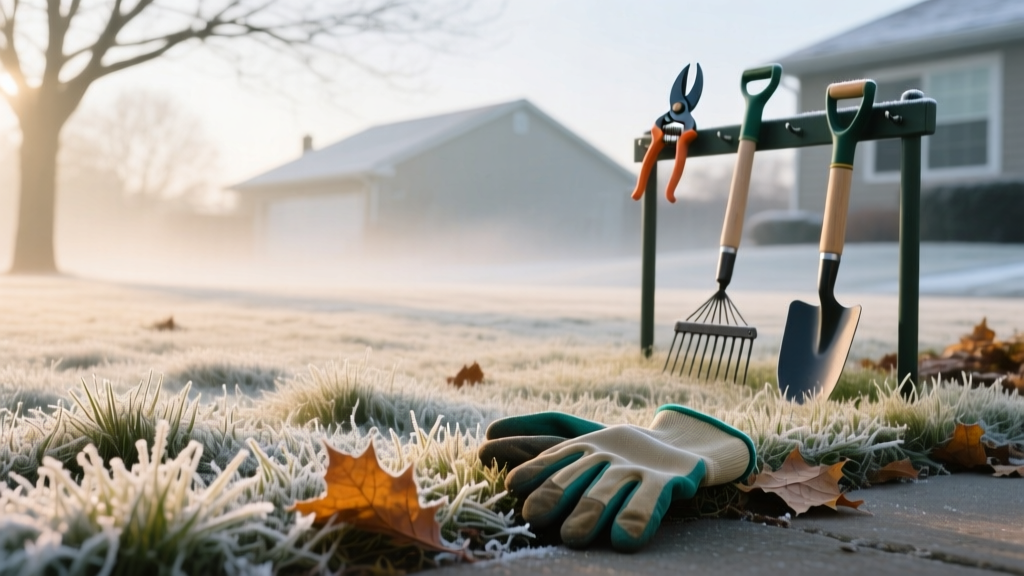
How to Maintain Dormant Grass: Step-by-Step Winter Care Guide
Understanding Dormancy vs. Dead Turf
Dormancy is a natural survival mechanism, not a disease. Turfgrass shuts down top growth to protect the crown and root system when environmental conditions become hostile. For warm-season grasses like Bermuda, Zoysia, and Centipede, this trigger occurs when soil temperatures at a 2-inch depth consistently drop below 55°F. Cool-season grasses like Tall Fescue and Kentucky Bluegrass typically enter dormancy during severe summer droughts or when winter soil temperatures plunge below 32°F.
Misdiagnosing dormant grass as dead turf leads to catastrophic maintenance errors, such as unnecessary aeration or aggressive dethatching, which will destroy the crown. Before initiating any winter maintenance protocol, perform the diagnostic Tug Test.
Diagnostic Framework: The Tug Test
Grab a handful of brown turf blades near the soil line and pull upward with moderate force.
- Result A (Dormant): The grass resists pulling. The roots remain firmly anchored, and the basal crown (the very bottom of the stem) feels firm and may show a pale white or light green color when scratched with a thumbnail.
- Result B (Dead/Winterkill): The grass pulls out easily with zero resistance. The roots are brittle, and the crown is dark brown or mushy, indicating death from desiccation, freezing, or fungal pathogens like Large Patch.
Step 1: Pre-Dormancy Hardening (Late Fall)
Preparing the lawn before it fully enters dormancy dictates how well it will survive winter stressors and how quickly it will green up in spring. According to turfgrass researchers at Texas A&M AgriLife Extension, the hardening-off process requires shifting your nutritional and mowing strategies.
Adjusting Mowing Heights
Drop your mowing height by 20% for the final two cuts of the season. If you maintain your Bermuda grass at 2.0 inches during the summer, lower the deck to 1.5 inches. This reduces the surface area of the leaf blade, minimizing the tissue that can be damaged by frost and reducing the thatch layer where fungal spores overwinter. Never scalp the lawn to the dirt, as exposing the crown to direct freezing air will cause winterkill.
Applying a Potassium-Rich Winterizer
Halt all nitrogen applications 45 days before the first expected frost. Nitrogen forces tender top growth that will be instantly killed by freezing temperatures, wasting the plant's stored carbohydrates. Instead, apply a Potassium-heavy fertilizer to thicken cell walls and increase cold tolerance. Look for an N-P-K ratio like 10-0-20 or 8-2-24. Apply at a rate that delivers exactly 1.0 lb of K2O (potassium) per 1,000 square feet.
Step 2: Active Dormancy Maintenance (Winter)
Once the grass is fully brown and dormant, maintenance shifts from growth promotion to protection and weed eradication.
Targeted Winter Weed Control
Dormancy provides a unique window for aggressive weed control. Because the desirable turf is not actively growing, you can apply post-emergent herbicides that would normally cause severe phytotoxicity (burning) to a green lawn.
- Broadleaf Weeds (Henbit, Chickweed, Dandelion): Apply Celsius WG (thiencarbazone-methyl, foramsulfuron, halosulfuron-methyl) at a rate of 0.06 to 0.11 oz per 1,000 sq ft. This is highly effective on warm-season lawns.
- Grassy Weeds (Annual Bluegrass/Poa Annua): If Poa Annua has already germinated and is visible, use Certainty (sulfosulfuron) at 0.75 oz per acre, or a targeted glyphosate application ONLY if the warm-season grass is 100% brown and completely dormant. A single green Bermuda stolon exposed to glyphosate will result in dead spots in spring.
Moisture Management and Desiccation Prevention
Winter winds and low humidity can pull moisture directly from the turf crown, leading to desiccation—a primary cause of winterkill in regions with freezing winds and no snow cover. Research from Penn State Extension highlights that dormant turf still requires baseline hydration. If your region receives less than 1 inch of precipitation (rain or snow melt) over a 21-day period, apply 0.5 inches of irrigation to keep the crown viable.
Traffic Control on Frosted Turf
Never walk on grass when frost is present on the blades. The frozen water inside the plant cells makes them brittle. Foot traffic will shatter the cell walls, causing physical damage that manifests as black, necrotic footprint tracks that will remain visible until the grass breaks dormancy in late spring.
Dormancy Triggers: Warm vs. Cool-Season Grasses
Understanding the exact environmental triggers for your specific turf species prevents premature or delayed maintenance applications.
| Turf Type | Primary Dormancy Trigger | Visual Characteristics | Spring Green-Up Threshold |
|---|---|---|---|
| Bermuda Grass | Soil temp drops below 55°F | Straw brown, stiff blades | Soil temp > 65°F for 5+ days |
| Zoysia Grass | Soil temp drops below 50°F | Golden/tan, dense mat | Soil temp > 60°F for 7+ days |
| Tall Fescue | Summer heat (>85°F) + drought | Faded yellow, rolled leaves | Resumes with moisture/cooling |
| Kentucky Bluegrass | Winter soil temp < 32°F | Purple/brown hue, limp | Soil temp > 45°F |
Step 3: Breaking Dormancy (Spring Green-Up)
The transition from dormancy to active growth is the most vulnerable period for turfgrass. The University of California Statewide IPM Program warns that improper spring maintenance can invite devastating diseases and deplete the plant's energy reserves.
Pre-Emergent and Soil Temperature Thresholds
Do not rely on air temperature to time your spring pre-emergent herbicide. Air temperatures fluctuate wildly; soil temperature is the biological clock for weed seeds. Insert a soil probe thermometer 2 inches into the ground. When the soil consistently reads 50°F to 55°F, apply a pre-emergent like Prodiamine 65 WDG at a rate of 0.185 oz per 1,000 sq ft to create a chemical barrier against crabgrass and goosegrass before they germinate.
The Danger of 'Pushing' Dormant Grass
A common and costly mistake is applying high-nitrogen fertilizers (e.g., 30-0-0) in early spring to force the grass to turn green faster. This practice, known as 'pushing,' forces the plant to expend its stored winter carbohydrates to produce leaf tissue before the root system is active enough to support it. This results in a weak root system and dramatically increases susceptibility to Spring Dead Spot and Take-All Root Rot. Wait until the grass has naturally greened up and you have mowed it twice before applying your first spring nitrogen application.
Large Patch Disease Warning
Large Patch (Rhizoctonia solani) actively attacks warm-season grasses during the transition periods when the grass is entering or exiting dormancy. If your lawn had Large Patch last spring, apply a preventative fungicide containing Azoxystrobin (such as Heritage TL at 2 oz per 1,000 sq ft) exactly when soil temperatures drop to 70°F in the fall, and again in early spring as soil temperatures rise back through 60°F.
Quick Reference Maintenance Checklist
- Late Fall: Lower mowing height 20%, apply 1 lb K2O/1,000 sq ft, halt nitrogen.
- Winter: Apply post-emergent herbicides to 100% dormant turf, irrigate 0.5 inches every 21 days if dry, avoid walking on frosted blades.
- Early Spring: Monitor soil temps, apply pre-emergent at 50-55°F soil temp, delay nitrogen until after the second spring mowing.

