
Lawn Care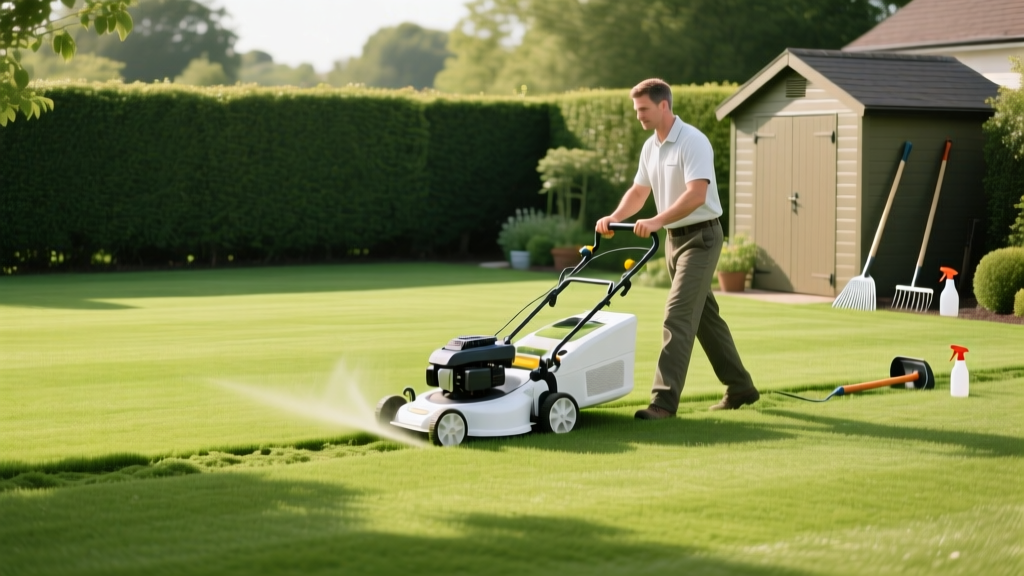
Step-by-Step Maintenance Procedures for a Flat Grass Plain
The Unique Agronomic Challenges of a Residential Grass Plain
A residential grass plain—typically defined as an open, unobstructed turf expanse exceeding 0.5 acres with minimal tree canopy, hardscaping, or natural windbreaks—presents distinct maintenance challenges. While a flat, open lawn might seem easier to manage than a heavily landscaped yard, the lack of environmental buffers creates severe microclimate extremes. According to the NC State Center for Turfgrass Environmental Research and Education, unshaded, open turf areas experience evapotranspiration rates up to 30% higher than partially shaded lots, leading to rapid moisture depletion and heat stress.
Defining the Grass Plain Scope: For the purposes of these procedures, a "grass plain" refers to a continuous, relatively flat turf area ranging from 20,000 to 100,000 square feet. These areas lack natural drainage swales, making them highly susceptible to subsurface water pooling, wind-induced desiccation, and heavy equipment soil compaction.
Maintaining this environment requires moving beyond standard suburban lawn care. The following step-by-step procedures outline the exact agronomic and mechanical protocols required to sustain a high-traffic, large-scale grass plain in 2026.
Step 1: Micro-Grading and Surface Leveling
The most critical failure point on a flat grass plain is surface drainage. Without a minimum 1% to 2% slope, water pools in minor depressions, leading to anaerobic soil conditions and fungal outbreaks like Pythium blight. Because the area is vast and flat, visual grading is impossible; you must rely on laser-guided leveling.
Equipment and Material Sourcing
- Survey the Topography: Use a rotary laser level (such as the Johnson Level 40-6912 or equivalent dual-slope model) mounted on a tripod at the center of the plain. Shoot grade elevations every 25 feet in a grid pattern to map micro-depressions.
- Calculate Fill Volumes: For every 1,000 square feet requiring a 0.5-inch depth correction, you will need approximately 1.5 cubic yards of topdressing material.
- Source the Correct Mix: Do not use pure topsoil, which will compact and seal the surface. Order an 80/20 sand-to-compost mix. Expect to pay between $45 and $60 per cubic yard delivered in bulk from local landscape suppliers.
- Distribution Protocol: Spread the mix using a tractor-pulled spreader box or a heavy-duty peat spreader. Drag the material with a steel mat to ensure it settles into the turf canopy without smothering the existing grass blades.
Step 2: Wind-Resistant Irrigation Calibration
On an open grass plain, wind drift is the primary enemy of irrigation efficiency. Standard high-angle sprinkler heads lose up to 40% of their water volume to evaporation and wind displacement before it reaches the soil profile. The EPA WaterSense program emphasizes that auditing and retrofitting sprinkler nozzles is the highest-ROI upgrade for open turf areas.
Nozzle Retrofitting Matrix
Replace standard spray nozzles with low-angle, wind-resistant models. The table below compares standard configurations with the required grass plain upgrades.
| Irrigation Zone Type | Standard Nozzle (Avoid) | Grass Plain Upgrade | Trajectory Angle |
|---|---|---|---|
| Perimeter Rotor Zones | Hunter I-20 Standard (25°) | Hunter I-20 Low-Angle (10°) | 10 Degrees |
| Interior Rotary Zones | Standard MP Rotator (21°) | Hunter MP800 Series (21° but heavier droplet) | 21 Degrees (Heavy Droplet) |
| Narrow Strip Edges | Standard 15' Strip Nozzle | Subsurface Drip Irrigation (SDI) | 0 Degrees (Subsurface) |
Calibration Step: Perform a catch-can test using 12 identical straight-sided cans placed in a grid across the plain. Run the system for exactly 15 minutes. Measure the water in each can; the variance between the highest and lowest can should not exceed 15%. If it does, adjust the arc and radius screws on the individual rotor heads to eliminate dry spots caused by wind shear.
Step 3: High-Acreage Mowing and Compaction Prevention
Mowing a large, flat grass plain requires heavy equipment, typically a 50-inch to 72-inch zero-turn mower (such as the Exmark Lazer Z X-Series or Toro TimeCutter 5000). The sheer weight of these machines, combined with the repetitive tracking patterns inherent to wide-open spaces, causes severe soil shearing and subsurface compaction.
Warning: Zero-Turn Tire Pressure: Most commercial and high-end residential zero-turn mowers ship from the factory with rear tire pressures set between 18 and 22 PSI. On a flat grass plain, this high pressure acts like a rolling tamper, compacting the top 2 inches of soil. Immediately reduce rear tire pressure to 12-14 PSI and front caster tires to 10-12 PSI. This expands the tire footprint, reducing ground pressure (PSI per square inch) by nearly 40% and preventing rutting.
The 45-Degree Routing Protocol
To prevent the turf from developing a permanent "grain" and to distribute mechanical wear evenly across the grass plain, implement a strict routing protocol:
- Week 1: Mow in a standard North-South striping pattern.
- Week 2: Shift the pattern 45 degrees (Northeast-Southwest).
- Week 3: Shift another 45 degrees (East-West).
- Week 4: Shift to a 45-degree Southeast-Northwest pattern.
According to University of Minnesota Extension Lawn Care guidelines, alternating mowing directions prevents the grass blades from leaning in one direction, ensures an even cut, and critically, prevents the mower wheels from tracking in the exact same soil grooves week after week.
Step 4: Core Aeration and Slit-Seeding at Scale
Because grass plains endure heavy, uniform foot and equipment traffic, the soil profile compacts evenly across the entire acreage. Standard spike aeration is entirely ineffective here; you must physically remove soil cores to alleviate deep compaction and allow oxygen to reach the root zone.
"On large, open plains, tow-behind aerators are a false economy. They rely on the weight of the tractor for tine penetration, which rarely exceeds 2 inches. For true agronomic remediation on a grass plain, you must use a dedicated walk-behind core aerator with a weighted drum, achieving 3 to 4 inches of penetration."
— Turf Management Field Notes, 2025
Execution Steps for Plain-Scale Aeration
- Moisture Preparation: Irrigate the grass plain with exactly 0.5 inches of water 24 hours prior to aeration. The soil must be moist but not saturated; if the soil sticks to your boots in clumps, it is too wet, and aeration will tear the turf rather than cleanly extracting cores.
- Equipment Selection: Rent a walk-behind core aerator (e.g., Billy Goat AET551H). Expect rental costs between $350 and $500 per day. For plains exceeding 1 acre, budget for a two-day rental to avoid rushing the job.
- Double-Pass Technique: Make your first pass in a North-South direction. Make your second pass perpendicular (East-West). This yields approximately 15 to 20 holes per square foot, which is the industry standard for heavy clay soils found in many residential plains.
- Overseeding Integration: Immediately following aeration, use a tractor-pulled slit-seeder calibrated to drop 6 to 8 pounds of turf-type tall fescue seed (or 2 pounds of Kentucky bluegrass) per 1,000 square feet. The open aeration holes provide direct seed-to-soil contact, bypassing the thatch layer entirely.
Seasonal Maintenance Matrix for Open Turf
Managing a grass plain requires strict adherence to seasonal timing. The lack of tree shade means the soil warms faster in the spring and freezes harder in the winter. Use this matrix to schedule your annual procedures.
| Season | Primary Focus | Actionable Procedure | Product/Material Target |
|---|---|---|---|
| Early Spring | Pre-emergent & Grading | Apply pre-emergent before soil hits 55°F; laser-check for winter frost-heave depressions. | Prodiamine 65 WDG (1.5 lbs/acre) |
| Late Spring | Irrigation Audit | Catch-can test; swap standard nozzles for low-angle wind-resistant models. | Hunter MP800 / I-20 Low Angle |
| Mid-Summer | Heat Stress Mitigation | Raise mowing deck to 3.5 - 4.0 inches; apply humic acid to improve water retention. | Liquid Humic Acid (12 oz/1,000 sq ft) |
| Early Fall | Core Aeration & Seed | Double-pass core aeration followed immediately by slit-seeding and starter fertilizer. | Turf-Type Tall Fescue (8 lbs/1k sq ft) |
| Late Fall | Winterizer Application | Apply high-potassium winterizer after the final mowing to harden the turf crown. | 0-0-25 Potassium (1.5 lbs/1k sq ft) |
By treating your grass plain not as a simple backyard, but as a large-scale agronomic environment, you mitigate the inherent risks of wind, water pooling, and mechanical compaction. Stick to the precise measurements, equipment calibrations, and routing protocols outlined above to maintain a dense, resilient, and visually striking open turf expanse year after year.

