
Lawn Care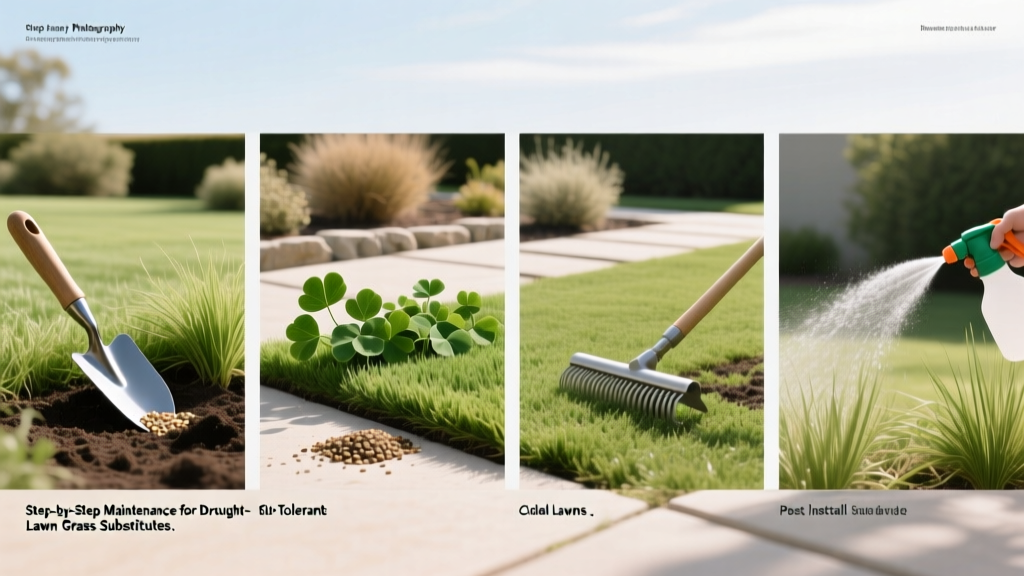
Step-by-Step Maintenance for Drought-Tolerant Lawn Grass Substitutes
The Reality of Low-Maintenance Lawn Alternatives
Transitioning to lawn grass substitutes is one of the most effective strategies for reducing residential water consumption and eliminating synthetic fertilizer runoff. According to the EPA WaterSense program, outdoor water use accounts for nearly 30% of total household water use, with traditional turfgrass being the primary culprit. However, a common misconception among homeowners is that "drought-tolerant" equates to "zero maintenance."
Lawn grass substitutes like Kurapia, microclover, and creeping thyme require highly specific, albeit less frequent, maintenance protocols to thrive. Applying traditional turfgrass maintenance schedules to these alternatives will result in root rot, thatch buildup, or invasive spreading. This guide provides exact, step-by-step maintenance procedures for the three most viable lawn substitutes on the market.
Phase 1: Kurapia (Lippia nodiflora) Maintenance Protocol
Kurapia is a sterile, warm-season broadleaf groundcover that uses up to 60% less water than traditional fescue or bermudagrass. Because it is a broadleaf, it responds poorly to standard turf herbicides and requires a distinct maintenance rhythm.
Kurapia Quick Specs:
• Installation Cost: $0.15–$0.25 per plug (approx. $150 per 1,000 sq. ft. at 1 plug/sq. ft.)
• Mature Height: 2–3 inches (mowed) or 5–6 inches (unmowed pollinator mode)
• Water Requirement: 15–20 inches annually
• Installation Cost: $0.15–$0.25 per plug (approx. $150 per 1,000 sq. ft. at 1 plug/sq. ft.)
• Mature Height: 2–3 inches (mowed) or 5–6 inches (unmowed pollinator mode)
• Water Requirement: 15–20 inches annually
Step 1: Precision Mowing for Density
Unlike turfgrass, you do not mow Kurapia to cut the leaf blade; you mow it to suppress flowering and encourage lateral stolon growth.
- Set your mower deck to exactly 2.5 inches. Cutting lower than 2 inches exposes the woody base of the plant, leading to unsightly brown patches that take weeks to recover.
- Mowing frequency: Every 10–14 days during peak summer growth (June–August).
- Clipping management: Always use a mulching blade. Kurapia clippings decompose rapidly and return vital potassium to the soil. Bagging clippings strips the soil of nutrients and necessitates external fertilization.
Step 2: Deep-Cycle Summer Watering
Kurapia’s taproots can reach depths of 3 to 4 feet, but only if trained correctly. Shallow, daily watering will cause the root system to collapse during heatwaves.
- Spring Establishment: Water 3 times per week for the first 45 days post-plugging to keep the top 2 inches of soil moist.
- Summer Maintenance: Switch to a single, deep watering session once per week. Apply exactly 0.5 to 0.75 inches of water per session. Use a catch-can test to measure your sprinkler output.
- Soil Surfactant Application: In heavy clay soils, apply a liquid soil surfactant (like Penterra or a yucca-based wetting agent) every 8 weeks to ensure water penetrates past the topsoil crust.
Phase 2: Microclover (Trifolium repens 'Pirouette') Maintenance
Microclover is a cool-season legume that fixes its own atmospheric nitrogen. The 'Pirouette' and 'Pipolina' varieties are specifically bred to stay low-growing and produce fewer flowers than standard white clover. The University of Minnesota Extension notes that microclover blends significantly reduce the need for synthetic nitrogen inputs.
Step-by-Step Microclover Care
| Maintenance Task | Microclover Protocol | Traditional Turf Protocol (For Contrast) |
|---|---|---|
| Nitrogen Fertilization | 0 lbs/year (Fixes own N) | 3–5 lbs per 1,000 sq. ft./year |
| Mowing Height | 2.0 to 2.5 inches | 3.0 to 4.0 inches |
| Broadleaf Herbicides | NEVER apply (will kill clover) | Apply 2,4-D or Dicamba as needed |
| Overseeding Rate | 1.5 lbs per 1,000 sq. ft. (Fall) | 5–8 lbs per 1,000 sq. ft. (Fall) |
Step 1: Managing the Nitrogen Balance
Because microclover generates its own nitrogen via Rhizobium bacteria in its root nodules, applying synthetic nitrogen fertilizer is a critical failure point. Excess nitrogen causes the clover to produce massive, floppy leaves that smother the crown, leading to fungal diseases like Sclerotinia. If your microclover is blended with fine fescue, apply a maximum of 1 lb of nitrogen per 1,000 sq. ft. in late fall solely to support the fescue; the clover will utilize the residual.
Step 2: Aggressive Fall Overseeding
Microclover has a shorter lifespan (3–5 years) than turfgrass and naturally thins out over time. To maintain a dense carpet that resists weed invasion:
- Aerate: Core aerate the lawn in early September.
- Seed: Broadcast raw (uncoated) microclover seed at 1.5 lbs per 1,000 sq. ft. Coated seed is often inoculated, but raw seed is cheaper if your soil already has established clover.
- Topdress: Apply a 1/8-inch layer of compost. Do not bury the seed deeper than 1/4 inch, or germination will fail.
Phase 3: Creeping Thyme (Thymus serpyllum) Hardscape Integration
Creeping thyme is not a lawn substitute for high-traffic areas like a football field, but it is the premier substitute for parkways, between stepping stones, and low-traffic front yards. It thrives in poor soils but has one major vulnerability: moisture retention.
Warning: The Root Rot Failure Mode
Creeping thyme will rapidly succumb to fungal root rot in heavy, unamended clay soils or areas with poor drainage. If water pools on your lawn for more than 2 hours after a rainstorm, thyme will die. You must amend the top 6 inches of soil with a 50/50 mix of native soil and coarse horticultural sand before planting.
Creeping thyme will rapidly succumb to fungal root rot in heavy, unamended clay soils or areas with poor drainage. If water pools on your lawn for more than 2 hours after a rainstorm, thyme will die. You must amend the top 6 inches of soil with a 50/50 mix of native soil and coarse horticultural sand before planting.
Step 1: Post-Bloom Shearing
Thyme produces vibrant pink or purple blooms in early summer. Once the flowers fade and turn brown (usually late July), the plant looks woody and unkempt.
- Action: Set a string trimmer to its highest setting or use manual hedge shears to skim off the top 1 inch of the plant.
- Result: This removes the spent flower heads, stimulates a flush of tight, green vegetative growth for the fall, and prevents the center of the plant from becoming woody and splitting open.
Step 2: Weed Extraction (No Chemical Options)
Because thyme is a broadleaf plant, standard broadleaf weed killers (like 2,4-D) will obliterate it. Furthermore, pre-emergent herbicides like prodiamine can inhibit thyme's ability to root into bare spots. You must maintain thyme lawns mechanically. Use a long-handled weeder with a V-notch tip to extract taproot weeds like dandelions and plantain before they establish a canopy that shades out the thyme.
Seasonal Maintenance Calendar for Substitutes
| Season | Kurapia (Warm-Season) | Microclover (Cool-Season) |
|---|---|---|
| Spring | Delay first mowing until soil temps reach 65°F. Apply pre-emergent for crabgrass if needed. | Apply iron sulfate (liquid) to deepen green color. Begin 2.5" mowing schedule. |
| Summer | Water deeply 1x/week. Mow every 14 days. Monitor for whitefly. | Allow to go dormant during extreme heat. Suspend mowing if browning occurs. |
| Fall | Reduce watering in October. Stop mowing when nighttime temps drop below 50°F. | Core aerate and overseed. Apply 1 lb potassium (0-0-60) for winter hardiness. |
| Winter | Expect complete dormancy (browning). Do not water. | Avoid heavy foot traffic on frost-covered crowns to prevent cellular damage. |
Long-Term Viability and ROI Analysis
While the upfront installation cost for lawn grass substitutes is higher than laying traditional sod—averaging $1.50 to $2.50 per square foot for Kurapia plugs compared to $0.60 per square foot for fescue sod—the return on investment is realized through utility savings and eliminated chemical costs. A standard 5,000 sq. ft. traditional lawn in the American Southwest uses roughly 45,000 gallons of water annually. Replacing this with Kurapia drops usage to approximately 18,000 gallons. At an average municipal water rate of $0.005 per gallon, the substitute pays for its premium installation cost in roughly 3.5 to 4 years, after which the homeowner realizes pure savings while maintaining a lush, functional green space.

